

Abyssosaurus nataliae is a plesiosaur from Upper Hauterivian deposits near the Menya River in Chuvashia, Russia. Its holotype combines skull material with parts of the postcranial skeleton, including a long but incomplete series of neck vertebrae. The animal's family-level placement changed after its original description, and a 2026 model-based study estimated its length at about 6.7 m. That figure is a reconstruction, not a direct measurement of a complete articulated body.
Quick facts
| Type species | Abyssosaurus nataliae |
|---|---|
| Group | Plesiosaur; usually recovered among cryptoclidids in cladistic studies |
| Age | Upper Hauterivian, Early Cretaceous; Speetoniceras versicolor Zone |
| Locality | Menya River, Chuvashia, European Russia |
| Holotype | MChEIO PM/1, partial skull and postcranial skeleton |
| Neck | 44 cervical vertebrae listed as preserved in an estimated series of about 51 |
| Estimated length | About 6.7 m in a 2026 skeletal model; not a direct measurement |
Evidence guide
MChEIO PM/1 comes from Upper Hauterivian deposits near the Menya River in Chuvashia. It includes skull and postcranial material, but is not a complete, continuously articulated animal.
The published inventory lists 44 preserved cervical vertebrae from an estimated series of about 51. This is a count of fossil elements, not a direct measurement of the soft-tissue neck.
The original description placed Abyssosaurus in Aristonectidae. Later character-based analyses and a separate skull study instead treated it as a specialized cryptoclidid plesiosaur.
A 2026 study used a reconstructed skeleton and comparative regression methods to estimate total length. Missing parts and model assumptions limit the precision of the result.
A Chuvashian type specimen
Alexander Berezin named Abyssosaurus nataliae in 2011 from specimen MChEIO PM/1, collected in deposits near the Menya River in Chuvashia. The locality lies on a tributary of the Sura in the central part of the Russian Platform. The fossil-bearing strata are assigned to the Upper Hauterivian and the Speetoniceras versicolor ammonite Zone. This age comes from the geological context, not a direct date measured from the bones.
The type specimen is held by the Chuvash natural-history museum collection. It includes parts of the skull and axial skeleton, with vertebrae from several regions and shoulder-area elements. The neck is well represented but has gaps. Additional fragmentary remains from the region should not be assigned to Abyssosaurus solely because they are geographically close or of similar age.
The species name honours Nataliya Berezina. The genus name refers to an abyss, but etymology is not evidence that the animal lived permanently at extreme ocean depth.
Skull, neck and proportions
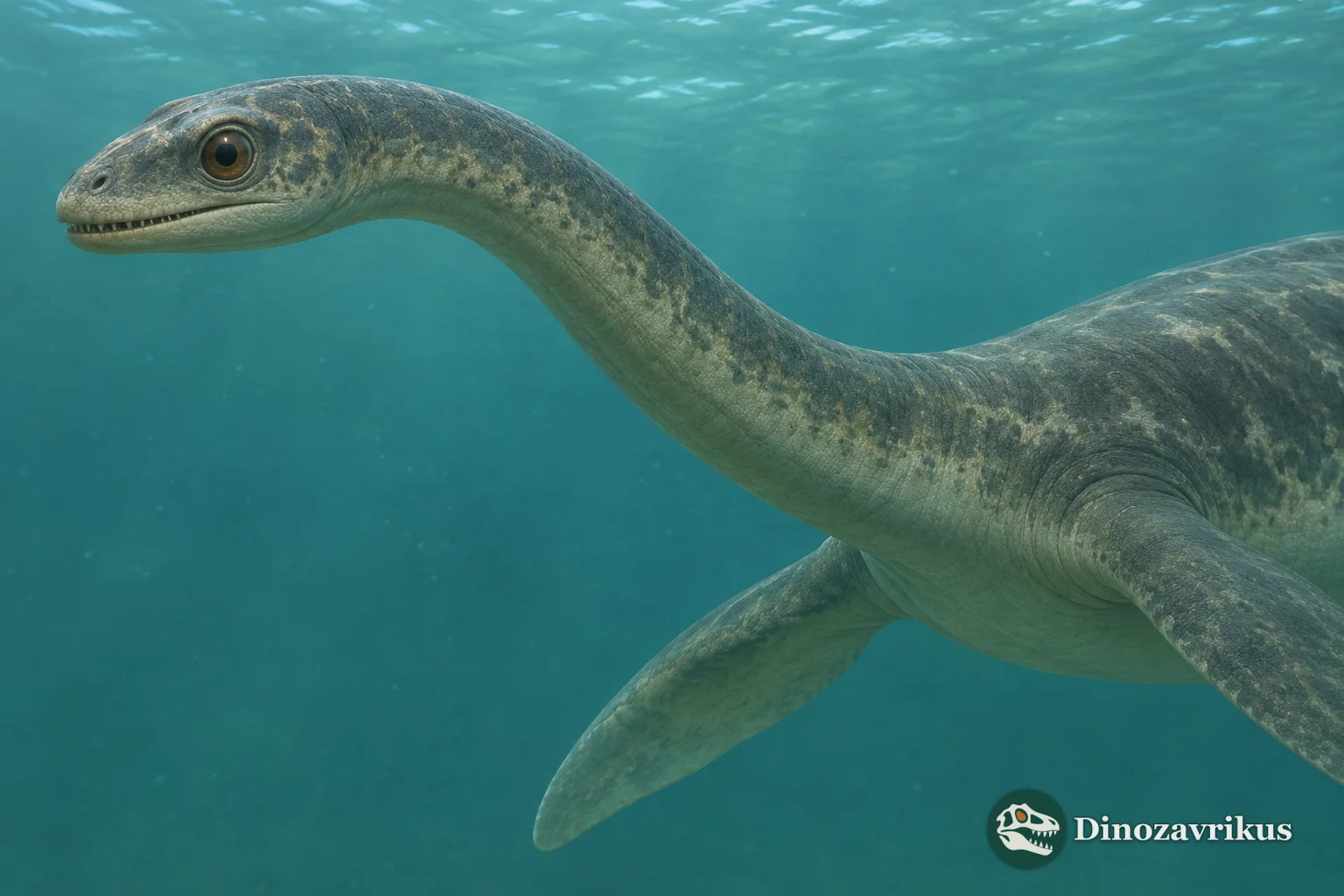
A separate 2018 study described skull bones associated with the holotype. The account emphasized a shortened facial region, a large occipital area, relatively large orbits, and a combination of cranial characters used to revise the diagnosis. Those observations concern preserved bone. They do not independently establish eye performance, prey, or depth range.
The specimen inventory lists 44 cervical vertebrae preserved from a series estimated at about 51, with several missing elements in one part of the neck. The count demonstrates a long neck but does not provide its exact living outline or flexibility. Comparison with other plesiosaurs, including Aristonectes and Muraenosaurus, helps describe diversity in the group; it does not establish direct ancestry.
Changing classification
The original 2011 description assigned Abyssosaurus to Aristonectidae and proposed it as an intermediate form in plesiosaur evolution. Later cladistic analyses, which compare coded anatomical characters across a broader set of taxa, recovered it among cryptoclidids. After studying the skull, Berezin also revised its family-level interpretation and described the animal as a specialized cryptoclidid.
A 2026 quantitative size study likewise lists Abyssosaurus within Cryptoclididae. Family placement is an inference from the characters and taxa included in an analysis. It is not a documented chain of direct ancestors. The better-known Cretaceous plesiosaur Libonectes provides a useful comparison for how fossil evidence varies among genera, not evidence that one was descended from the other.
How long was Abyssosaurus?
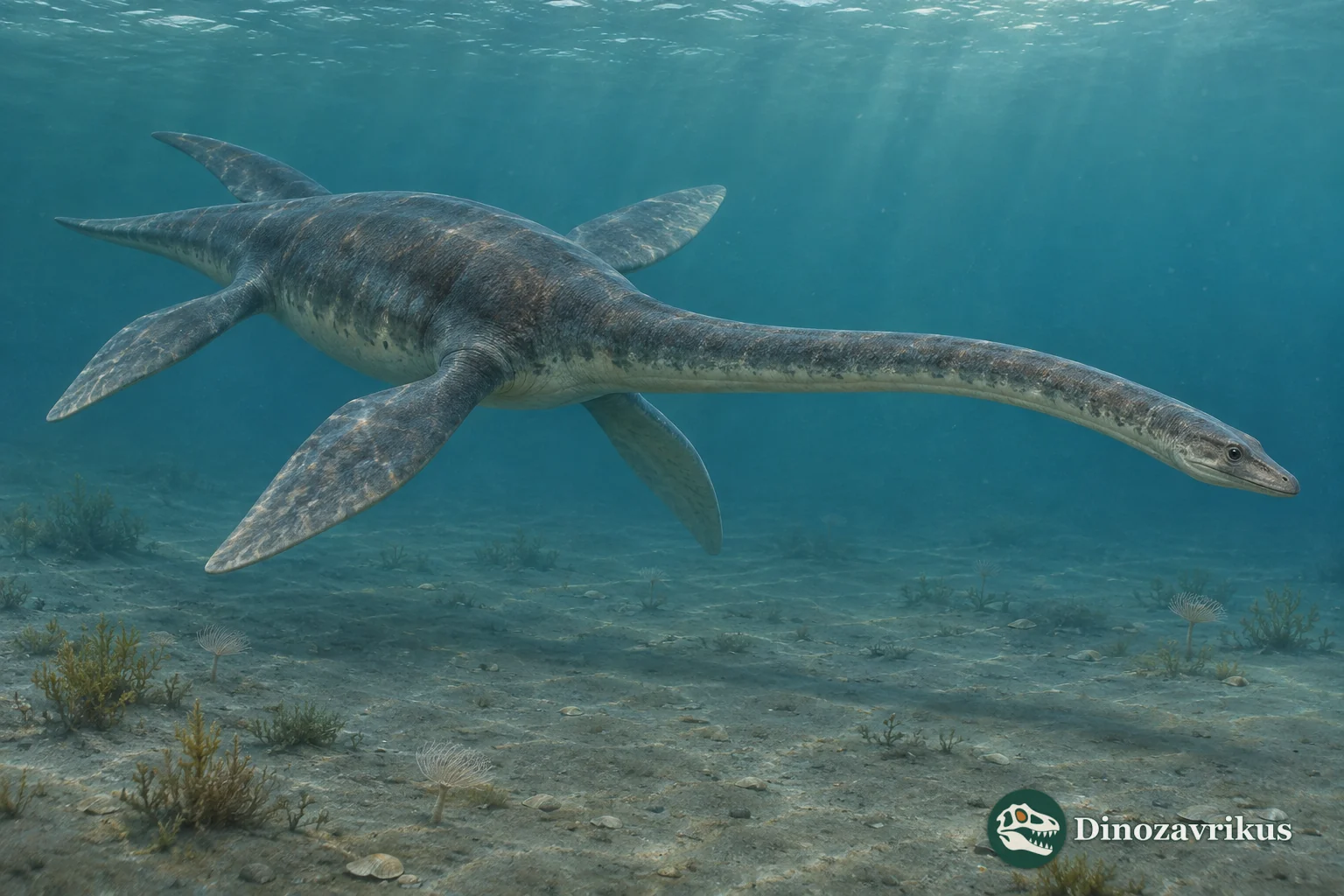
A 2026 study estimated a total length of about 6.7 m from a standardized skeletal reconstruction and regression model. The value is not a ruler measurement of an intact fossil: the model restores missing regions and uses relationships between measurable bones and body length in other plesiosaurs. Reporting tenths of a metre should not imply comparable certainty in the living animal's exact size.
Alexander Berezin proposed that cranial and limb proportions may be consistent with a deep-water lifestyle and feeding on soft-bodied prey. This is a morphofunctional hypothesis. No stomach contents, prey remains, or other direct evidence establish a species-specific diet or diving depth for Abyssosaurus. A single known skeleton also cannot reveal population growth patterns, reproduction, or typical behaviour.
What the fossil record can and cannot show
The evidence identifies a named species from Chuvashia, a partial skull and skeleton, a long neck with a substantial preserved vertebral series, and an Upper Hauterivian age. Family placement, total length, and a possible deep-water adaptation are conclusions of comparative or model-based studies and may be revised with new specimens.
Skin colour, soft tissues, exact fin outlines, swimming speed, and social behaviour are not preserved. The scenes on this page are palaeoart based on the bones and general plesiosaur anatomy. They help visualize one plausible body plan, but are not photographs or precise portraits of MChEIO PM/1.
Frequently asked questions
Where was Abyssosaurus found?
The holotype came from Upper Hauterivian deposits near the Menya River in Chuvashia, on the Russian Platform.
How many Abyssosaurus skeletons are known?
The species is based on one holotype, MChEIO PM/1. Other nearby fragments are not automatically referable to the genus.
How long was Abyssosaurus?
A 2026 skeletal-model study estimated about 6.7 m. The value depends on reconstruction and comparative regression rather than direct measurement of a complete articulated fossil.
Does the fossil prove a deep-water lifestyle?
No. Deep-water specialization was proposed from anatomical features, but the fossil does not directly record its normal depth or prey.