

Acamptonectes densus is an Early Cretaceous ichthyosaur documented by incomplete skeletons from England and Germany. Its skull base, vertebrae and forefins retain a combination of features also seen in Jurassic ophthalmosaurids. The fossils show that this lineage survived the Jurassic–Cretaceous transition; they do not preserve the complete appearance of the species.
The name was published in 2012. A formal correction published the same month fixed an important collection number, while later work narrowed the identification of younger isolated bones. Those changes matter more than a simple range copied from an older checklist.
Quick facts
| Type species | Acamptonectes densus Fischer et al., 2012 |
|---|---|
| Group | Ichthyosauria, Ophthalmosauridae |
| Secure age | Hauterivian, Early Cretaceous |
| Range | England and Germany |
| Holotype | GLAHM 132855, Speeton Clay Formation |
| Key paratype | SNHM1284-R from Cremlingen |
| Preserved | Parts of skull, jaw, vertebrae, girdles and forefins |
What can the fossils tell us?
The Speeton holotype is GLAHM 132855, not the number 132588 printed in the original article. Its partial skull and skeleton diagnose the species but do not preserve a complete body outline.
The German SNHM1284-R preserves a long jaw and cervical material. Matching cranial and limb features support the taxon without turning separate fossils into one full skeleton.
Bones from the Cambridge Greensand were initially referred to Acamptonectes sp. A subsequent revision retained them as indeterminate ophthalmosaurines, so they do not establish a late species range.
The specimens behind the name
The adult holotype GLAHM 132855 comes from the Speeton Clay Formation of North Yorkshire. The original description repeatedly printed GLAHM 132588; the authors' correction specifies 132855. The specimen lacks much of the skull roof and the posterior half of the skeleton.
The Cremlingen paratype SNHM1284-R adds a near-complete mandible and part of the cervical region. Its preserved jaw is about 1,045 mm long, a measurement of that element alone. A precise total body length cannot be read directly from these incomplete fossils.
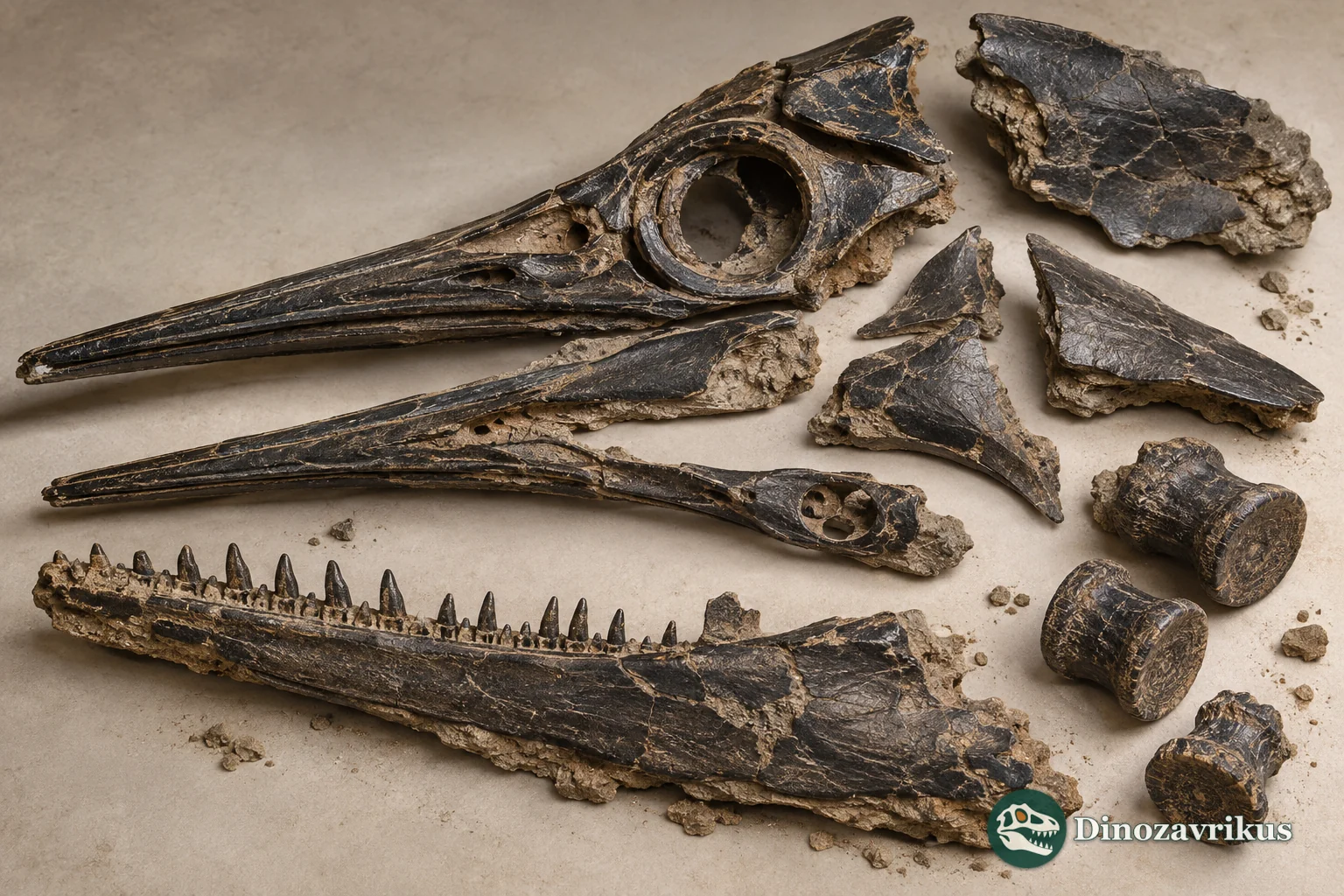
Anatomy and identity
Closely interlocking anterior trunk vertebrae and distinctive bones of the rear skull helped Fischer and colleagues diagnose Acamptonectes. The forefin also preserves features useful for comparison within Ophthalmosauridae. The descriptive name 'rigid swimmer' refers to preserved joints, not a direct measurement of how flexible the living animal was.
The similarities to Ophthalmosaurus emerge from comparative anatomy. The broader ichthyosaur body plan helps reconstruct a streamlined swimmer, but the color, complete tail profile and exact motion shown in life art are not fossils of this species.
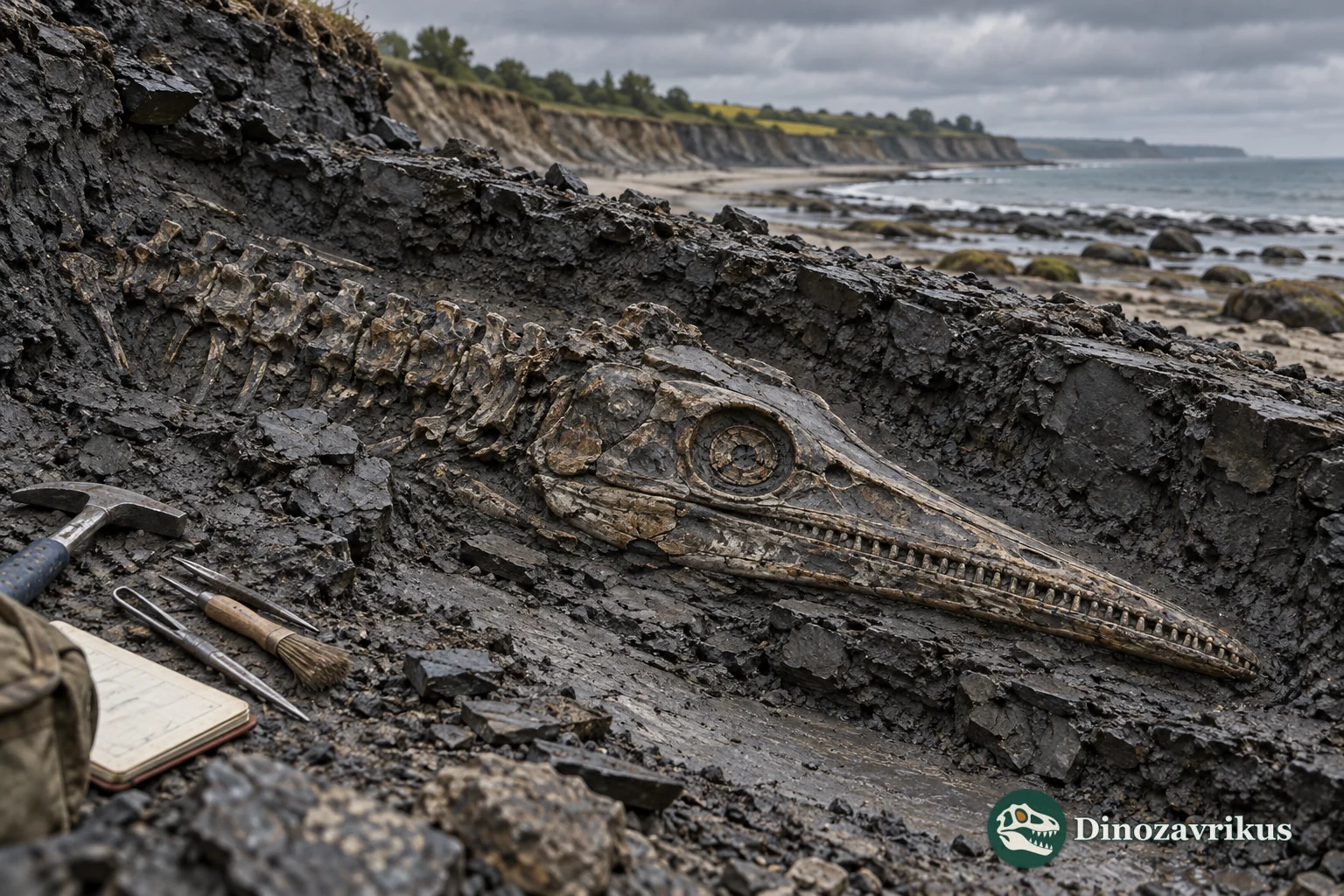
Age and the Cambridge problem
Secure specimens are Hauterivian in age. The 2012 paper also associated isolated bones from the Cambridge Greensand with Acamptonectes sp.; a 2014 reassessment treated them as indeterminate ophthalmosaurines. The deposit contains reworked fossils, adding another reason not to equate its rock age with the age of every bone.
The Early Cretaceous Platypterygius record is a useful comparison for ichthyosaur diversity, but similar isolated elements do not prove identity with A. densus. No stomach contents from the described type material establish a particular prey list. Small teeth and an elongated snout allow a feeding inference, not a directly observed diet.
Frequently asked questions
What is the correct holotype number?
GLAHM 132855. The number GLAHM 132588 in the original description was explicitly corrected in 2012.
Where is Acamptonectes densus securely known?
From Hauterivian marine deposits in England and Germany. Later isolated Cambridge bones are not secure examples of this species.
Does its name prove that it swam with a rigid body?
No. It alludes to closely fitting preserved vertebrae; swimming motion was not directly measured.
Do scientists know its exact total length?
No. The German specimen has a mandible about 1.045 metres long, but the incomplete skeletons do not give a precise whole-body length.