

Aciprion is a fossil iguanian. Edward Cope named Aciprion formosum from a tooth-bearing lower jaw in the Oligocene beds of Colorado. Skulls later attributed to the species preserve much more anatomy, although their identification is difficult to test against the original jaw.
Quick facts
| Group | Iguanians (Iguania) |
|---|---|
| Age | Oligocene for the type material |
| Region | North America, United States |
| Type species | Aciprion formosum |
| Scientific name | Aciprion |
| Diet | No direct evidence |
What can the fossils tell us?
The holotype, AMNH 1609, comes from the White River deposits. It preserves seven teeth.
Analysis of skull AMNH FR 11400 places that specimen on the stem of the group that includes modern collared lizards.
The Wyoming skull has not been securely linked to the type jaw. Additional specimens from the type locality could test the assignment.
The specimen that anchors the name
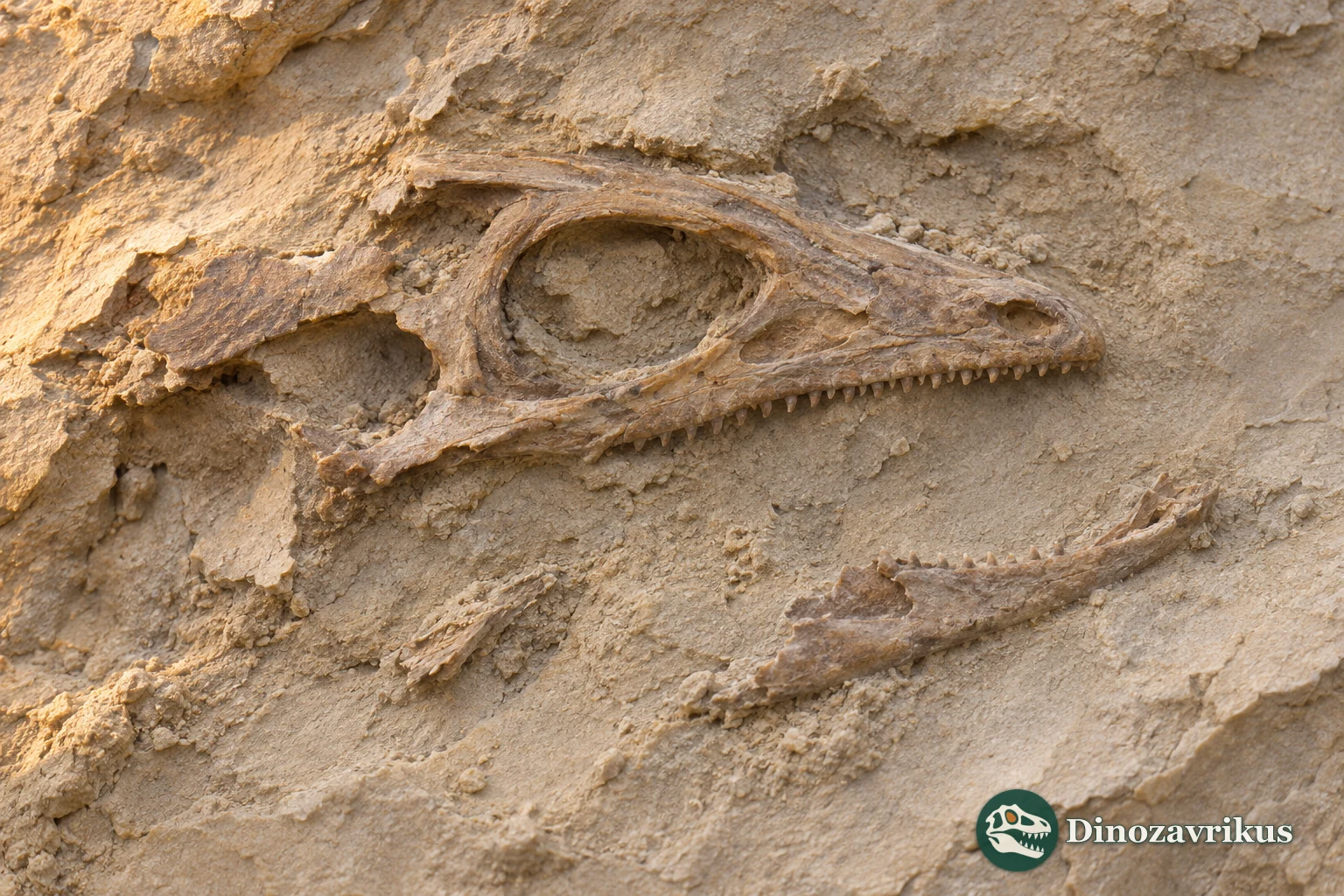
Cope named the species in 1873. Holotype AMNH 1609 from the White River deposits of Colorado is a nearly complete dentary with seven surviving teeth. In 1941, Charles Gilmore described a referred skull, USNM 16566, from the Brule Formation in Wyoming. In the same paper he examined the skull of Exostinus from the same area.
What tomography revealed
In 2024, Simon Scarpetta described a different Wyoming skull, AMNH FR 11400. Many bones were close to their original positions despite being fractured. The right maxilla has 21 tooth positions and the left has 22, several of them empty. A phylogenetic analysis of the specimen placed it on the lineage leading to collared lizards.
Why the distinction between specimens matters
The beds that yielded AMNH FR 11400 span the transition from the Eocene to the Oligocene. Its exact level is unknown. Anatomical features shared by that skull and the type jaw are limited, so the skull remains provisionally referred. The age of the Colorado type and the placement of the Wyoming skull therefore answer separate questions.
Frequently asked questions
What does the Aciprion holotype preserve?
It is a nearly complete lower jaw bone with seven surviving teeth.
What age does the type specimen establish?
The Colorado jaw comes from the Oligocene White River deposits.
Why count tooth positions as well as teeth?
Some teeth were lost. Their attachment positions indicate that the row contained more teeth than survive.
Was Aciprion related to collared lizards?
An analysis recovered that relationship for the Wyoming skull. The assignment of that specimen to Aciprion remains provisional.