

Acritohippus was a North American Miocene horse. Several of its fossils were once assigned to the broad historical genus Merychippus. Comparison of skulls and cheek teeth led to a separate genus, making Acritohippus a useful example of why similar fossil horses need not belong to one lineage.
Its place in the ancient mammal catalogue rests on identifiable material, not on an imagined straight line from a small ancient horse to living Equus. Acritohippus had three toes; its exact coat, pace and day-to-day feeding choices remain unknown.
Quick facts
| Scientific name | Acritohippus Kelly, 1995 |
|---|---|
| Type species | A. quinni, described from the Caliente Formation |
| Group | Equidae, early Equinae |
| Age | Middle Miocene in the discussed samples |
| Range | Western North America |
| Named skull | AMNH FM 8175, type of the species now called A. isonesus |
| Feet | Three toes, unlike the single hoof of living horses |
| Dietary evidence | Cheek teeth and their wear; no exact plant menu |
What can the fossils tell us?
Kelly named A. quinni and transferred several horses formerly called Merychippus. The decision rests on a combination of cranial and dental traits, not an old label by itself.
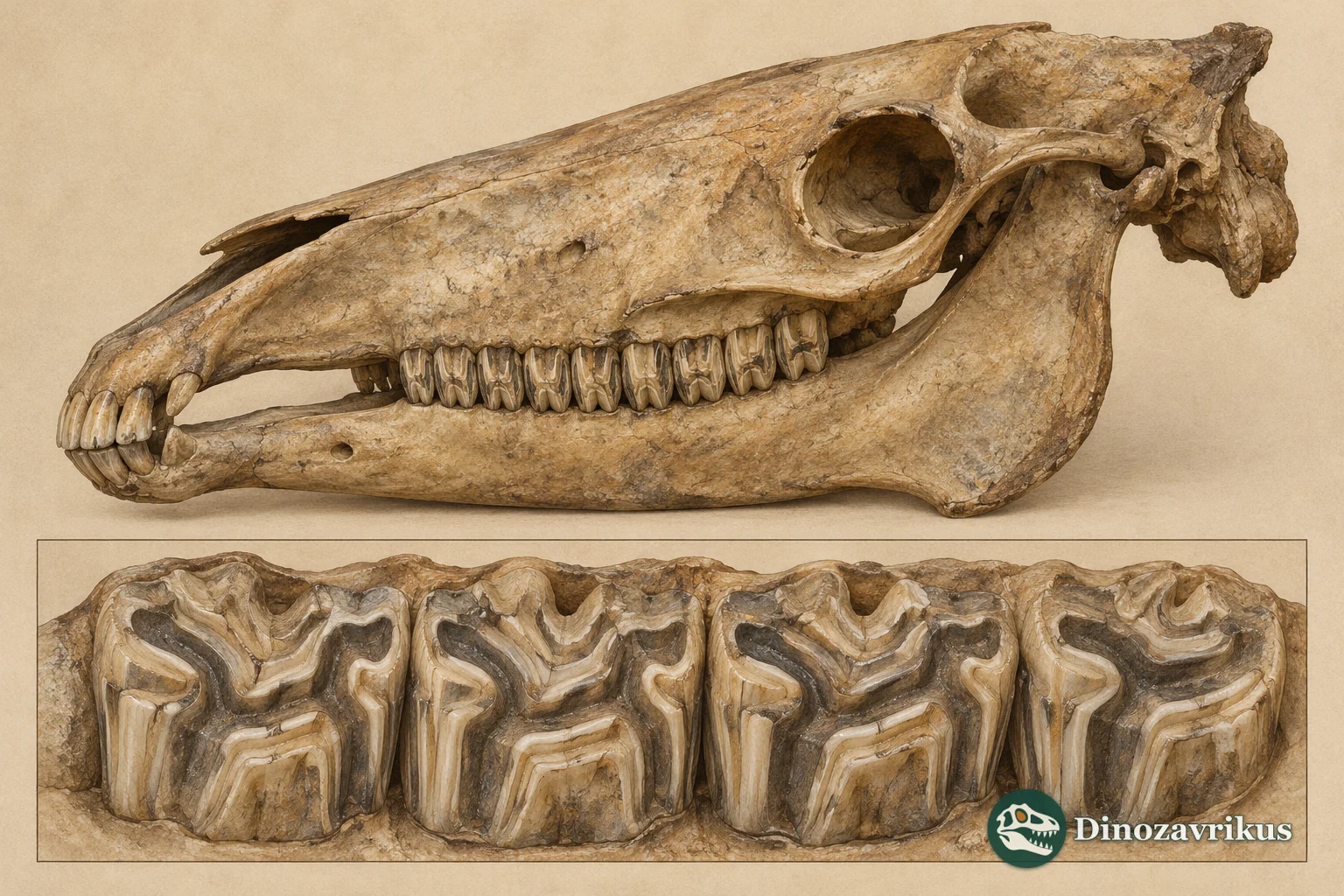
AMNH FM 8175 is the type skull of the animal first named Hippotherium isonesum. Later work refers it to Acritohippus isonesus. It cannot represent every individual or species in the genus.
Cheek-tooth folds, cement and abrasion permit comparison. Wear depends on food and external grit, so one crown does not disclose a complete list of plants eaten.
A review of equid evolution places Acritohippus among tridactyl early equines. This anatomy does not by itself calculate running speed or a preferred ground surface.
How a new genus emerged from older names
Thomas Kelly described Acritohippus quinni in 1995 from the Caliente Formation of California. He also grouped the previously named A. tertius and A. isonesus with it. Earlier work had placed comparable horses in a much wider Merychippus. Kelly compared combinations of muzzle, facial-fossa and cheek-tooth features rather than merely substituting one name for another. His analysis treated the acritohippines as a distinct group while leaving their exact relationship to some later horse lineages unresolved.
That uncertainty matters. A recognisable extinct branch is not automatically the direct ancestor of a modern horse. The related Merychippus profile gives a useful comparison, but the former transfer of certain species does not make every specimen bearing the two names interchangeable.
A named Oregon skull and tooth comparisons
The history of A. isonesus began before the genus itself was named. AMNH FM 8175 is the type skull of the animal that Cope called Hippotherium isonesum in 1889. Later authors moved it among genera and compared it with other species. A revision of the Mascall Formation fauna in Oregon re-examined the skull and associated dental evidence under the combination Acritohippus isonesus. The specimen number ties the taxonomic argument to a real fossil instead of a generic horse image.
Researchers compare crown height, enamel folds, additional ridges and cement on upper cheek teeth. Some Mascall teeth vary in those details, and chewing wear can erase or change their appearance. A broken isolated molar is a weaker species identifier than a well-preserved skull with a tooth row. The study also cautions against counting every old museum determination as an independent species record.
Three toes and a diet inferred from wear
Acritohippus belonged to the three-toed early equines. The central toe carried most support while smaller side toes remained. It should not be given the single hoof of living Equus. A broad review of equid foot evolution places the genus among tridactyl forms, although toe number alone cannot tell us its running speed, daily travel distance or preferred substrate.
Its cheek teeth are those of a plant-eating horse, yet the amount of grass in any one population's diet needs separate evidence. A study of fossil ungulate dental wear included samples assigned to A. tertius and A. isonesus. Abrasion reflects both vegetation and grit such as dust or sand on plants. Wear is more informative than assigning a precise menu from the scene on a cover, but it still depends on which species, tooth and locality were sampled.
Caliente, Mascall and the age of a fossil
The Caliente Formation yielded the type material of A. quinni. Kelly documented that species across an interval from the late Hemingfordian to late Barstovian North American land-mammal ages. Fossils later referred to other species occur in western North America, including the Mascall area of Oregon. They were not members of one herd in one moment: bed position and specimen identity have to be assessed independently.
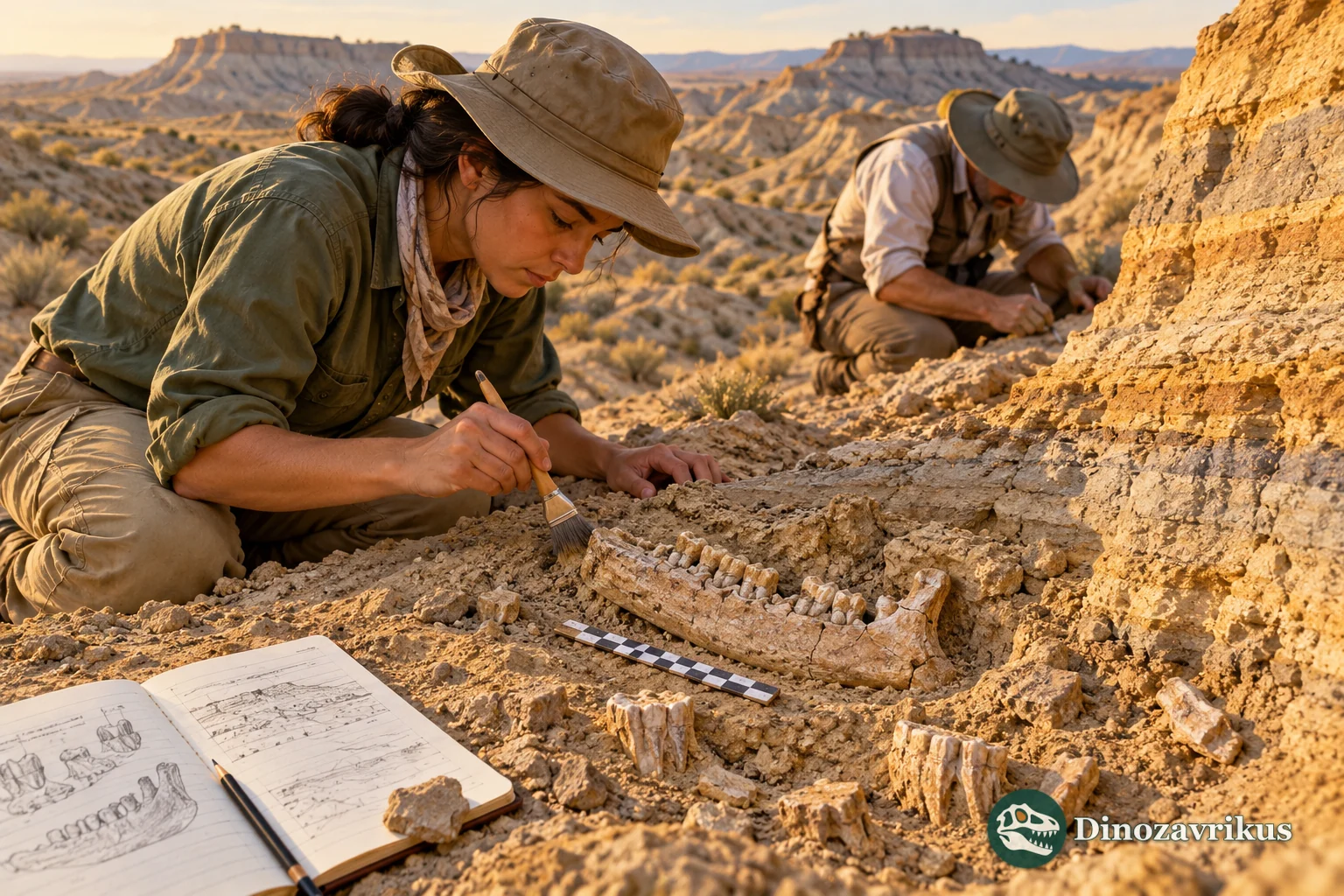
The broader Neogene Period includes the Miocene diversification of horses. Acritohippus contributes to that branching history without turning it into a simple ladder. The cover keeps the three-toed condition visible, while its fur, vegetation and particular stance remain reconstruction.
Frequently asked questions
Were Acritohippus and Merychippus the same animal?
No. Some species now placed in Acritohippus were historically assigned to a broad Merychippus. Comparative skull and tooth work separates them; the two whole genera are not synonyms.
Why does the skull AMNH FM 8175 matter?
It is the type material of a species originally called Hippotherium isonesum. Its preserved anatomy helps test the later identification as Acritohippus isonesus.
Did Acritohippus have a modern horse's hoof?
No. It was three-toed, with the central toe bearing most support and smaller side toes still present.
Was it exclusively a grass eater?
That cannot be established for every species and locality. Tooth wear reflects plant abrasion and external grit; it does not provide a complete, fixed menu.