

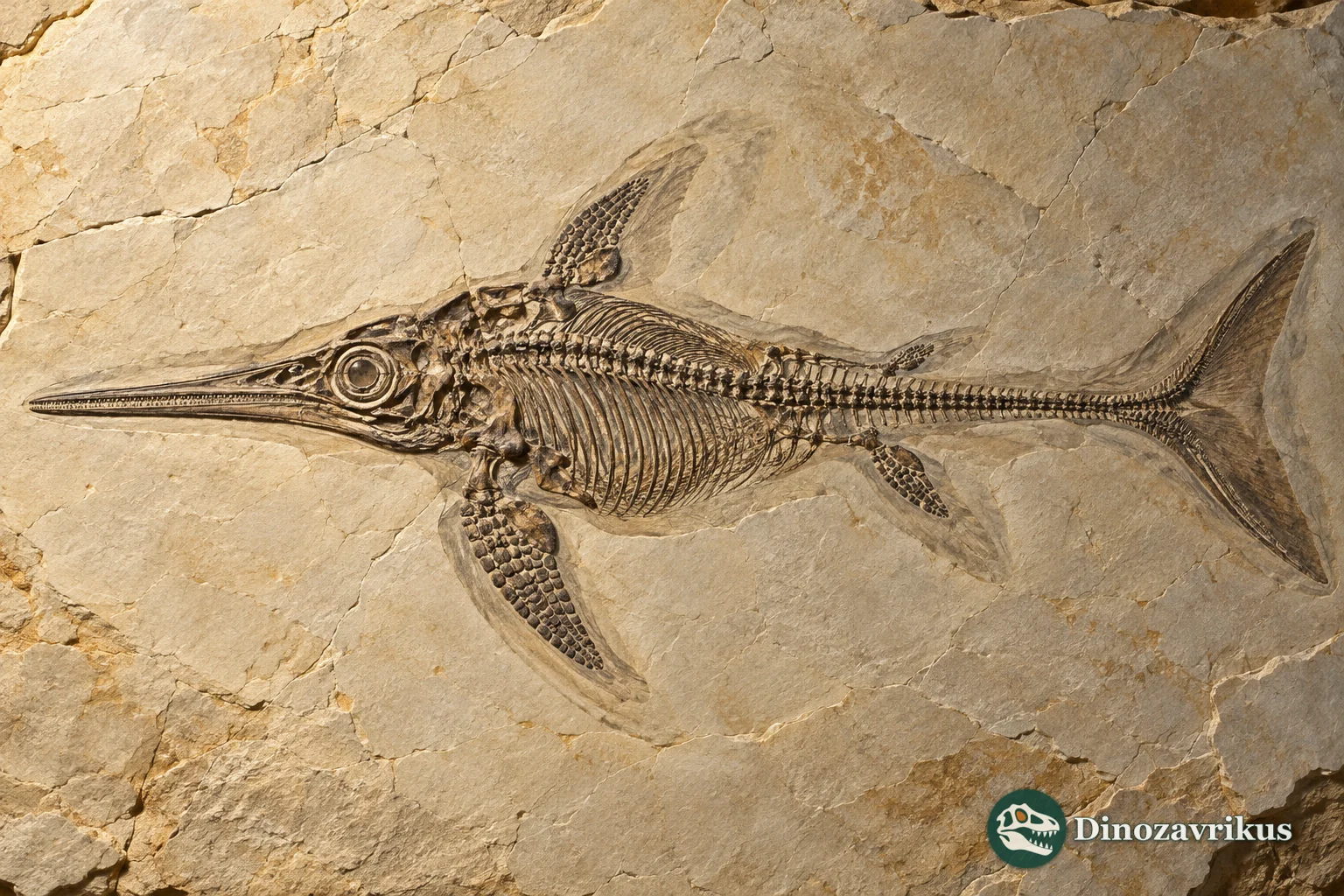
Aegirosaurus leptospondylus is best understood from a nearly complete ichthyosaur skeleton preserved in Bavarian lithographic limestone. Its long narrow snout, small pointed teeth and traces of soft tissue make it unusually informative about the outline of a Late Jurassic marine reptile.
The taxonomic story changed in 2026. Several specimens long grouped under this name were assigned to another genus, while a French Early Cretaceous jaw received a less specific identification. The Bavarian neotype remains the secure reference for Aegirosaurus.
Quick facts
| Type species | Aegirosaurus leptospondylus (Wagner, 1853) |
|---|---|
| Genus established | Bardet and Fernández, 2000 |
| Group | Ichthyosauria, Ophthalmosauria |
| Secure age | Early Tithonian, Late Jurassic |
| Neotype | SM skeleton from Langenaltheim, Bavaria |
| Neotype length | About 1.77 m; not a species maximum |
| Preserved | Nearly complete skeleton and soft-tissue outlines |
What can the fossils tell us?
The Bavarian SM neotype measures about 1.77 m and retains soft-tissue outlines around limbs and tail. These traces do not reveal pigmentation or behaviour.
A 2026 study removed SNSB-BSPG 1954 I 608 and other referred material from Aegirosaurus, assigning part to Jabalisaurus tethyensis. The neotype itself stays with Aegirosaurus.
RGHP LA 1 was identified as Aegirosaurus sp. in 2011. The 2026 revision follows a broader Ophthalmosauria indet. identification, leaving definitive Aegirosaurus in Late Jurassic Germany.
From lost type to Bavarian neotype
Wagner named Ichthyosaurus leptospondylus in 1853. Its original type was destroyed in the Second World War, although tooth sections survive. Bardet and Fernández established Aegirosaurus in 2000 and designated the SM skeleton from Langenaltheim as neotype.
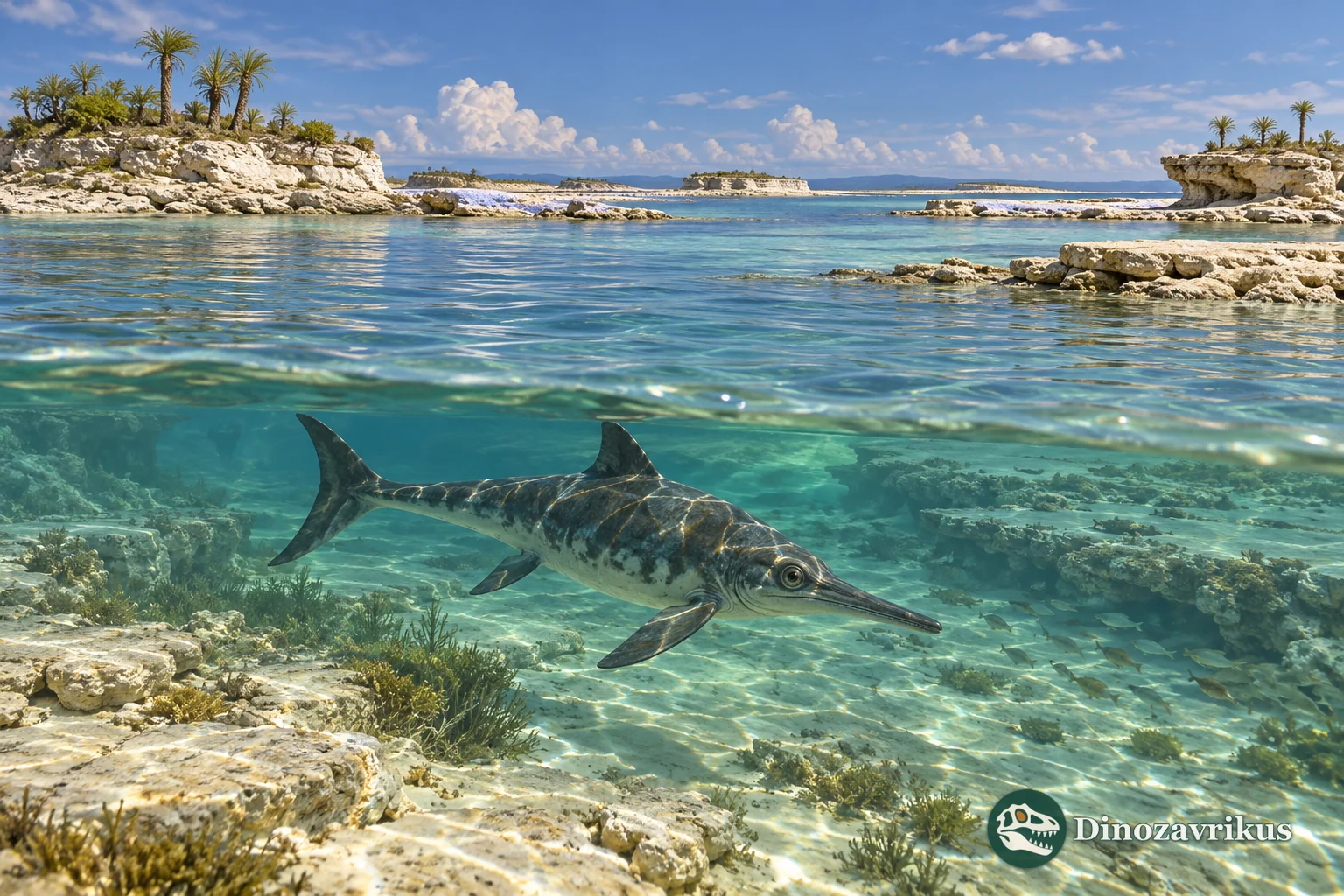
The neotype is about 1.77 m long. That is a measured specimen length, not a demonstrated maximum for the species. Soft-tissue impressions occur around the forelimbs, hind limbs and tail, constraining parts of the outline without preserving color or an exact living scene.
A slender snout and complex forefin
The neotype combines a notably long slender snout, moderate orbit and many small pointed teeth. The revised diagnosis also uses skull sutures, enamel ridges and forefin elements. Such characters separate it from a similar-looking Ophthalmosaurus; a fish-shaped silhouette alone cannot identify a genus.
Tooth shape suggests grasping comparatively small prey, but stomach contents have not established a menu for the neotype. Propulsion by the tail and steering with flippers follow the general ichthyosaur body plan; no track records the movements of this animal.
The 2026 reassessment
Maxwell, Neumann and Serafini re-examined Bavarian material and transferred the specimen SNSB-BSPG 1954 I 608 and other former referrals to Jabalisaurus tethyensis. Their comparison draws on skull proportions, teeth and limb anatomy. This revision changes the membership of the old sample, not the identity of the SM neotype.
The French Valanginian jaw RGHP LA 1 was called Aegirosaurus sp. in 2011. The newer study accepts a more cautious Ophthalmosauria indet. label. Definitive Aegirosaurus therefore remains a German Late Jurassic taxon, and a Tithonian-to-Valanginian range copied from older lists overstates the evidence. The neotype comes from the early Tithonian of the Jurassic period.
Frequently asked questions
What is the difference between the holotype and neotype?
The original specimen was lost during the Second World War. The SM skeleton is a later designated reference that fixes use of the name.
How large was Aegirosaurus?
The measured neotype is about 1.77 m long. A single skeleton does not establish the maximum size of the species.
Why are some old Aegirosaurus fossils now called Jabalisaurus?
A 2026 comparison found differences in skull, tooth and limb features and assigned part of the former material to Jabalisaurus tethyensis.
Is Aegirosaurus securely known from Early Cretaceous France?
No. The French Valanginian jaw once assigned to Aegirosaurus is now identified more cautiously as an indeterminate ophthalmosaurian.