

Aerodraco sedgwickii is a toothed pterosaur known from the front of an upper jaw found in eastern England. Richard Owen named it Pterodactylus sedgwickii in 1859; a reassessment of the jaw in 2020 established Aerodraco as a separate genus.
Its entry in the pterosaur catalogue illustrates how a small fossil can carry diagnostic information while leaving most of an animal unknown. The genus has also moved between proposed anhanguerid subgroups as researchers have revised their phylogenetic analyses.
Quick facts
| Scientific name | Aerodraco sedgwickii |
|---|---|
| Group | Toothed pterodactyloid; anhanguerid placement is analysed phylogenetically |
| Fossil age | Late Albian; reworked into Cenomanian sediment |
| Locality | Cambridge Greensand, Cambridgeshire, England |
| Holotype | CAMSM B54422, anterior upper-jaw fragment |
| Body size | Wingspan cannot be measured from the holotype |
What can the fossils tell us?
CAMSM B54422 preserves the anterior rostrum and alveoli from tooth pairs one to seven. It supports a diagnosis from jaw shape and socket proportions, not a complete skull or body-size estimate.
The Cambridge Greensand was deposited in the early Cenomanian, but many phosphatised fossils were reworked from older, late Albian deposits. The holotype is treated as Albian in age within a Cenomanian horizon.
Holgado and Pêgas (2020) placed Aerodraco among coloborhynchines; Pêgas (2025) recovered it among tropeognathines. Phylogenetic placement can change as datasets and clade definitions change.
A Victorian specimen with a long taxonomic history
Richard Owen described the species as Pterodactylus sedgwickii in 1859. The holotype, CAMSM B54422, is an anterior portion of the upper jaw now held by the Sedgwick Museum of Earth Sciences in Cambridge. It preserves seven pairs of tooth sockets. A separate lower-jaw fragment, CAMSM B54421, has sometimes appeared in older discussions, but it is not part of the holotype and has not been shown to belong to the same animal.
Later authors placed the species in Ornithocheirus and other groupings. In 2013, Rodrigues and Kellner reviewed the English Ornithocheirus complex and assessed the distinguishing traits of sedgwickii. In 2020, Borja Holgado and Rodrigo Pêgas erected Aerodraco for the species. The name refers to Harry Seeley’s book Dragons of the Air.
A diagnosis in the shape of the jaw
The holotype preserves an expanded front of the upper jaw that narrows abruptly behind the third pair of tooth sockets. The third pair is proportionally larger than the fourth, and paired rows of neurovascular openings flank the palatal ridge. This combination distinguishes Aerodraco in comparative studies; a dramatic whole-animal reconstruction does not provide the evidence for its name.
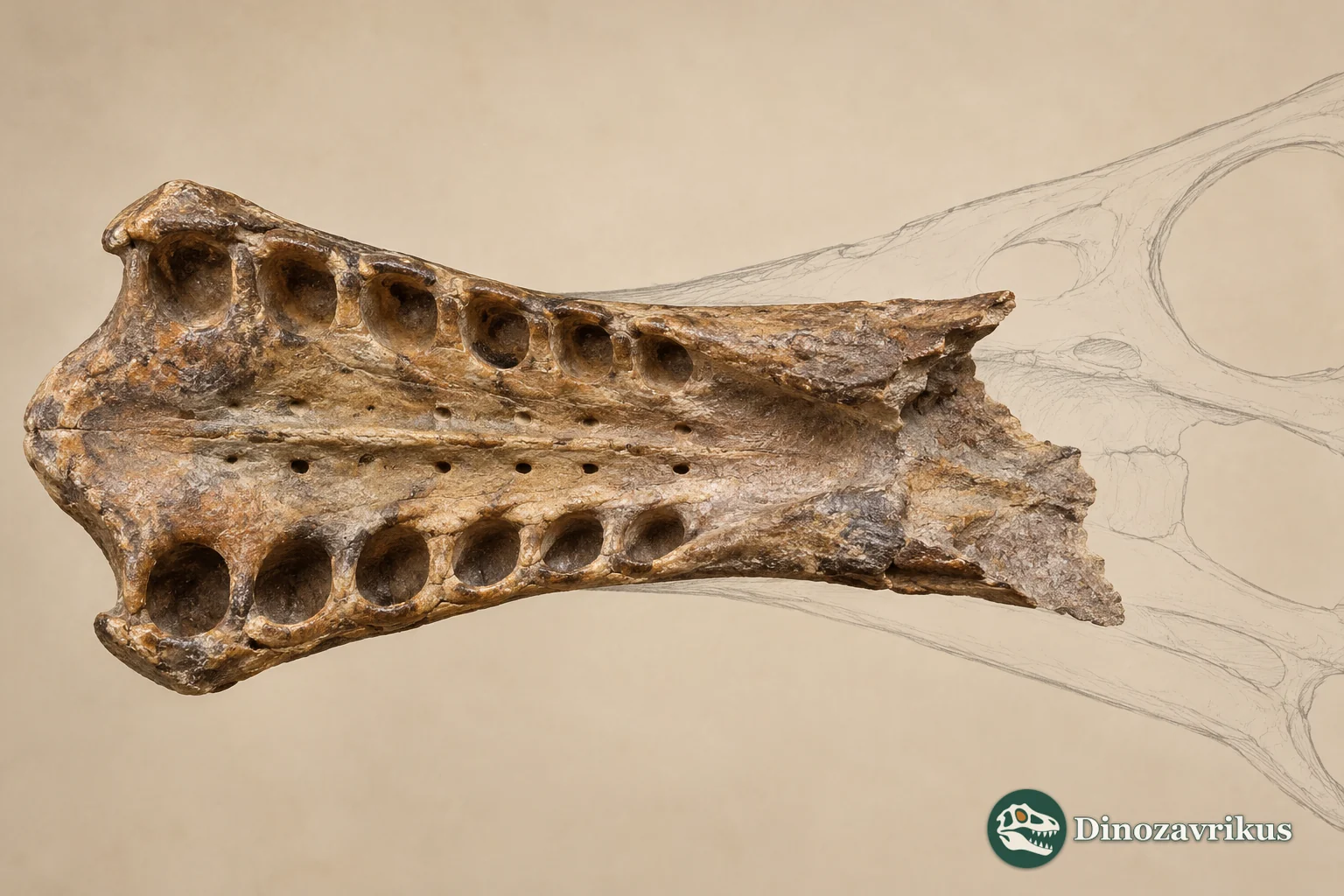
Other Cambridge Greensand fragments cannot simply be added to Aerodraco. The deposit contains many isolated pterosaur bones, some diagnostic for other taxa and others uncertain. A similar tooth row or general shape is not enough to establish that separated pieces belonged to the same genus.
Albian fossils in a Cenomanian deposit
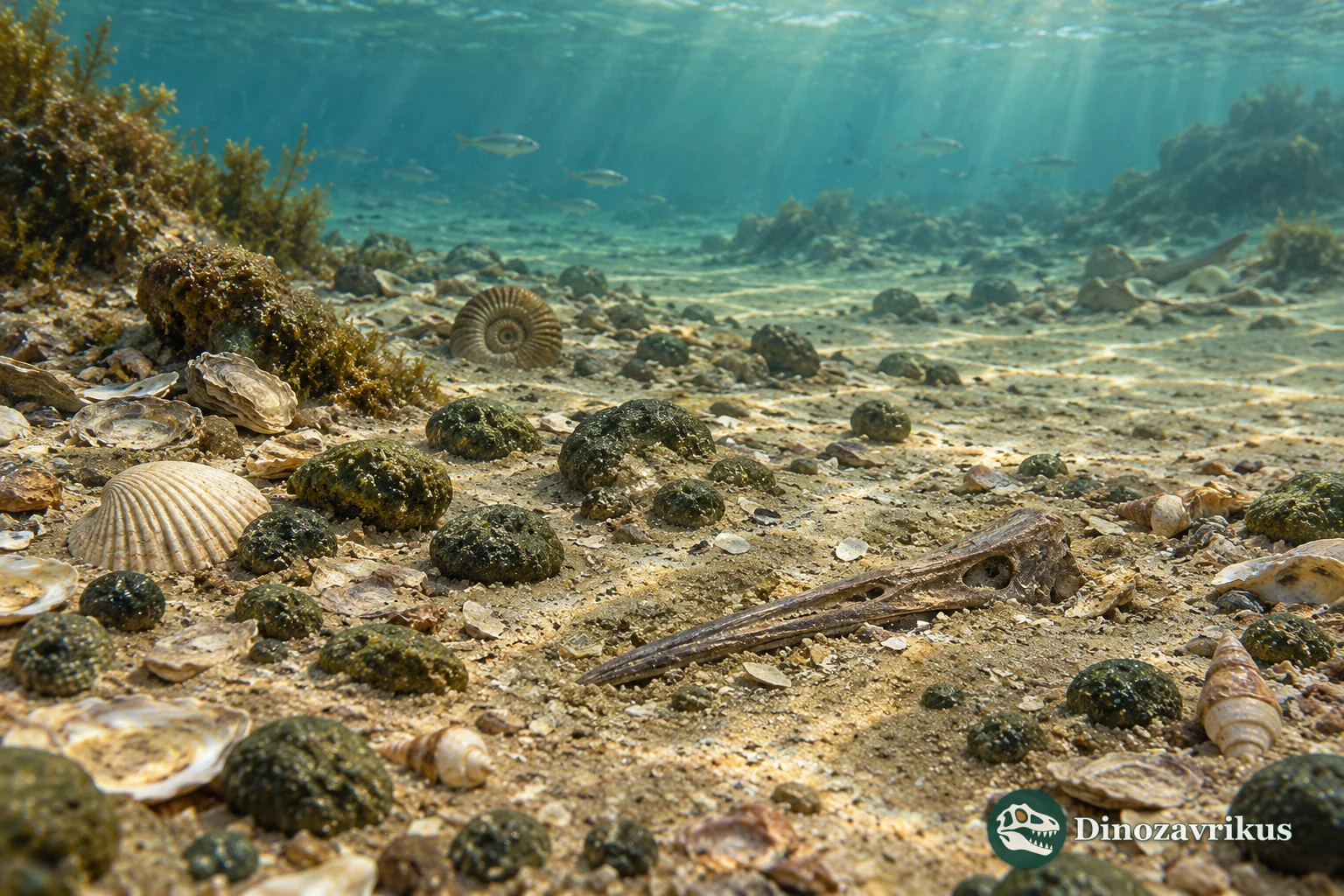
The Cambridge Greensand Member was deposited in the early Cenomanian, but its basal phosphatic concentration includes many fossils eroded from older upper Albian rocks and redeposited. CAMSM B54422 is treated as Albian material within a Cenomanian horizon. The age of the fossil and the age of the rock around it therefore describe different events.
Reworking also means that the collection can mix remains from different times. It complicates attempts to reconstruct Aerodraco’s immediate environment: the holotype records anatomy, but does not by itself establish behaviour, diet or a precise habitat.
A newer hypothesis about its relatives
Holgado and Pêgas placed Aerodraco in Coloborhynchinae in 2020. In 2025, Pêgas analysed a larger ornithocheiriform dataset and recovered it in Tropeognathinae, closer to some pterosaurs from Morocco’s Kem Kem Group. This did not change the jaw or its diagnostic features; it changed the proposed interpretation of how those features relate to other pterosaurs.
Because the species is represented by one jaw fragment, its position depends on which characters can be scored and which comparative taxa are included. The 2025 placement is the newer published hypothesis, while the older coloborhynchine assignment explains the taxonomic history and should not be mistaken for an anatomical contradiction.
What the jaw cannot tell us
No wing, vertebra or limb belongs to the holotype. Its wingspan cannot be measured, and estimates based on relatives depend on assumptions. The robust, toothed snout suggests a grasping apparatus, but a specific prey item or fishing behaviour has not been preserved.
An anhanguerid-like body plan is a reasonable artistic guide, not direct evidence of Aerodraco’s exact proportions, colour or flight style. The fragment is scientifically valuable precisely because a few measurable features can support a taxonomic diagnosis, even while most of the animal remains unknown.
Frequently asked questions
Why was Aerodraco once called Pterodactylus sedgwickii?
In the nineteenth century, many unrelated pterosaurs were placed in the broad genus Pterodactylus. Later anatomical comparisons showed that this species belonged in its own genus.
What is the Aerodraco holotype?
CAMSM B54422 is the front of an upper jaw with seven pairs of tooth sockets. It is the only material on which the species is based.
Why is the fossil Albian if it came from Cenomanian rocks?
The early Cenomanian Cambridge Greensand contains many fossils reworked from older late Albian deposits. The age of the fossil differs from the age of the bed that contains it.
Which group does Aerodraco belong to?
Holgado and Pêgas placed it in Coloborhynchinae in 2020; Pêgas’s 2025 analysis recovered it in Tropeognathinae. These are competing phylogenetic placements.