

Afrohyrax was an extinct hyrax of the early Miocene. Unlike a taxon built on one isolated tooth, it can be examined through several skulls and jaws. The best discussed material comes from East Africa and Namibia, where two named species differ in cranial proportions and overall size.
It belongs in the ancient mammal catalogue. Sharing the hyrax order with living species does not make it a demonstrated direct ancestor of any living hyrax.
Quick facts
| Type species | Afrohyrax championi (Arambourg, 1933) |
|---|---|
| Genus established | Martin Pickford, 2004 |
| Family | Titanohyracidae, extinct hyraxes |
| Age | Early Miocene |
| Named species | A. championi and A. namibensis |
| Fossils | Skulls, jaws and teeth |
What can the fossils tell us?
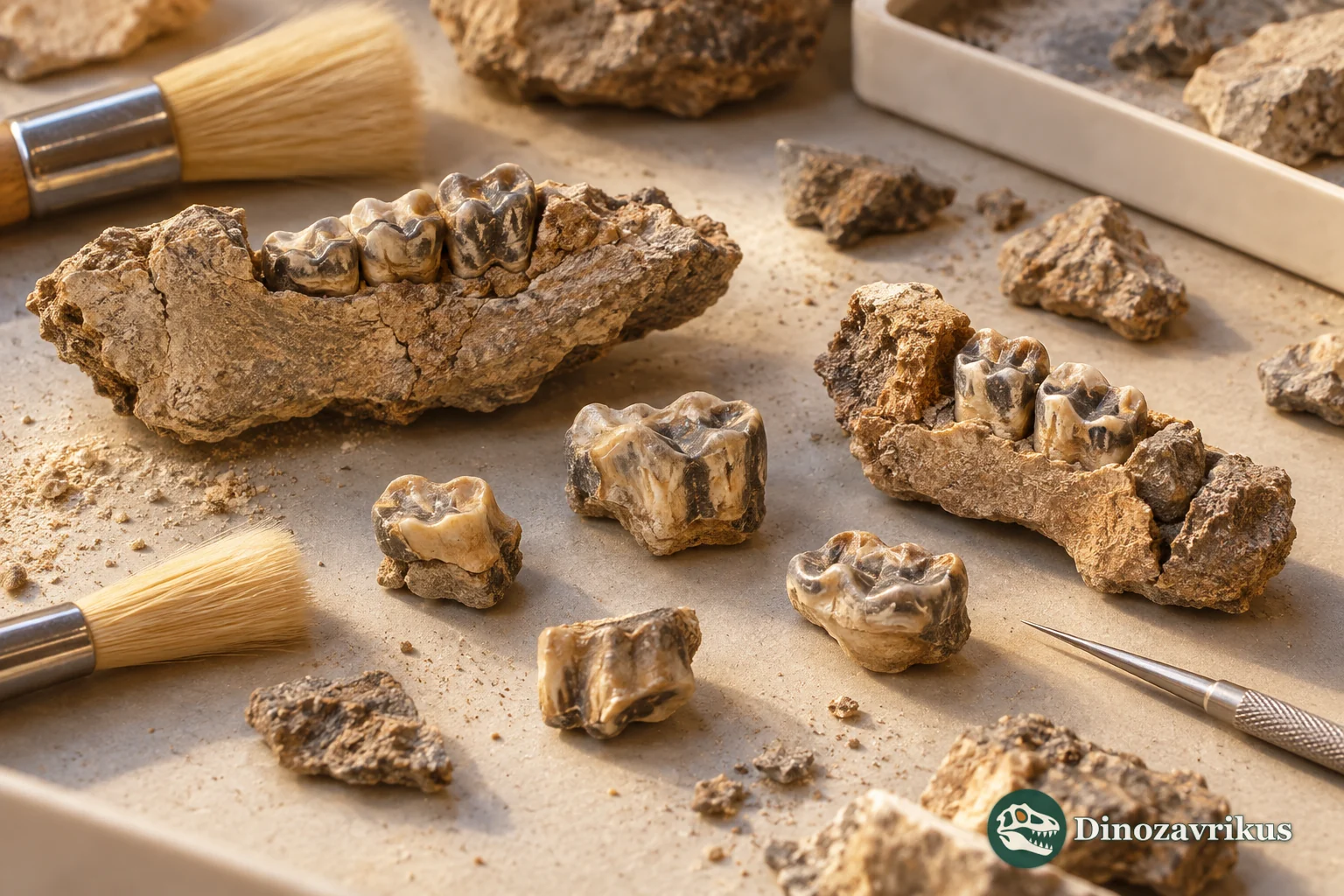
The A. championi material from Rusinga includes skulls and teeth. It records the snout, orbits and incisors, but cannot preserve fur color or the entire living outline.
The type of A. namibensis is snout fragment GSN GT 30’04. Referred skull GSN EF 10’17 and maxilla GSN FS 1’08 support comparisons, but are not parts of one individual.
Differences among A. championi skulls have been interpreted as sexual dimorphism. Individual variation, age and limited samples still matter.
How the genus was separated
Camille Arambourg described the species championi in 1933. Later authors placed related fossils under several older hyrax genera, including Megalohyrax and Pachyhyrax. Martin Pickford erected Afrohyrax in 2004 during a revision of Miocene hyracoids. A historical change of combination is not an additional fossil species.
Three skulls of A. championi were described from Rusinga Island in Kenya. London Natural History Museum specimens NHMUK M 21294 and M 21295 are among those comparisons. The broader eastern record includes other Kenyan sites, Uganda and Arabian material compared with the species. Each occurrence requires its own identification and geological context.
A second species in Namibia
A. namibensis, named by Pickford in 2008, is documented from the Sperrgebiet of Namibia. The holotype GSN GT 30’04 is a fragment of the snout from Grillental 6. A partial skull GSN EF 10’17 comes from Elisabethfeld, and maxilla GSN FS 1’08 from Fiskus. The numbers identify distinct specimens, not a composite skeleton.
The Namibian form is larger than the East African A. championi material in the published comparison. Its upper incisors and cheek teeth provide taxonomic characters. Differences in tooth size and crown form must be assessed against wear and position in the jaw; no single drawing supplies a reliable body mass for all individuals.
What skulls reveal and what they do not
Molar and incisor shape help reconstruct how the animal processed plants, and comparisons with other hyracoids support a herbivorous interpretation. The fossils do not identify every plant eaten, a preferred time of day, or exact social behavior. The age of each occurrence comes from its sedimentary setting and associated fauna rather than a date stamped on the tooth.
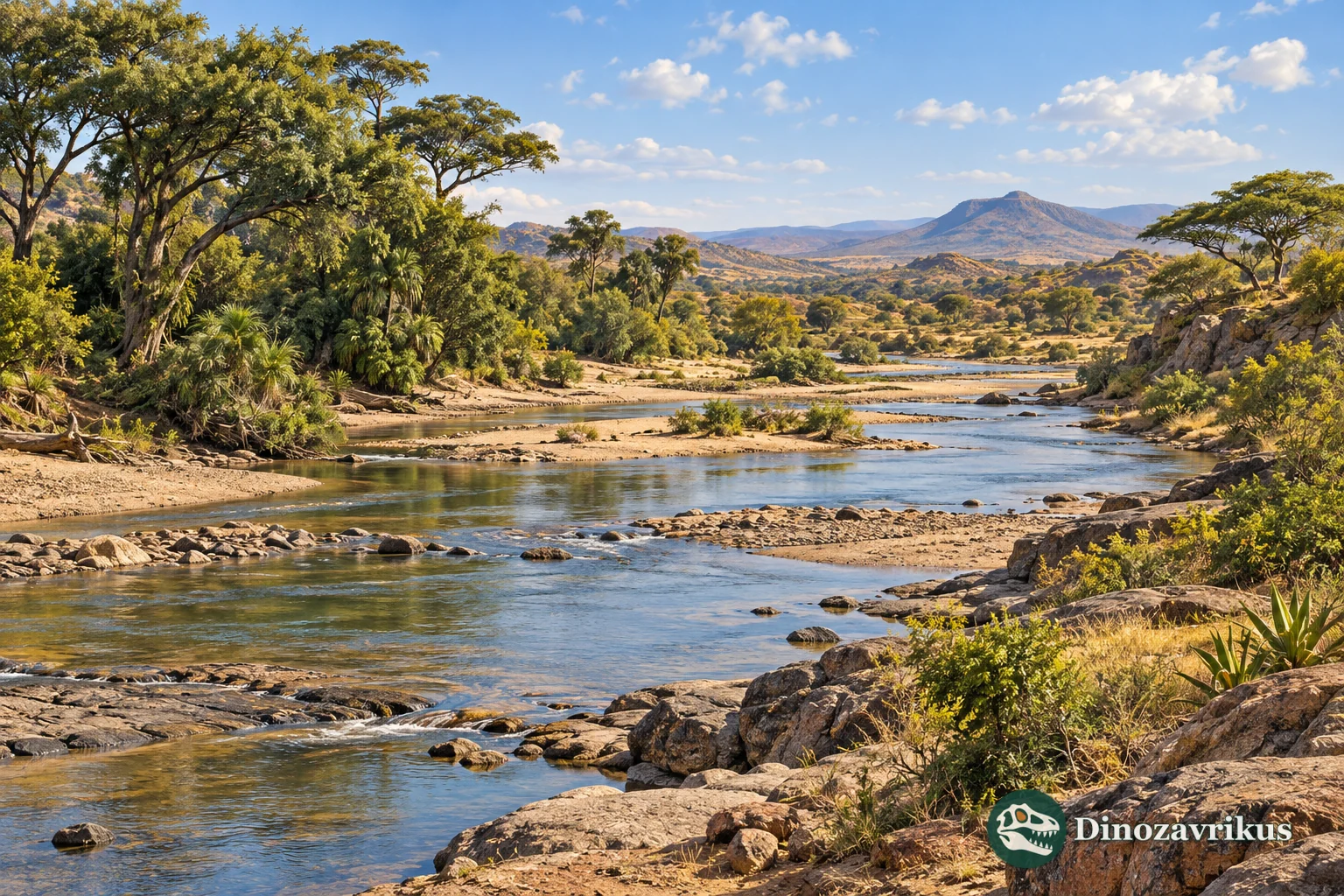
Variation in upper incisors and parts of the skull has been discussed as possible sexual dimorphism. Living hyraxes offer a useful comparison, but the sex of every fossil skull has not been verified. The cover and river scene show a plausible animal in a plausible setting; fur, ears and color remain artistic choices.
Frequently asked questions
What kind of animal was Afrohyrax?
It was an extinct member of Hyracoidea, placed within the extinct family Titanohyracidae.
Where were the A. championi skulls found?
Three skulls were described from Rusinga Island in Kenya; NHMUK M 21294 is one of the London museum specimens.
What distinguishes the Namibian species?
A. namibensis is generally larger than A. championi in the published cranial comparisons, but a precise body mass is not established.
Can fossil skulls reveal whether each animal was male or female?
Differences in incisors and skull shape suggest possible sexual dimorphism. Age and individual variation mean the sex of every specimen remains uncertain.