

Agnostus is best known from the Cambrian species A. pisiformis. Open shells show just two movable segments between two rounded shields. Swedish limestones preserve juvenile appendages in enough detail to follow changes that normally leave no trace in the fossil record.
Quick facts
| Group | Arthropoda, Agnostida |
|---|---|
| Type species | Agnostus pisiformis |
| Age of the Swedish material | Latest Guzhangian, Cambrian |
| Adult length | About 1 cm in A. pisiformis |
| Thorax | Two movable segments |
| Exceptional material | Phosphatised juvenile anatomy from Västergötland |
What can the fossils tell us?
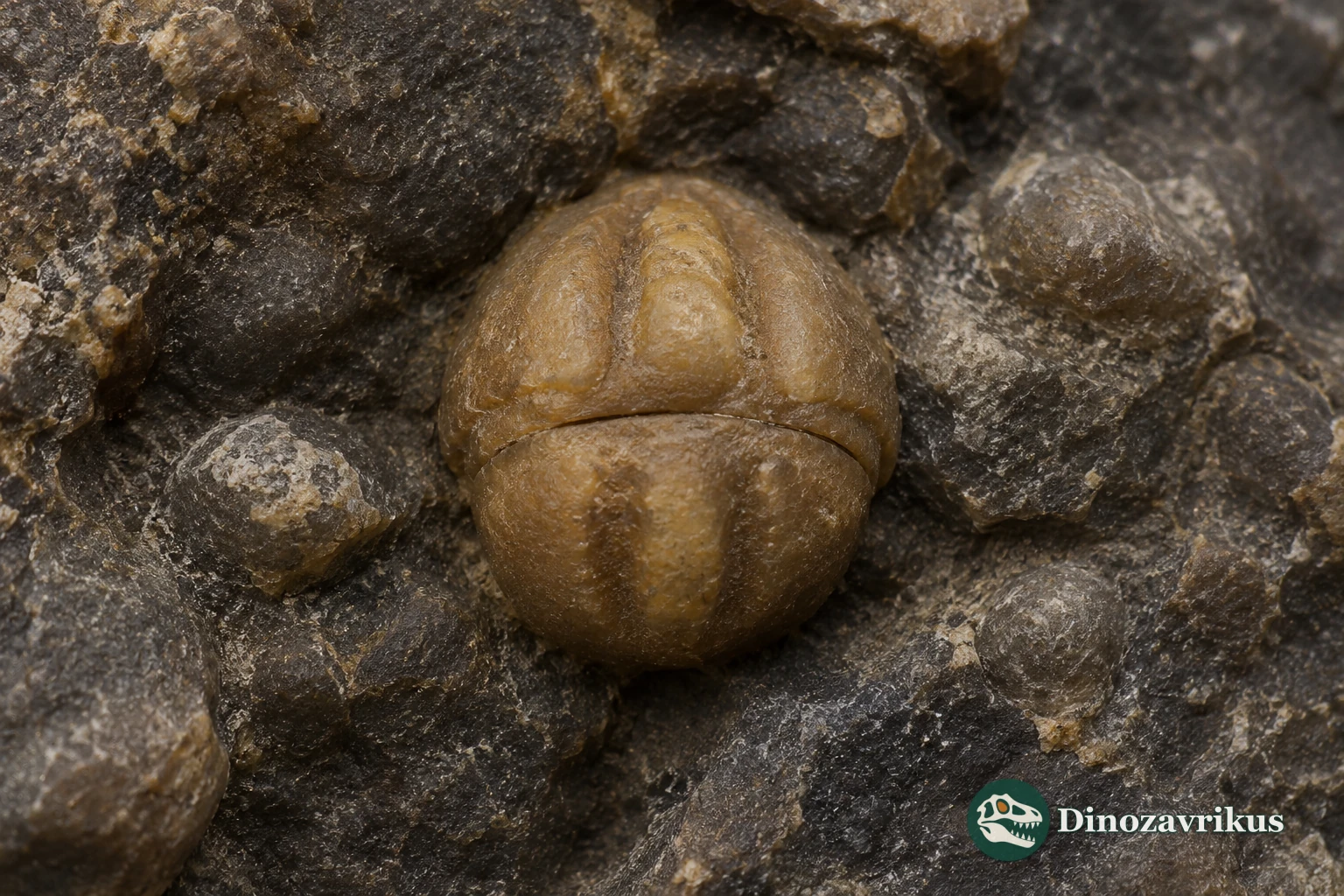
Two movable thoracic segments separate the head and tail shields. The enrolled shell resembles a tiny pea.
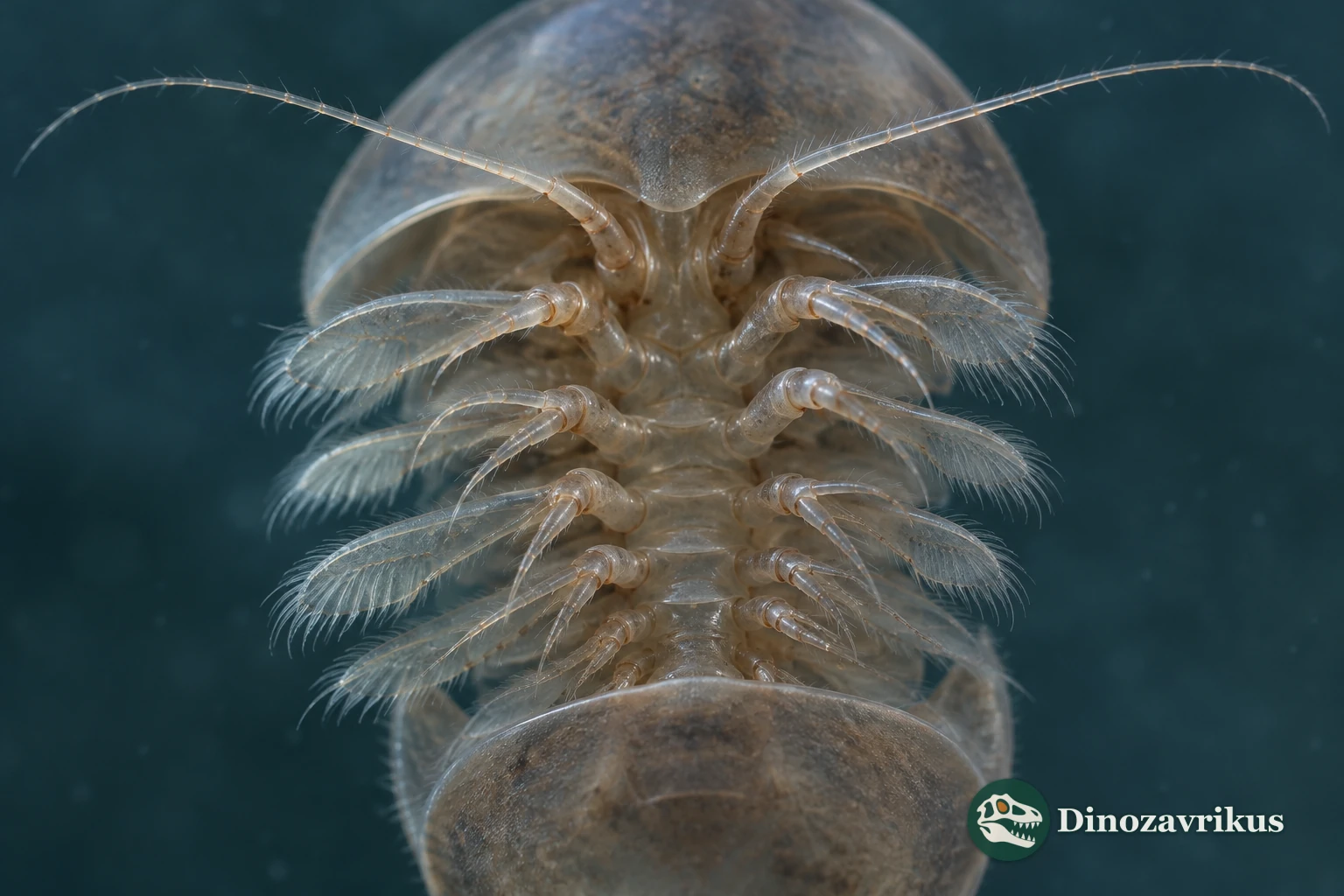
The juveniles retain antennae, joints and bristle bases. Different growth stages record changes in the limbs.
The zone correlates near the top of the Guzhangian. Another agnostid marks the base of the younger Furongian.
Names and Swedish specimens
Adolphe Brongniart established Agnostus in 1822. The type species is A. pisiformis, described by Göran Wahlenberg in 1818. Earlier literature sometimes credited Carl Linnaeus, who wrote about similar fossils before Wahlenberg. The lectotype, PM Vg819a, is a head shield from Västergötland. The associated type series also includes a separately figured tail shield, PM Vg819b.
Some superficially similar forms have been reassigned. The form formerly called Agnostus pisiformis obesus, for example, is now placed in Homagnostus. The length and outline of the tail axis help distinguish such fossils.
Two shields and a short thorax
An adult A. pisiformis was about a centimetre long. The head and tail shields are similar in size, and there are no visible dorsal eyes. Two freely articulating thoracic segments lie between the shields. Enrolment brings their rounded edges together, helping enclose the underside.
In black shale the shells are often flattened. Limestone nodules preserve them in three dimensions, sometimes enrolled. The species gives its name to a fossil zone correlated near the top of the Guzhangian. Older literature often refers to these rocks as Upper Cambrian.
The appendages of young Agnostus
Klaus Müller and Dieter Walossek studied more than a hundred phosphatised specimens from limestone nodules in Västergötland, extracted by dissolving the carbonate matrix. The underside preserves antennae and differentiated limbs with branches and bristles. A growth series records the appearance of two free thoracic plates.
The appendages prompted debate about the place of agnostids among arthropods. Related species from the Burgess Shale show a mixture of characters, and one analysis of those fossils placed agnostinids close to the other trilobites. The appendages permit hypotheses about swimming. Enrolled fossils alone cannot show how much time Agnostus spent above the seabed.
Frequently asked questions
Why is the type species called pea-shaped?
Its two rounded shields close together during enrolment, making the shell resemble a small pea.
How large was an adult Agnostus?
Adults of A. pisiformis were about one centimetre long.
How did its fine appendages survive?
Phosphate mineralisation preserved the cuticle of some small individuals. Dissolving the surrounding limestone releases the three-dimensional fossils.
Did Agnostus live in the water column?
Swimming is one interpretation of its appendages. The fossils cannot establish whether it spent most of its time in open water or near the seabed.