

Akanthosuchus langstoni was a small alligatoroid from Paleocene New Mexico. Its best specimen preserves more than two hundred osteoderms, bones that formed in the skin. They include near-flat plates and plates with blunt conical spikes. Their positions on the living animal remain uncertain.
Quick facts
| Species | Akanthosuchus langstoni |
|---|---|
| Group | Alligatoroidea |
| Age | Paleocene, Torrejonian for the type |
| Locality | Nacimiento Formation, San Juan Basin, New Mexico |
| Holotype | NMMNH P-8628, incomplete skeleton and osteoderms |
| Age of type individual | At least eight years from osteoderm growth marks |
What can the fossils tell us?
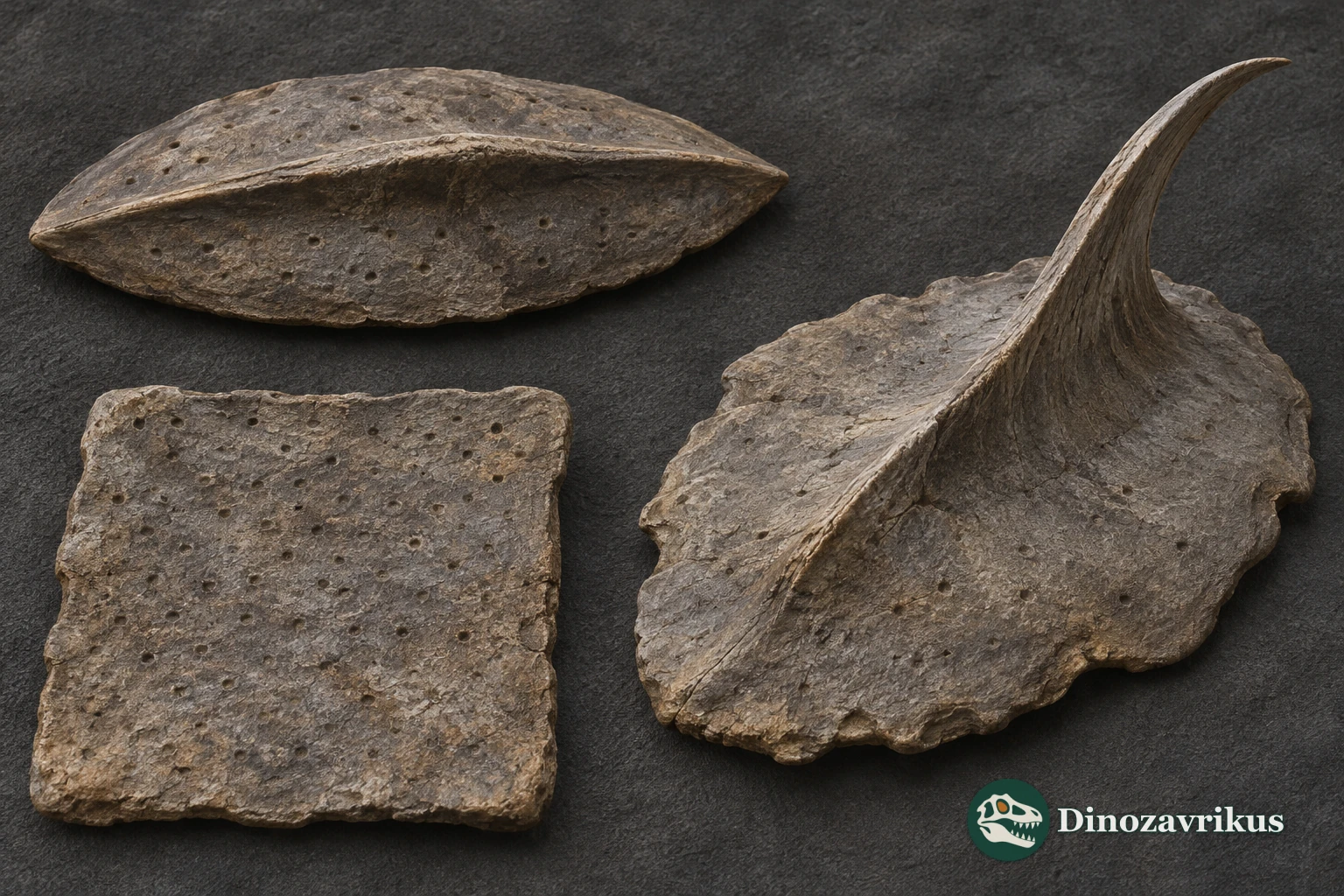
The plates include square and oval pieces, conical spikes and blade-like crests. They were found disarticulated, so their positions in the skin remain uncertain.
A thin section of an osteoderm gives a minimum age for the type individual. The growth limit of the species cannot be inferred from one fossil.
Comparisons place the genus within Alligatoroidea. Relationships within that group are unresolved because head material is restricted to a jaw fragment.
A skeleton from the San Juan Basin
Michael O’Neill, Spencer Lucas and Barry Kues named Akanthosuchus in 1981 from the Nacimiento Formation. The type, NMMNH P-8628, is held at the New Mexico Museum of Natural History and Science. It includes a complete hind limb, 28 vertebrae, a jaw fragment and more than two hundred osteoderms.
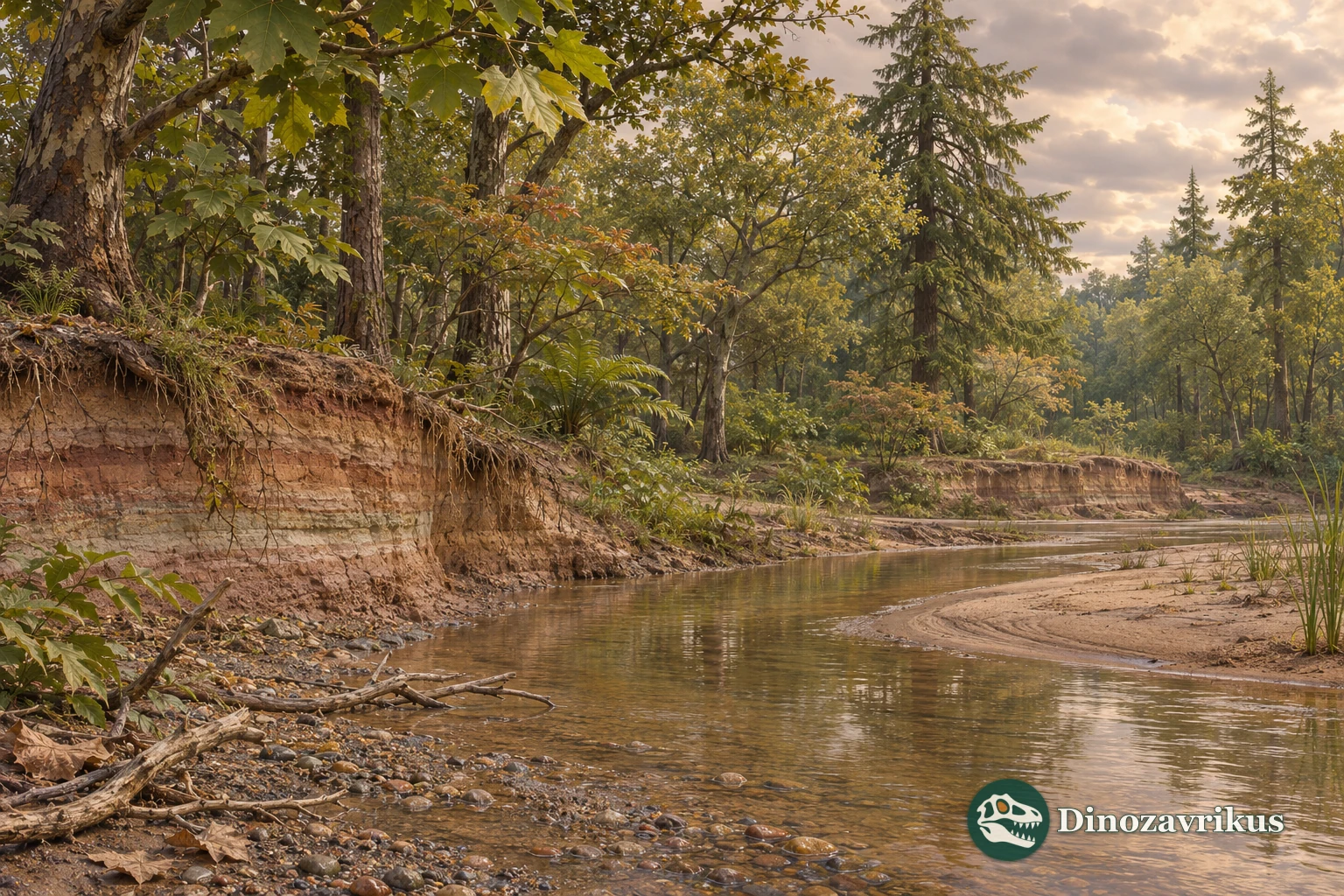
Other finds include isolated bones and plates. The formation contains mudstones and sandstones laid down in fluvial and lake settings. Without a complete skull, the appearance of the head and the diet remain open questions.
Flat plates, crests and spikes
In some osteoderms a blunt cone projects from the base. Another form has a tall, curved blade-like ridge. Most oval plates have a lengthwise keel, while square plates usually remain nearly flat. Small shallow pits mark their outer surfaces.
Spiked plates account for about 60% of the type specimen’s osteoderms. The bones were found close together, and their size and preservation support assignment to one individual. The plates were disarticulated when found, leaving their exact positions on the animal unknown.
What thin sections reveal
Robert Hill and Spencer Lucas examined osteoderms under a microscope. The compact surface bone of an oval plate preserves eight zones separated by growth marks. They estimated a minimum age at death of eight years. The study could not tell whether the individual had finished growing.
Characters of the jaw fragment and the rest of the preserved skeleton support an alligatoroid placement, but its closest relatives remain uncertain. An early suggestion linked these bones to Ceratosuchus, a Paleocene alligatoroid known from skulls. The later analysis did not support merging the two genera.
Frequently asked questions
What were the spikes made of?
They were bony projections on osteoderms that formed within the skin.
Can the plates be fitted back onto the body?
The plates were found disarticulated. Their shapes are known, but their precise positions on the body remain uncertain.
How old was the type individual?
Growth zones within an osteoderm indicate a minimum age at death of eight years.
Which rock unit yielded Akanthosuchus?
The Paleocene Nacimiento Formation of the San Juan Basin, New Mexico.