

Akialoa was an extinct genus of Hawaiian honeycreepers in the finch family. Both halves of the long, curved bill extended nearly the same distance. Museum skins document four historically known island species, while a named fifth species is known from fossils.
Quick facts
| Type species | Akialoa obscura |
|---|---|
| Family | Fringillidae, Hawaiian honeycreepers |
| Range | Hawaiian Islands |
| Period | Holocene, including historical times |
| Distinctive feature | Long, downcurved bill |
| Evidence | Museum skins, observations and fossils |
What can the fossils tell us?
In akialoas the two halves of the bill are almost the same length. In Hawaiian nukupuʻu, the lower part is much shorter than the upper.
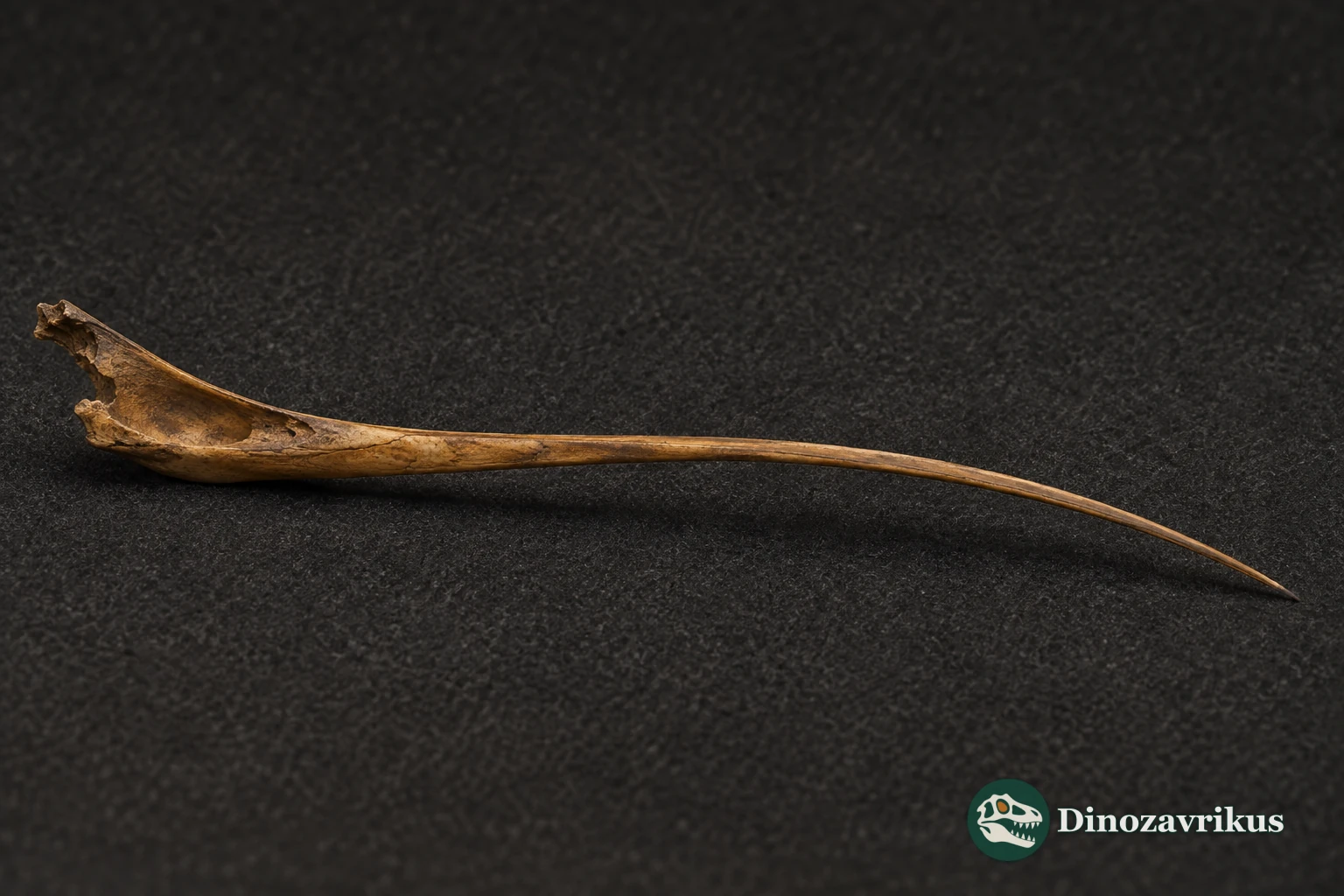
USNM 254171 is a mandible from the Makawehi dunes on Kauaʻi. It preserves features that distinguish the fossil species.
The last confirmed Kauaʻi observation was in 1965. A report in 1969 could not be confirmed, and subsequent surveys failed to find the bird.
Four historically known island forms
Storrs Olson and Helen James established Akialoa in 1995. The birds had often been placed with other long-billed honeycreepers in Hemignathus. They chose Akialoa obscura from Hawaiʻi Island as the type species. The first known specimens of that form were collected on Cook’s third voyage in 1779.
In 2015 the American Ornithologists’ Union recognised four historical species. The others were Akialoa ellisiana from Oʻahu, A. lanaiensis from Lānaʻi and A. stejnegeri from Kauaʻi. The Lānaʻi bird is known from three skins collected in 1892. Fossil material from Maui and Molokaʻi has been tentatively associated with it.
The bill in use
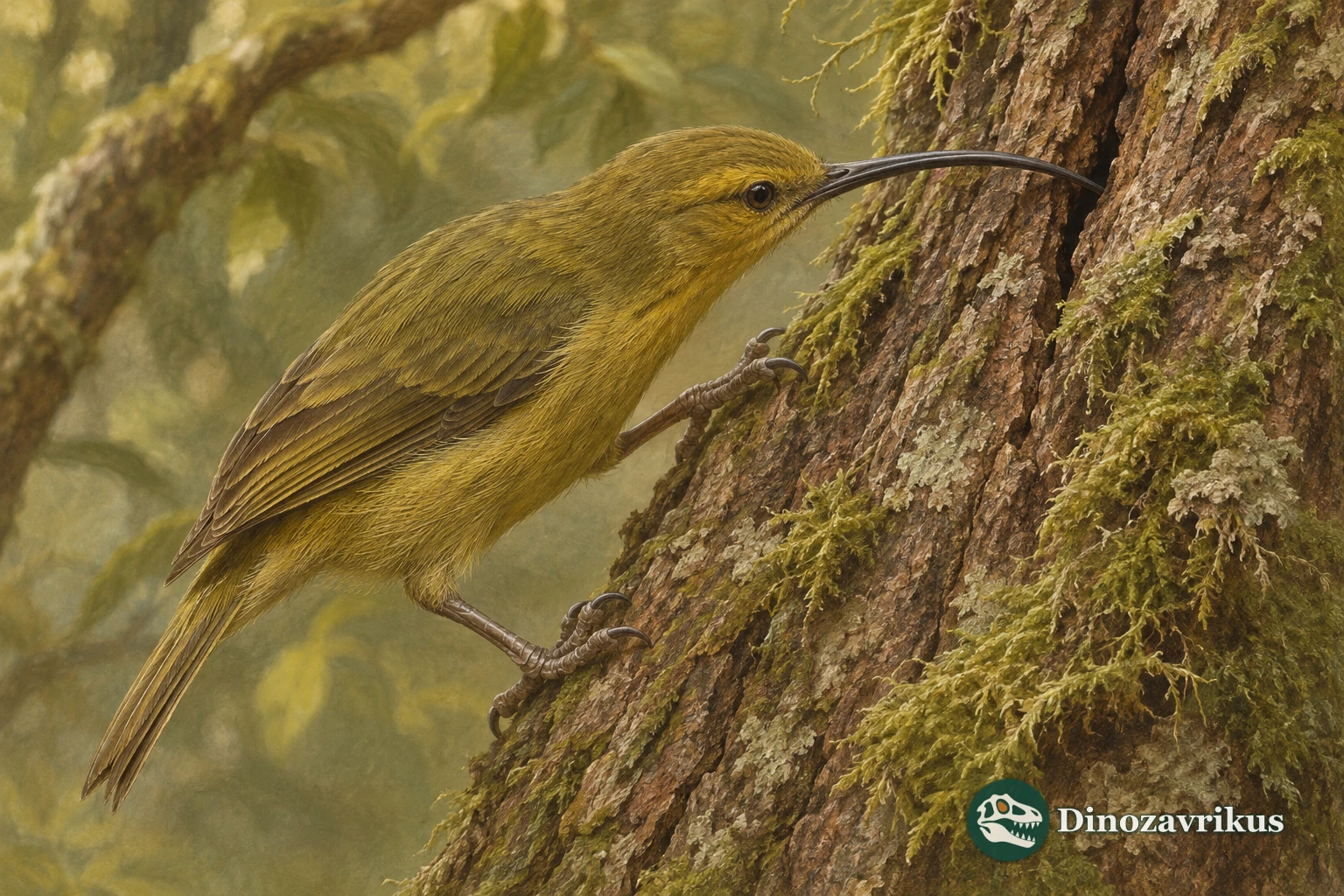
Observers on Kauaʻi saw the birds probe bark, moss, epiphytes and decaying wood on trees such as ōhiʻa and koa. The bill could reach small invertebrates concealed in crevices. Historical accounts also mention nectar feeding. The details principally concern the Kauaʻi form, whose relatives were observed less thoroughly.
A specimen of the Kauaʻi form was collected in 1960. The last confirmed observation was in 1965. Surveys subsequently failed to find it. The federal extinction assessment considered loss of forest and introduced diseases among several pressures. The date of the final individual’s death is unknown.
A species described from dunes
James and Olson named the fossil species in 1991. It was later called Akialoa upupirostris. Its type, USNM 254171, is an incomplete lower jaw recovered from the Makawehi dunes in 1976. The researchers also referred material from Oʻahu. Hawaiian subfossil sites preserve other extinct birds as well, including the flightless ibis Apteribis.
Frequently asked questions
How many species of Akialoa were there?
Four named species are known from historical material. A fifth, Akialoa upupirostris, was described from fossils.
What was the long bill used for?
The Kauaʻi bird probed crevices, moss and dead wood for invertebrates. Historical accounts also report visits to flowers.
When was the Kauaʻi ʻakialoa last seen?
The last confirmed observation was in 1965. A 1969 report remained unconfirmed.
Do the fossils preserve the bird’s colour?
The fossil species is represented by bones, including the lower jaw. These preserve anatomical features but not plumage colour.