

Alamitophis was a small fossil snake in the extinct family Madtsoiidae. Two species are known from Late Cretaceous Patagonia. A third was described from early Eocene Australia. Separate ribs and a lower jaw fragment were also referred to the Australian species.
Quick facts
| Group | Snakes (Serpentes), madtsoiids |
|---|---|
| Age | Late Cretaceous and early Eocene |
| Region | South America, Argentina. Australia, Queensland |
| Type species | Alamitophis argentinus |
| Scientific name | Alamitophis |
| Diet | No direct evidence |
What can the fossils tell us?
The type species is based on MACN-PV RN 27 from Patagonia. The Australian species is based on QM F19729 from Tingamarra.
Comparisons use the proportions of the centrum and the shape of the keel underneath. The position of a vertebra along the body also matters.
The fossils are consistent with dispersal through Antarctica. They give no exact time or route for that movement.
The Los Alamitos fossils
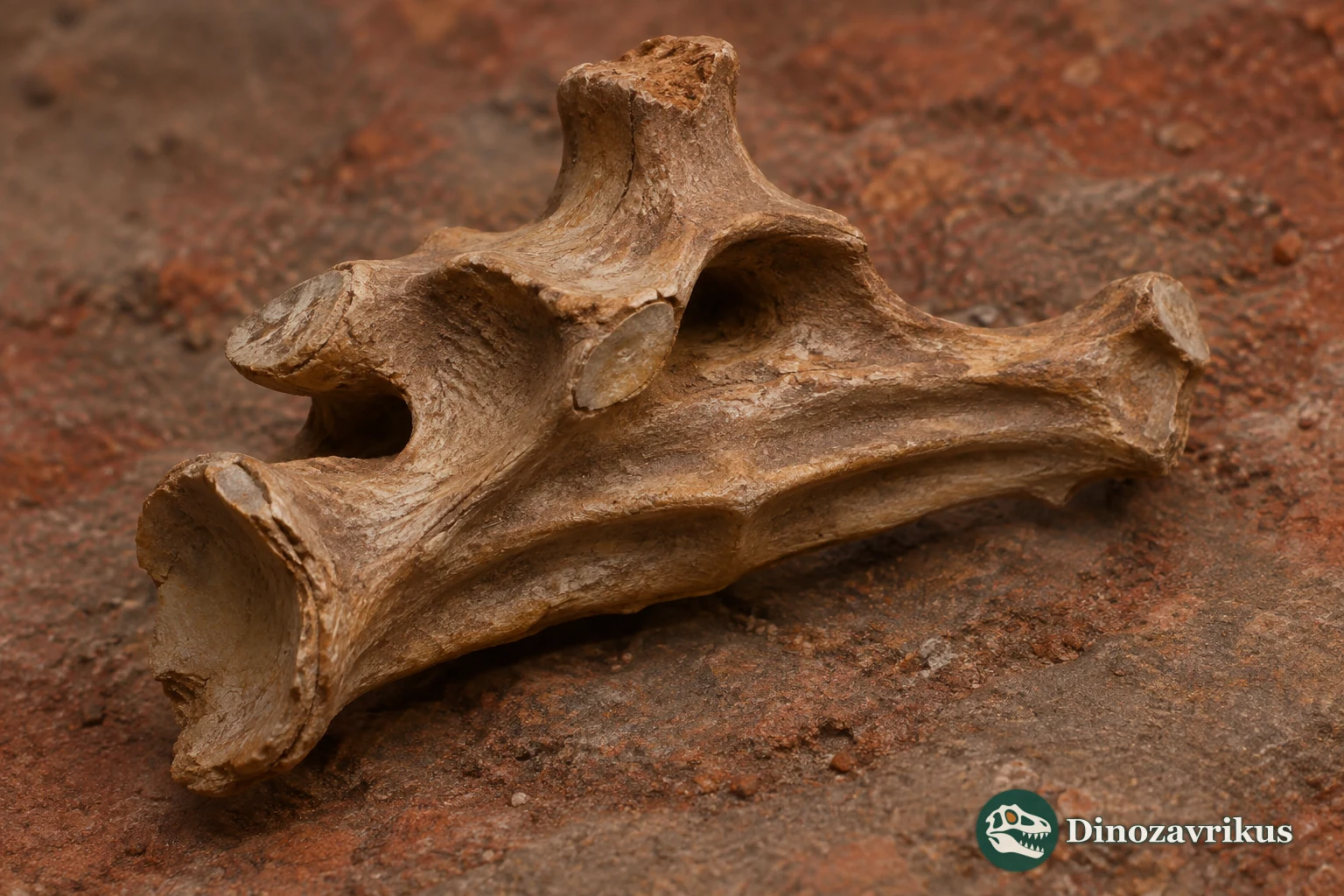
Adriana Albino named Alamitophis argentinus in 1986. Holotype MACN-PV RN 27 is a trunk vertebra from the Los Alamitos Formation in Río Negro Province. The same formation yielded type vertebra MACN-PV RN 38 of Alamitophis elongatus, named in 1994. The second species has a more elongated centrum and a marked central projection on the front edge of the zygosphene.
The Australian species from Tingamarra
John Scanlon named Alamitophis tingamarra in 2005 from early Eocene deposits near Murgon, Queensland. The holotype, QM F19729, is a posterior trunk vertebra. Other finds include vertebrae from different parts of the body. Separate rib fragments and the front of a right dentary were also referred to the species on comparative grounds.
What the distribution suggests
The resemblance between the South American and Australian forms is consistent with a geographic connection through Antarctica. The fossils come from different intervals and do not date the dispersal itself. Madtsoia represents another lineage in the same family and provides additional vertebral material for comparison.
Frequently asked questions
What does the name Alamitophis mean?
It combines Los Alamitos, the type locality in Patagonia, with a Greek word for snake.
How old are the fossils?
The Patagonian species are Late Cretaceous. The Australian species is early Eocene.
Which species has a fragment of jaw?
A fragment of the right dentary from Tingamarra was referred to the Australian species.
Have Alamitophis fossils been found in Antarctica?
The named species are based on fossils from Patagonia and Australia. Antarctica is a proposed route between them.