

Albionbatrachus was a European frog of the extinct family Palaeobatrachidae. A frontoparietal from England gave the genus its name. A similar skull-roof bone later turned up in Early Oligocene deposits in Romania, and high-resolution scans helped researchers compare the two fossils.
Quick facts
| Group | Frogs (Anura), palaeobatrachids |
|---|---|
| Age | Late Eocene and Early Oligocene |
| Region | Europe (England and Romania) |
| Type species | Albionbatrachus wightensis |
| Scientific name | Albionbatrachus |
| Diet | Undetermined |
What can the fossils tell us?
The Isle of Wight type is MCZ VPRA-8784. The Romanian type is UBB V 442. Both preserve the same bone of the skull roof in different named species.
A 2015 study examined the bone margins, external surface and internal structure. The combination of features supported distinguishing Albionbatrachus from Palaeobatrachus.
Isolated material documents parts of the skull and skeleton. It leaves the history of any connection between the English and Romanian populations unresolved.
The Isle of Wight type
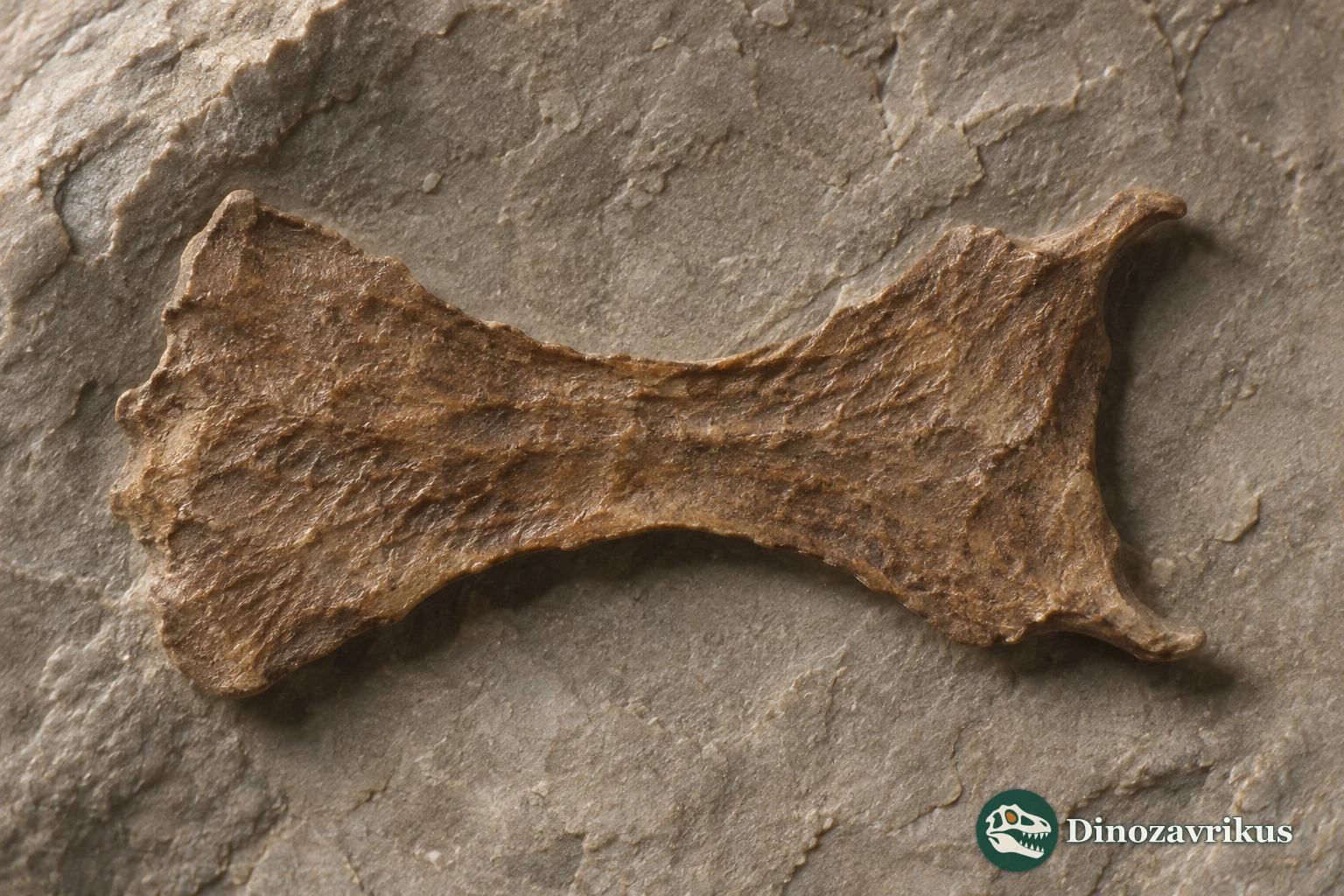
Meszoely, Špinar and Ford described Albionbatrachus wightensis in 1984 from the Late Eocene Headon Hill Formation. The nearly complete frontoparietal, MCZ VPRA-8784, is held at Harvard’s Museum of Comparative Zoology. Isolated fossils, including an atlas and fused vertebrae of the sacral complex, were also assigned to the species. The main diagnostic features come from the skull roof.
A younger record from Romania
The frontoparietal UBB V 442 from Suceag in Transylvania was named as the type of Albionbatrachus oligocenicus. The Dâncu Formation at Suceag is dated to the Rupelian, the first age of the Oligocene. On this identification, fossils assigned to the genus occur on both sides of the Eocene–Oligocene boundary.
Which features hold through growth?
Albionbatrachus has projecting rear corners, a relatively short median process and a flat, sculptured dorsal surface of the frontoparietal. The 2015 researchers compared its outline and micro-CT sections with those of other fossils and living clawed frogs at different ages. Internal structure can change during development. They considered the external combination sufficient to distinguish it from Palaeobatrachus.
Frequently asked questions
Which part of Albionbatrachus is best known?
A frontoparietal, a bone in the roof of the skull, is the key fossil for each of the two named species.
Where did the English type come from?
It came from the Late Eocene Headon Hill deposits on the Isle of Wight, southern England.
What changed with the Romanian find?
The fossil was assigned to the same genus but came from Early Oligocene deposits, extending the proposed record beyond the Eocene.
Can one bone reveal the frog's appearance?
It shows the shape of part of the skull roof. More complete material is needed to reconstruct the body's proportions.