

Aldabranas cabri was a duck that lived on Aldabra Atoll in the western Indian Ocean. Its record comes down to a thigh bone and part of an upper wing bone from Île Picard. The deposits in which they were found preserve a low island community that existed before a major rise in sea level.
Quick facts
| Type species | Aldabranas cabri |
|---|---|
| Family | Anatidae |
| Age | Pleistocene |
| Locality | Bassin Cabri, Île Picard, Seychelles |
| Material | Femur and incomplete humerus |
What can the fossils tell us?
A femur and an incomplete humerus preserve enough anatomy for comparison with other ducks. Neither preserves the bird’s beak, plumage or wingspan.
The deposits with bird remains are older than the Aldabra Limestone. About 136,000 years is a minimum age inferred from stratigraphy, not a date measured on the bones.
No Aldabranas remains have been reported from younger Point Hodoul deposits. An absence in one fossil assemblage does not date the extinction.
An island duck known from two bones
Colin Harrison and Cyril Walker named the duck in 1978. They noted similarities to the Egyptian goose and its relatives in the genus Alopochen, but the available features did not establish close kinship. Aldabranas is the spelling in the original description. The later spelling Aldabranus appears in a fossil inventory for the atoll.
The bones have been interpreted as those of a largely terrestrial duck. How well it flew and how often it used the water remain unresolved. The fossil duck Chendytes from North America offers a contrast: its markedly reduced wing bones give much stronger evidence of flightlessness.
The older island and the rising sea
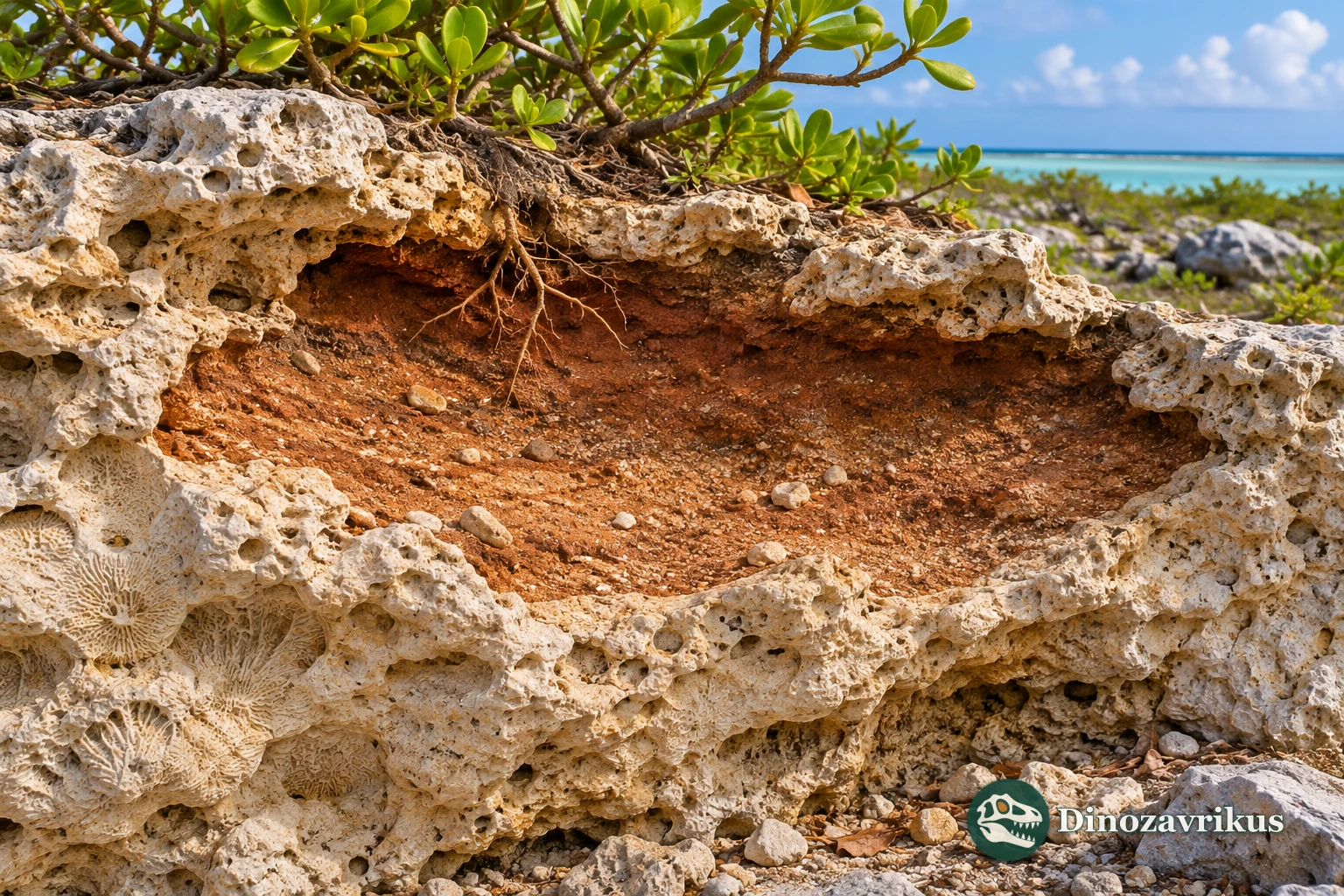
The sands that produced the fossils accumulated behind a reef. Their fauna includes land snails and giant tortoises, consistent with a low, well-vegetated island. The deposits at Bassin Cabri are older than the Aldabra Limestone. Uranium-series measurements on that younger limestone put the fossil locality at more than about 136,000 years old.
The younger records from Point Hodoul belong to a different phase of Aldabra’s history. A later high stand of the sea drowned the low land at least once. The duck’s narrow record cannot show whether it survived to that inundation or disappeared earlier.
Frequently asked questions
Where was Aldabranas found?
The bones come from Bassin Cabri, on Île Picard in the Aldabra Atoll, Seychelles.
Is a skull known?
No skull has been reported. The description is based on a femur and an incomplete humerus.
Was it an Egyptian goose?
Its bones shared some features with Alopochen, the Egyptian goose genus. Those similarities did not establish that it belonged to that genus.
How precisely is the fossil dated?
Bassin Cabri predates limestone dated to about 136,000 years ago. The duck bones themselves have no direct numerical date.