

Alexandronectes zealandiensis is an aristonectine elasmosaurid from the early Maastrichtian of New Zealand. It is known from two skull fragments that were once treated as separate individuals. Their anatomy is complementary, with no duplicated elements, and the 2016 description interpreted them as one skull. No postcranial bones are known, so the animal's body length and proportions cannot be measured from the type material.
Quick facts
| Type species | Alexandronectes zealandiensis |
|---|---|
| Group | Plesiosaur; elasmosaurid; aristonectine |
| Age | Early Maastrichtian, Late Cretaceous |
| Formation | Conway Formation |
| Region | Canterbury, South Island, New Zealand |
| Holotype | CM Zfr 73 and CM Zfr 91, complementary parts of one skull |
| Known anatomy | Fragmentary skull; no postcranial skeleton described |
| Body length | Unknown |
Evidence guide
CM Zfr 73 and CM Zfr 91 do not duplicate anatomical elements and share matching mineralization and preservation. The description treats them as complementary parts of one individual; no other part of the skeleton is assigned to the species.
Dinoflagellate cysts in matrix adhering to the skull fragments point to the Conway Formation and an early Maastrichtian age. A historical association with the Waipara River is probable, but the exact locality and bed are uncertain.
The description notes posterior extension of the pterygoids beyond the occipital condyle, an A-shaped squamosal arch in dorsal view, and distinctive paroccipital processes and mandibular glenoid. These features describe preserved bone, not colour or behaviour.
A 2021 study described internal skull features including a stapes and the inner-ear labyrinth. The authors discussed a possible stabilizing role for the floccular recess; such a functional interpretation is not direct evidence of behaviour.
Two fragments, one skull
CM Zfr 73 and CM Zfr 91 are held by Canterbury Museum. They were once considered remains of two separate individuals. In their 2016 description, Otero and colleagues argued that the pieces are anatomically complementary, do not duplicate elements and share matching mineralization and preservation. They therefore treated them as parts of one skull and named a new genus and species.
Historical records suggest that the fragments may have entered Alexander McKay's collections in 1872 from the Waipara River area. McKay was a prominent nineteenth-century collector of New Zealand vertebrate fossils. The precise point and horizon are uncertain, so the historical locality should not be made more exact than the evidence allows.
Age and geological context
Dinoflagellate cysts recovered from sedimentary matrix adhering to both skull fragments point to the Conway Formation and an early Maastrichtian age. This is microfossil evidence from the surrounding matrix, not a direct date measured from the bones. The geological evidence narrows the context despite the incomplete historical locality record.
The name Alexandronectes honours Alexander McKay, while zealandiensis refers to New Zealand. The fossil demonstrates that aristonectine plesiosaurs were present in the region during the Maastrichtian. It does not by itself describe the full marine community or the animal's range beyond this record.
Cranial features and relatives
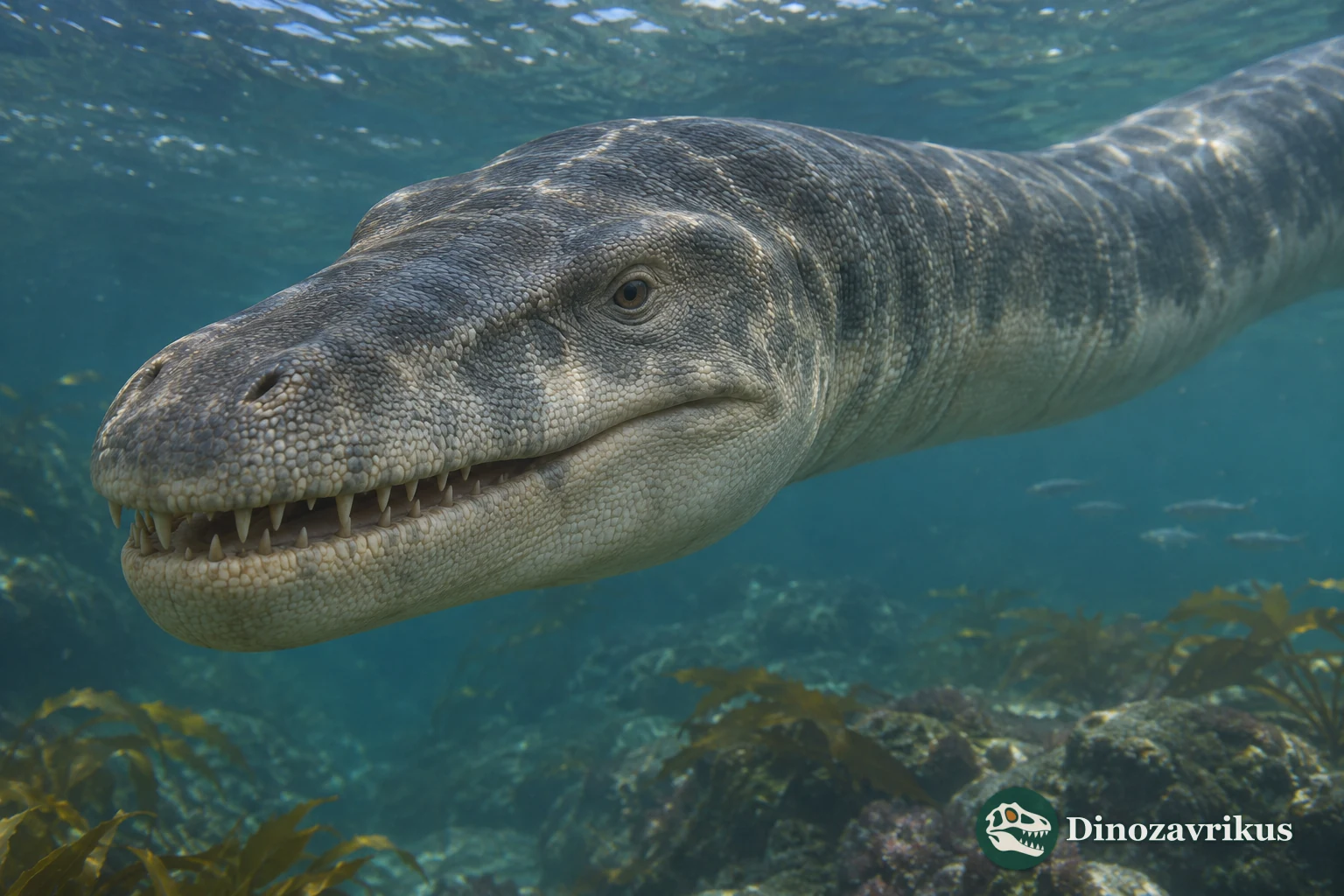
The skull has pterygoids that extend posteriorly beyond the occipital condyle and an A-shaped squamosal arch when viewed from above. The authors distinguished it from other aristonectines by the form of the paroccipital processes and the mandibular glenoid. This combination, rather than a single dramatic feature, supports the diagnosis.
The authors described the skull as an adult and comparatively smaller than those of some other aristonectines, including Aristonectes. That comparison concerns skull size. Because no neck, trunk, limbs or tail are known for Alexandronectes, it cannot be converted into a reliable estimate of total body length or mass.
What CT scans added
A 2021 CT-based study examined internal cranial anatomy that cannot be understood from the external surfaces alone. It described the stapes, the first reported for an aristonectine elasmosaurid, and the bony labyrinth of the inner ear. These observations add to the anatomical diagnosis without supplying the missing body skeleton.
The authors discussed a possible role for the floccular recess and associated musculature in stabilizing the head or retinal image during movement. That is a functional interpretation of anatomy. The scan does not record how the animal actually turned its head, hunted or swam.
Why body size remains unknown
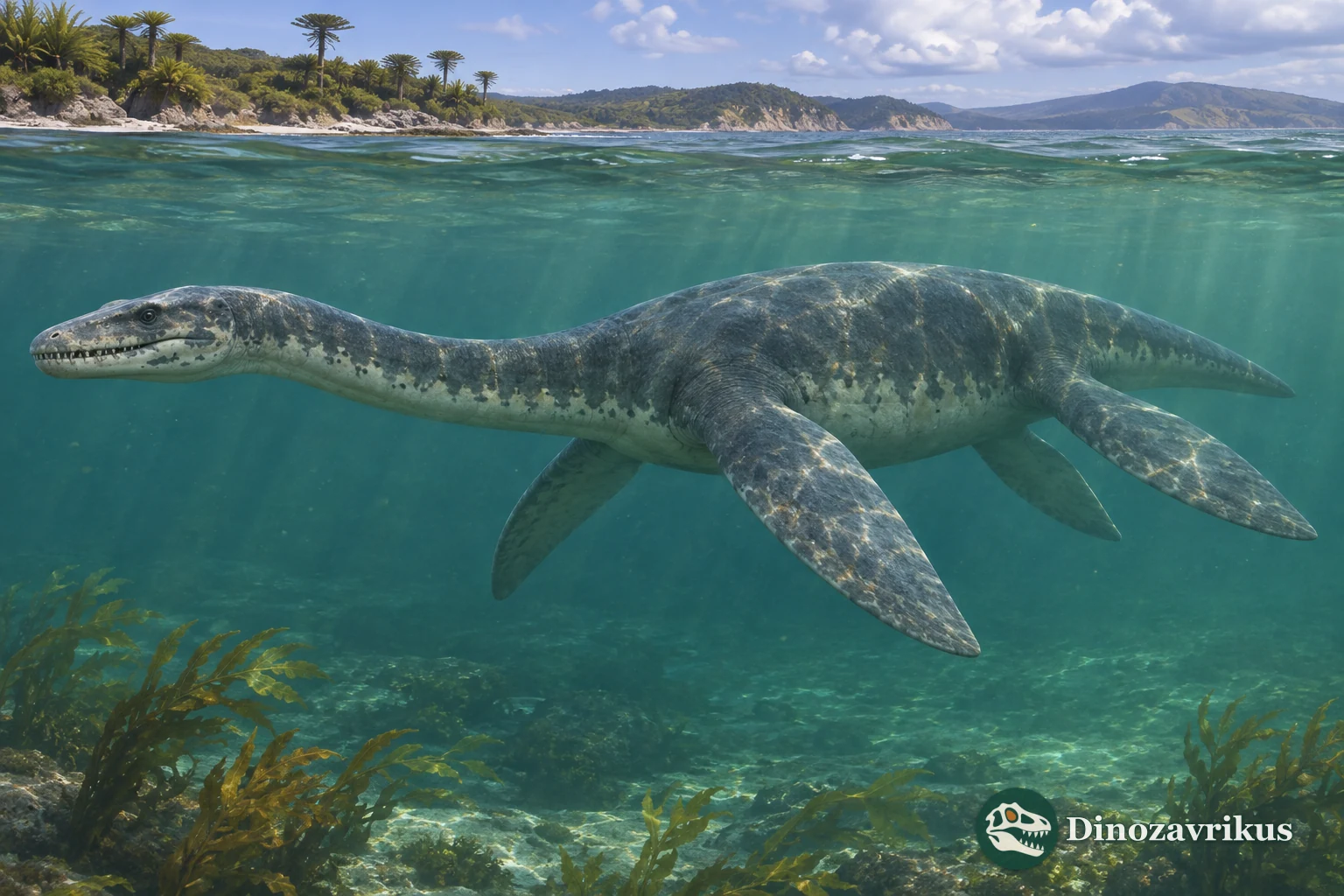
Only skull fragments are known. There are no securely referred vertebrae, girdle bones or limbs from which to estimate the proportions of the body. Skull comparisons with other aristonectines help place the animal anatomically, but they do not provide a direct body-length measurement.
Jaw anatomy is relevant to feeding hypotheses, but there are no stomach contents or associated prey remains that establish a species-specific diet. The fossils likewise do not show swimming speed, depth preference, skin colour, soft tissues, growth rate or reproduction. A full-body image is therefore a comparative reconstruction, not a portrait of a complete specimen.
Frequently asked questions
What is known about Alexandronectes?
It is an early Maastrichtian aristonectine elasmosaurid from New Zealand, described from two complementary fragments of one skull. No postcranial skeleton is known.
Where was the skull found?
The fragments probably came from the Waipara River area and may have been collected by Alexander McKay in 1872. The exact locality and bed remain uncertain.
How was the skull studied internally?
A 2021 study used computed tomography to describe internal cranial structures, including the stapes and inner-ear labyrinth.
How long was Alexandronectes?
Its body length is unknown. Only skull fragments are known, and the missing postcranial skeleton does not allow a reliable total-length estimate.