

The bones of Amanzia greppini were found in Late Jurassic limestone near Moutier, Switzerland. The rock held a mixture of skeleton parts from at least four individuals. The collection includes jaw, vertebral and limb material as well as a rare remnant of cartilage at a bone joint.
Quick facts
| Group | Sauropods, eusauropods |
|---|---|
| Age | Late Jurassic (early Kimmeridgian) |
| Region | Europe (Switzerland, near Moutier) |
| Diet | Herbivorous sauropod |
| Type species | Amanzia greppini |
| Size | Up to about 10 m in the taxonomic revision |
| Type material | Syntype series at the Natural History Museum Basel |
| Deposits | Lower Reuchenette Formation |
What can the fossils tell us?
Limestone from one quarry produced more than one example of the same bone, in different sizes. The fossil series represents at least four individuals.
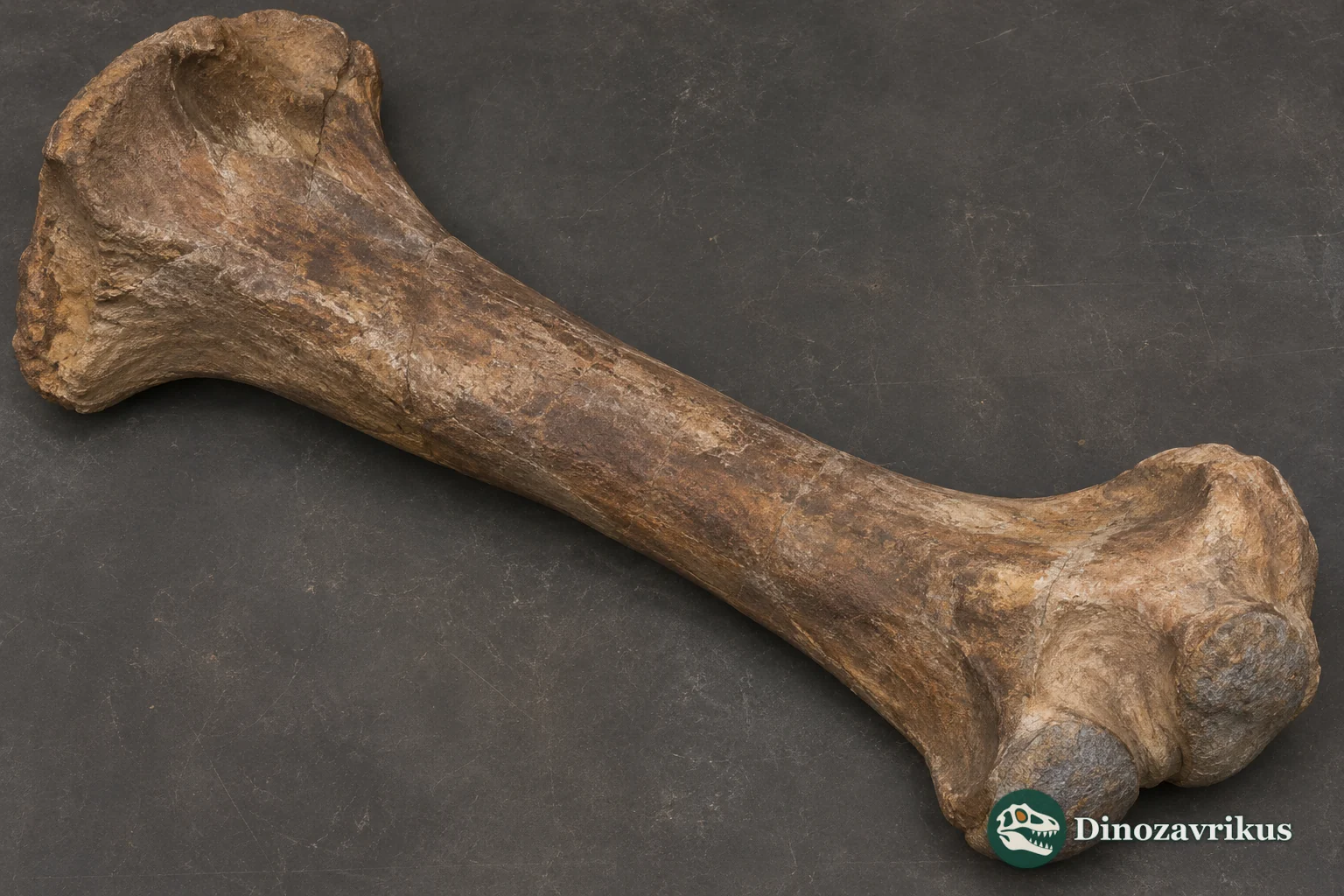
Small patches overlie the distal joint of NMB M.H. 260. They preserve a layer that is usually missing when palaeontologists compare the shape of fossil bones.
Differences in vertebrae and limbs led to a new generic assignment. Both analyses recovered Amanzia outside Neosauropoda, with its closest relatives varying between the results.
From the quarry to the Basel collection
Workers extracted the bones in the 1860s at Basse Montagne, near Moutier. The geologist Jean-Baptiste Greppin secured much of the material for the museum in Basel. A pointed theropod tooth found in the accumulation initially led him to associate the bones with Megalosaurus.
Friedrich von Huene identified the larger bones as sauropod remains and named them Ornithopsis greppini in 1922. He subsequently transferred the species to Cetiosauriscus. In 2020 Daniela Schwarz and colleagues named Amanzia for the Swiss geologist Amanz Gressly, after comparing the Moutier material directly with the British type of Cetiosauriscus.
Bones from several individuals
The repeated bones and differences in their size show that the deposit contains at least four Amanzia individuals. Vertebrae, shoulder bones and limb elements supplied characters for distinguishing them from the British sauropod. The new description estimated that Amanzia reached roughly 10 metres at most. Each preserved individual is incomplete.
Patches of mineralised articular cartilage cover part of the lower end of the right humerus NMB M.H. 260. These patches preserve part of the joint surface and obscure details of the bone beneath. The occurrence of cartilage shows why the bony outline alone may differ from the working shape of a joint in life.
The sauropod material includes a broad, spoon-shaped tooth with wrinkled enamel. It is consistent with herbivory, although it does not establish which plants the animal ate. The slender theropod tooth that contributed to the original identification belonged to a different animal.
The early Kimmeridgian coast
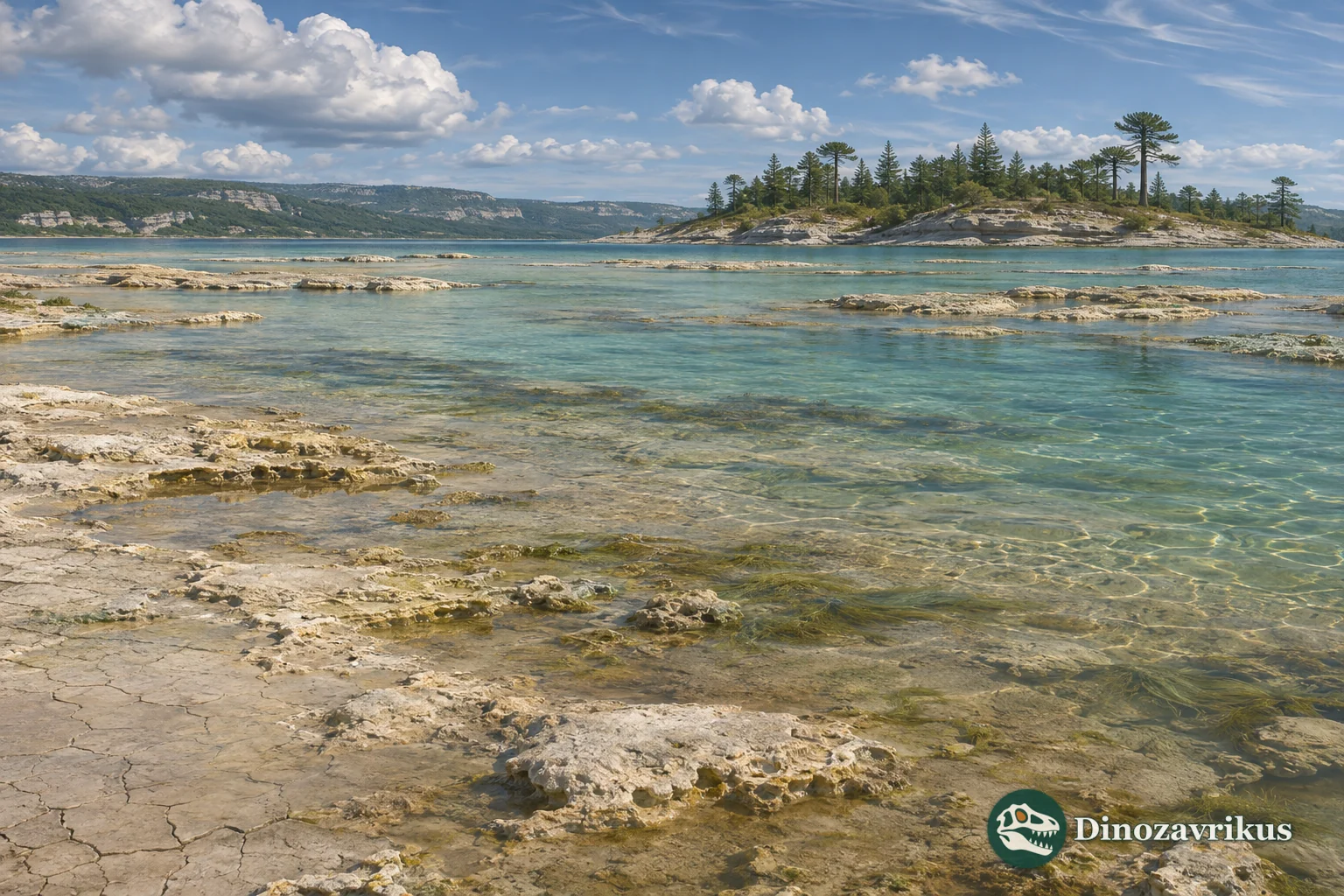
The fossil horizon is assigned to the lower Reuchenette Formation near Moutier, dated to the early Kimmeridgian. The same locality produced fragmentary crocodylomorph bones. Many Amanzia bones are flattened, and a scapula bears marks that researchers interpreted as bites.
One phylogenetic analysis placed Amanzia close to the turiasaur Zby. Another reached a different result within the early branches of Eusauropoda. Both placed the Swiss animal outside Neosauropoda, and its precise position remains open.
Frequently asked questions
Where was Amanzia found?
The type material came from a limestone quarry at Basse Montagne, near Moutier. The main collection is held by the Natural History Museum Basel.
How many individuals are represented?
At least four. Similar parts of the skeleton recur in several sizes among the bones from the quarry.
Why did the name change to Amanzia?
A 2020 revision found consistent differences in the vertebrae and limb bones of the Swiss and British animals. The Swiss species was assigned to its own genus.
Which part of the joint is fossilised?
The distal end of one humerus retains patches of the cartilage that covered the joint in life. A second humerus preserves smaller traces.