

Anchigyps is known from a partial skeleton in volcanic ash in Nebraska. Its jaw resembles those of some vultures, and its foot had features associated with strong toe flexion. The authors who described it proposed that it could have hunted and scavenged.
Quick facts
| Family | Accipitridae |
|---|---|
| Age | Miocene, Clarendonian |
| Locality | Near Orchard, Nebraska |
| Rock unit | Cap Rock Member, Ash Hollow Formation |
| Holotype | Partial skeleton UNSM 62877 |
| Named by | Zihui Zhang, Alan Feduccia and Helen James, 2012 |
What can the fossils tell us?
A robust mandibular symphysis resembles that of some vultures. It supports discussion of scavenging as one part of the diet.
A deep groove in the tarsometatarsus and features associated with the hind toe suggest a firm grip. They leave the specific prey unknown.
The ulna is relatively short. The authors inferred less specialised soaring than in many living vultures.
Recovered from volcanic ash
Zihui Zhang, Alan Feduccia and Helen James named Anchigyps voorhiesi in 2012. The genus name means almost a vulture. The species honours Michael Voorhies, who found the locality and led excavations.
The type material is from an ash bed near Orchard in Antelope County. The University of Nebraska State Museum holds UNSM 62877, which includes both tarsometatarsi, the right ulna, part of the left tibiotarsus and pieces of the lower jaw. The description also lists an incomplete left tarsometatarsus as a separate paratype.
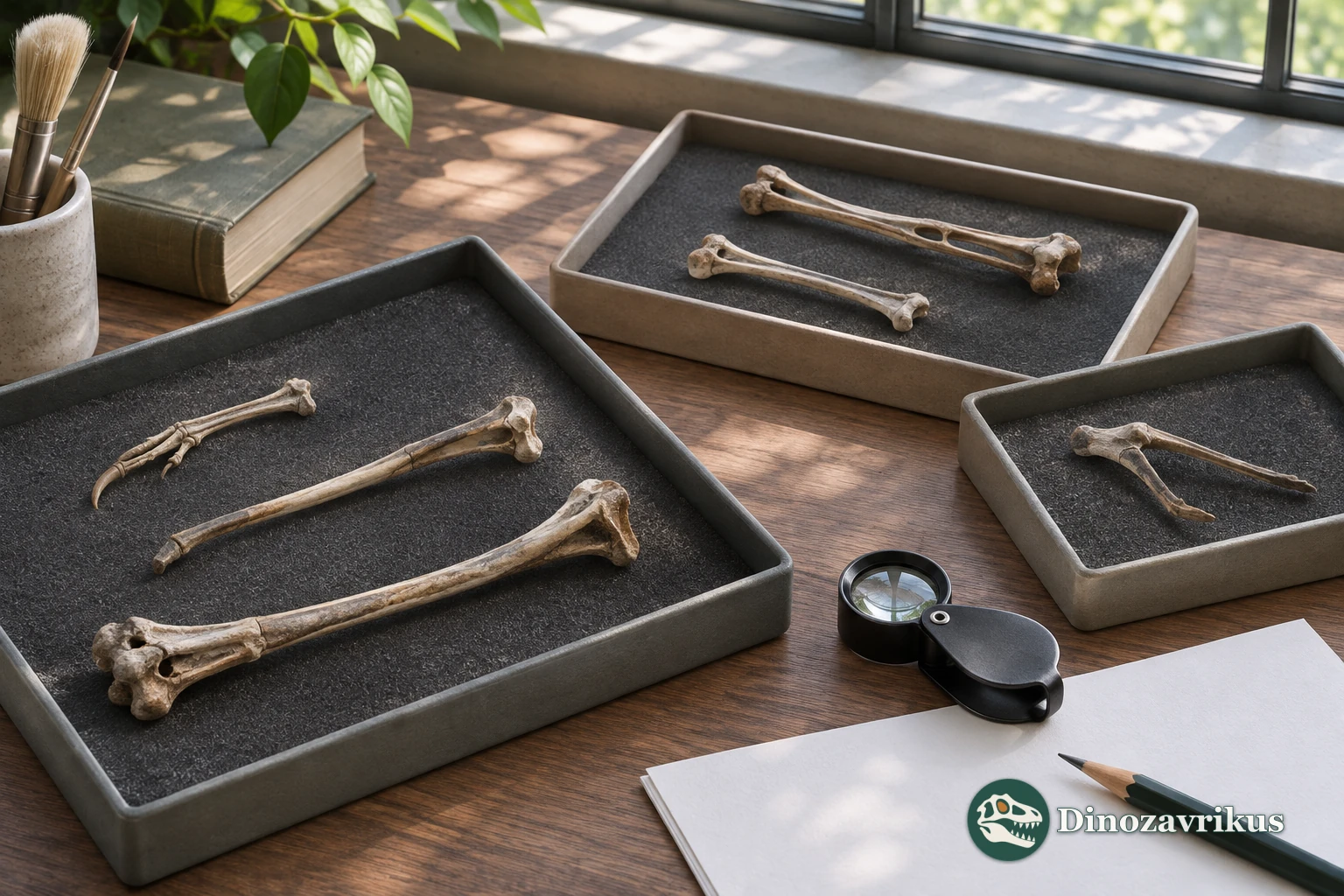
A grasping foot and a vulture-like jaw
The preserved front of the mandible has a strong, broad symphysis where its sides meet. The branch behind it is relatively narrow. The combination invited comparison with carrion-feeding birds. Only part of the mandible survives, leaving the complete bill shape and dietary preference uncertain.
A deep groove in the tarsometatarsus housed the tendons that flex the toes. Other features indicate good control of the hind toe. Together they suggest the bird could grip prey or hold food while feeding. The bones do not show how often it caught animals itself.
Flight and relationships
The right ulna is 127.5 millimetres long and the right tarsometatarsus is 84.5 millimetres long. Three limb bones are comparable in length to those of a red-tailed hawk. The relatively short ulna lacks pneumatic openings and led the describers to propose less specialised soaring. Neither flight speed nor wingspan can be measured from that element.
The authors proposed that Anchigyps was close to the lineage that includes the bearded vulture and its relatives. The powerful grasping foot differs from those of some living members of that lineage. The placement is a hypothesis based on the available anatomy. Comparisons with another Miocene accipitrid, Promilio, illustrate the importance of which bones survive in a fossil raptor.
Frequently asked questions
Was Anchigyps a vulture?
The original study proposed affinities with the branch that includes the bearded vulture. Its foot retained features that support a firm grip.
What suggests that it could hunt?
Features of the foot point to strong flexion of the toes. This shows a capacity for gripping, without recording hunting behaviour.
How large was Anchigyps?
The measured limb bones are comparable in length to those of a red-tailed hawk. Whole-body mass and wingspan are unknown.
What does Anchigyps mean?
The name combines Greek roots meaning almost and vulture, reflecting the comparisons made by the original authors.