

Aquilavus is an extinct genus of birds of prey described from French fossils. The most informative specimen of the type species is a tarsometatarsus, the long bone immediately above the toes. Fossils from other sites have been assigned to the genus, but many preserve a different part of the skeleton and are difficult to test against the type.
Quick facts
| Type species | Aquilavus depredator |
|---|---|
| Group | Accipitridae |
| Age of type species | Early Miocene |
| Localities | Saint-Gérand-le-Puy and Langy, France |
| Lectotype | Tarsometatarsus from the original material |
What can the fossils tell us?
The gaps between the joint surfaces at the lower end of the type species’ tarsometatarsus are relatively narrow.
The material referred to Aquilavus priscus includes wing and leg bones. It does not preserve a complete skeleton from one bird.
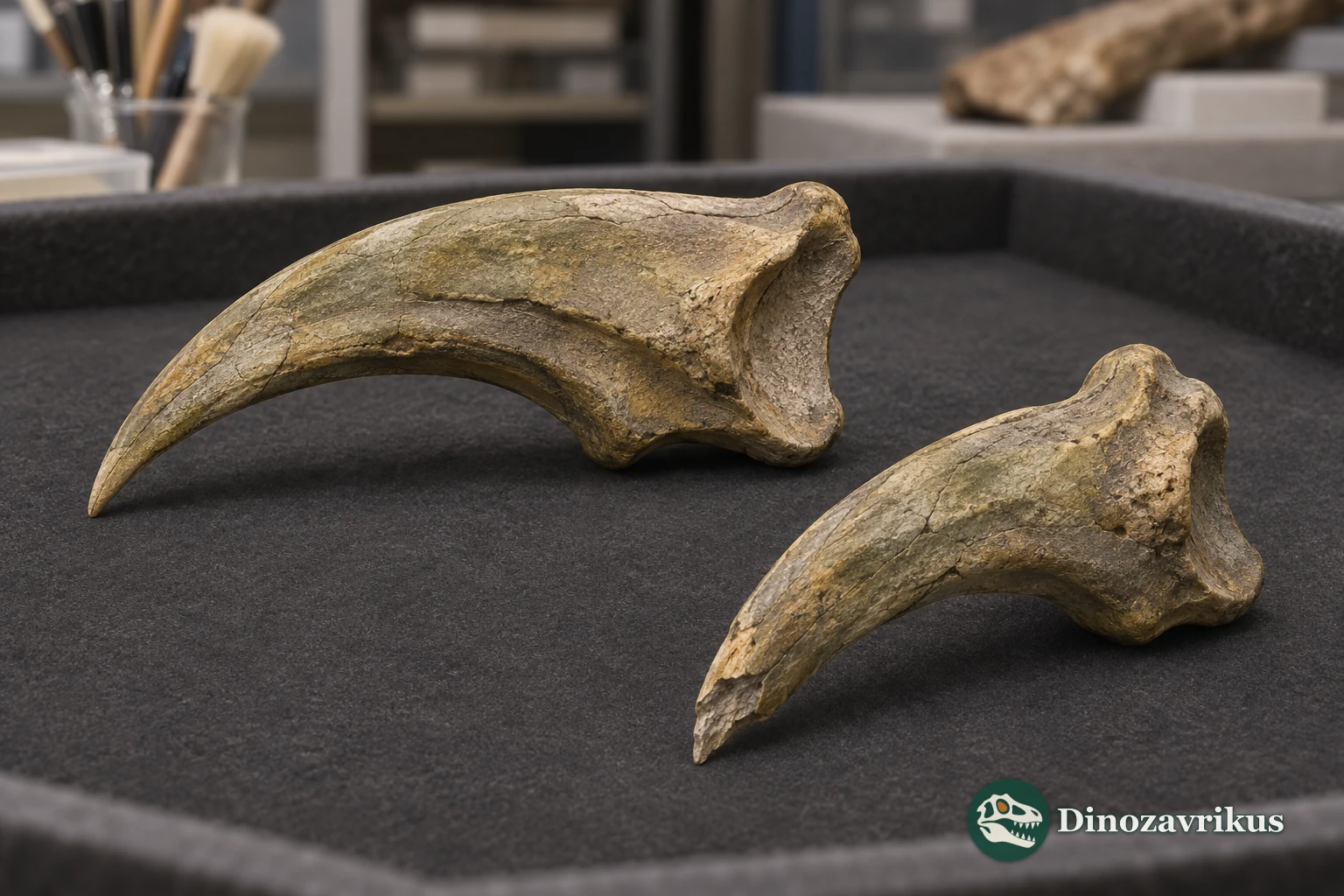
The bony claw from Tavers was assigned to the genus because of its elongated, laterally compressed flexor process. Its species remains uncertain.
How the type species was named
Alphonse Milne-Edwards described the species as Aquila depredator. Kálmán Lambrecht introduced Aquilavus in 1933, and Pierce Brodkorb designated depredator as its type species in 1952. Richard Lydekker had already selected a tarsometatarsus from the original material as the lectotype in the nineteenth century.
The type species comes from Early Miocene deposits in central France. The earlier French raptor Milvoides offers another example of how far researchers can get with isolated fossils. To distinguish one bird from another, it helps to have the same bone in both.
What the foot preserves
The toe joints sit relatively close together on the tarsometatarsus of Aquilavus. A flange by the second toe joint is directed towards the inner side of the foot. These features help distinguish it from the Australian Archaehierax, which has much more widely spaced toe joints.
Fossils referred to Aquilavus priscus include a tarsometatarsus, a lower leg bone and a fused bone from the hand portion of the wing. Individual elements can be compared with those of living and fossil birds. No associated skeleton records the wingspan or the proportions of the whole animal.
How far the record extends
A 28.8 mm claw bone from Tavers in the Loire Valley was compared with a 30.2 mm fossil from Mauvières. The shape of the flexor process supported referral to Aquilavus, but the authors left the Tavers fossil unidentified at species level.
Some older French fossils from Quercy were also named as species of Aquilavus, including material based on a tarsometatarsus and material based on a femur. Their generic identification remains disputed. A fragmentary claw bone from Hordle, England, was tentatively listed under the spelling Aquifavus. It does not establish an early occurrence of the genus.
Frequently asked questions
Why was the type species given an eagle name?
Milne-Edwards placed it in Aquila, the genus of several living eagles. It was later separated into the extinct genus Aquilavus.
Where was the original material found?
The type species comes from Early Miocene deposits in central France, including records from Saint-Gérand-le-Puy and Langy.
Can the foot bone identify its prey?
The toe joints help compare it with other raptors. The bone does not show what the bird caught.
Does the Tavers claw represent the type species?
The claw was assigned to the genus. It does not demonstrate that the type species survived into the Middle Miocene.