

Archaehierax sylvestris was a Late Oligocene bird of prey from southern Australia. Sixty-three skeletal elements of one individual preserve parts of the wings, legs and feet. Their proportions suggest a raptor that could manoeuvre in woodland and may have hunted from a perch.
Quick facts
| Type species | Archaehierax sylvestris |
|---|---|
| Group | Accipitridae |
| Age | Late Oligocene, approximately 26–24 million years ago |
| Locality | Lake Pinpa, South Australia |
| Holotype | SAMA P.54998, partial skeleton |
What can the fossils tell us?
The dolomite bed yielded wing and leg bones, parts of the backbone and sternum, a quadrate and a fragment of the bill.
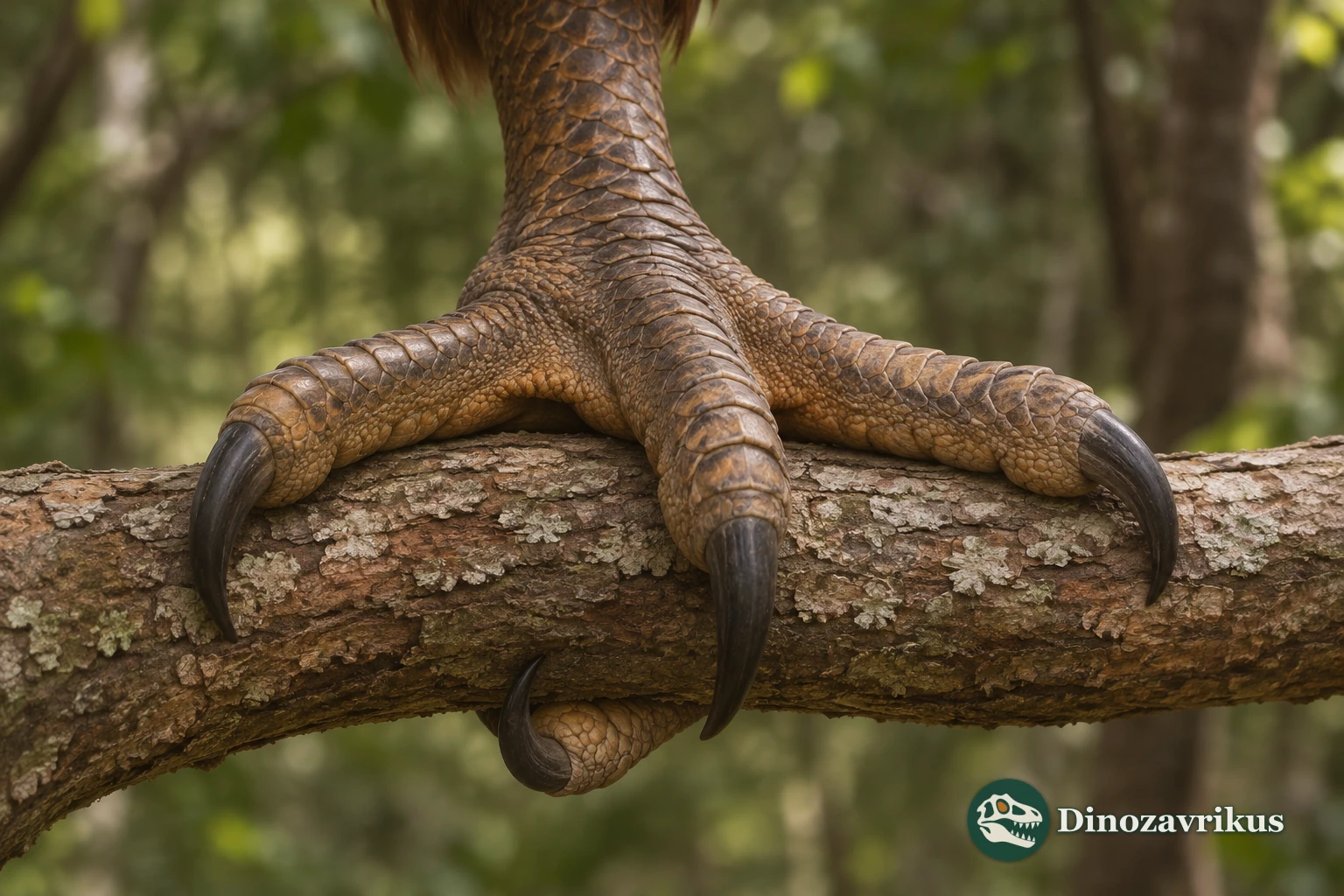
Narrow joint surfaces splay out at the lower end of the tarsometatarsus. A large rear toe contributed to the grasping foot.
Comparisons with living raptors suggest manoeuvrable flight in woodland and possible perch hunting. The bones do not record a hunt.
The partial skeleton from Lake Pinpa
A Flinders University expedition found the skeleton in 2016 at Lake Pinpa. It came from a dolomite bed of the Namba Formation, dated to about 26–24 million years ago. Elen Mather, Michael Lee, Aaron Camens and Trevor Worthy described it in a paper first published online in 2021.
The South Australian Museum holds the specimen as SAMA P.54998. The preserved bones include a nearly complete left ulna, a complete radius, parts of the skull and several elements of the foot. The researchers set aside two isolated raptor bones from the Namba deposits without assigning them to the genus.
The wings and grasping feet
The narrow toe joints are spread apart at the distal end of the tarsometatarsus. There is also a deep notch by one joint for the passage of a tendon. The preserved toe bones show that the hallux, or backward-pointing first toe, was large.
The researchers estimated that the raptor fell between a black-breasted buzzard and a wedge-tailed eagle in overall size. The tarsometatarsus measured roughly 66–75 percent of the estimated tibiotarsus length. The range reflects the missing upper end of the tibiotarsus. The wing bones are relatively short in comparison with the leg bones.
How a woodland raptor might have hunted
A relatively short wing could have helped the raptor turn between trees. Long legs could have extended its reach below a perch or into vegetation. These inferences come from comparisons with living raptors. No prey items were found with the skeleton.
The deposits near Lake Pinpa also contain remains of Wilaru, a different kind of bird. The lake sediments preserved animals from the surrounding landscape. Skeletal analyses support an accipitrid identity for Archaehierax, but its exact place within that family varies between analyses.
Frequently asked questions
How many birds does the holotype represent?
The bones were found together and match in size and preservation. The authors described them as one skeleton.
How long were its wings?
The bones show how wing length compared with leg length. Exact wingspan also depends on the unknown length of the flight feathers.
What prey did it catch?
No particular prey has been identified. Its grasping toes and proportions are consistent with a predatory bird.
Was it an ancestor of living eagles?
The fossils support membership in the hawk and eagle family. They do not identify it as a direct ancestor of a living species.