

Arenysuchus gascabadiolorum comes from the latest Cretaceous of north-eastern Spain. Its partial skull preserves a long, pointed process of the frontal bone. Researchers later scanned the same specimen to inspect cavities and passages inside the skull.
Quick facts
| Species | Arenysuchus gascabadiolorum |
|---|---|
| Age | Late Maastrichtian |
| Locality | Elías site near Arén, Huesca, Spain |
| Formation | Tremp Formation |
| Holotype | MPZ 2011/184, partial skull |
| Group | Eusuchia, generally placed in Allodaposuchidae |
What can the fossils tell us?
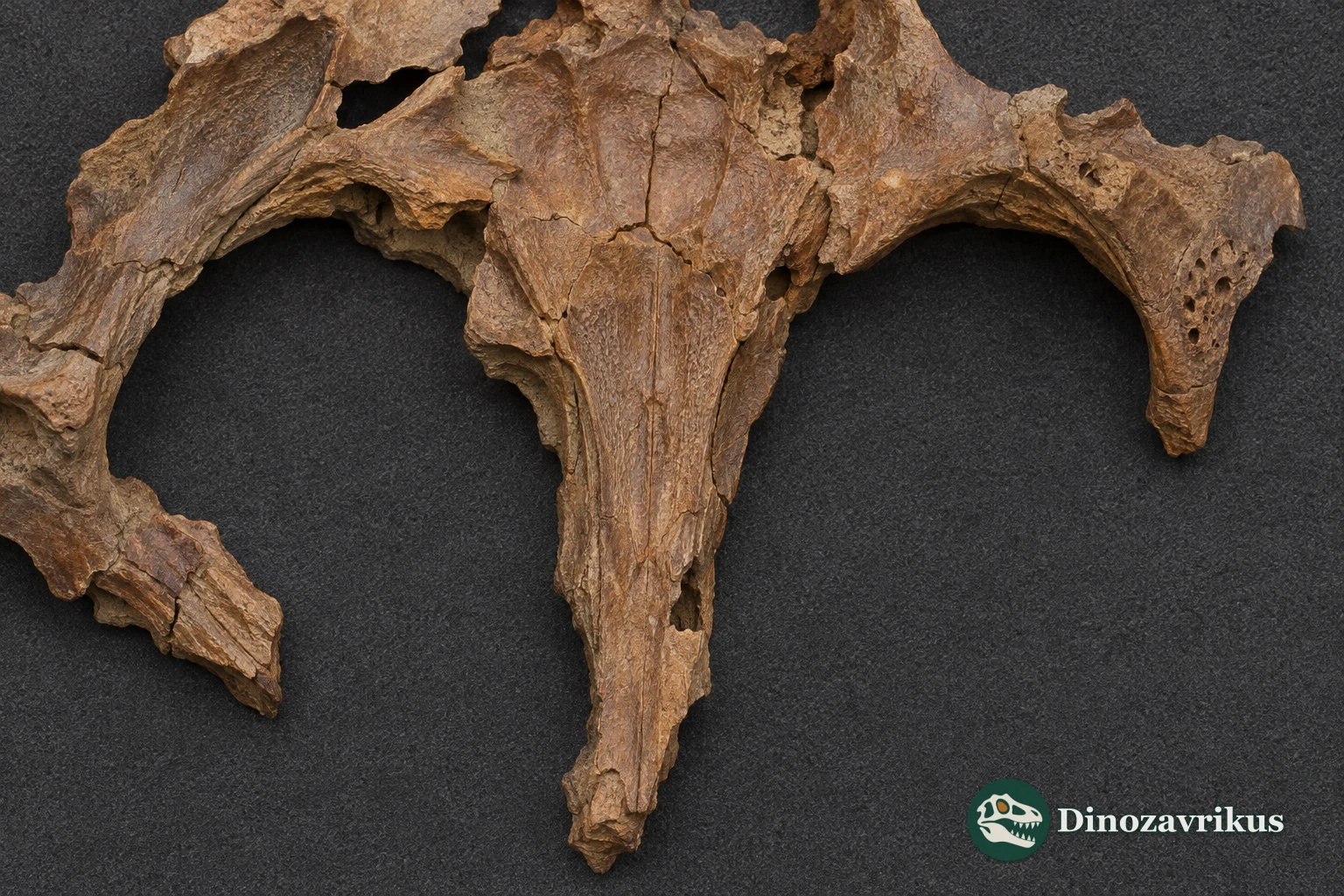
The long pointed process makes up about three-fifths of the frontal’s length. It helps identify the skull, which lacks its lower jaw.
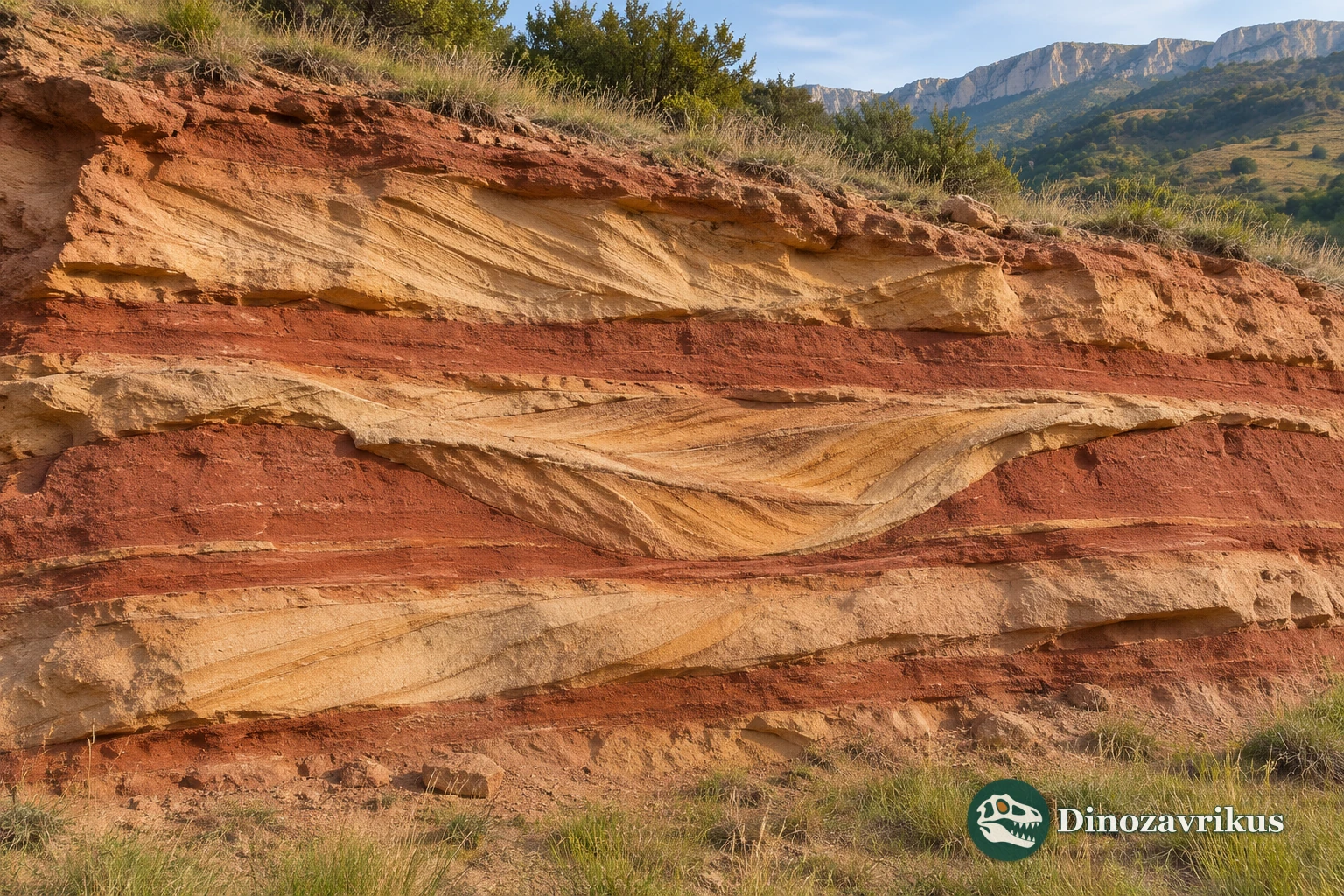
The position of the bed and its magnetic polarity constrain the fossil’s age. The date comes from the enclosing succession.
The recovered spaces include parts of the olfactory region and nasopharyngeal ducts. Their outlines alone do not measure sensory acuity.
The type skull from Elías
José Manuel Gasca and Ainara Badiola discovered the partial skull at the Elías site near Arén. Eduardo Puértolas, José Ignacio Canudo and Penélope Cruzado-Caballero named the genus and species in 2011. The genus takes its name from Areny, the Catalan name of the locality. The species honours the two finders.
The University of Zaragoza houses the type as MPZ 2011/184. The original paper called it MPZ ELI-1 and referred four isolated teeth from the nearby Blasi 2 site to the same species. The skull comes from late Maastrichtian sandstone in the Tremp Formation.
A long frontal process and a preserved palate
A pointed process of the frontal reaches forward between the nasals, extending beyond the front of the eye sockets. It accounts for about 60% of the frontal’s length. The orbital rims rise above the snout, and the lacrimal bone next to the eye is relatively broad.
The bones of the palate enclose the internal nasal opening within the pterygoids, as in other eusuchians. The lower jaw and much of the right side of the snout are missing, and few teeth survive in place. The known material gives little basis for a full tooth count or an estimate of total length.
Inside the skull and on the family tree
The 2022 CT study produced digital casts of several cavities inside the cranium. Portions of the olfactory region and the rear nasopharyngeal passages could be traced. The outlines represent the spaces bounded by bone, and missing areas limit the reconstruction.
The first analysis recovered Arenysuchus as an early crocodyloid. Later comparisons placed it with Allodaposuchus and related European eusuchians in Allodaposuchidae. The placement changed as researchers included more taxa and compared more characters.
Frequently asked questions
Who found Arenysuchus?
José Manuel Gasca and Ainara Badiola found the type skull. The species name honours them.
What stands out on its skull?
The front of the frontal bone forms a long point that extends between the nasals, ahead of the eye sockets.
What did the CT scans add?
They let researchers reconstruct parts of the internal cavities, including the olfactory region and the rear of the nasopharyngeal ducts.
Which group does it belong to?
Later analyses generally place it in Allodaposuchidae, a group of European eusuchians.