

Argillipes was a small bird from early Eocene England. The type specimen is the upper end of a foot bone collected on the Isle of Sheppey. A prominent tendon canal survives in that fragment and provides a reason to associate the bird with early galliforms.
Quick facts
| Group | Early galliforms |
|---|---|
| Age | Early Eocene (Ypresian) |
| Region | Europe (Isle of Sheppey, England) |
| Diet | Exact diet unknown |
| Type species | Argillipes aurorum |
| Holotype | NHMUK A 3130, upper end of the right tarsometatarsus |
| Formation | London Clay Formation |
What can the fossils tell us?
NHMUK A 3130 preserves the upper portion of a tarsometatarsus, the long bone between the ankle and the toes.
A canal on the rear of the bone carried a long toe-flexor tendon. Its shape resembles the arrangement in other early galliforms.
The specimen named Argillipes paralectoris lacks the canal in question. Researchers now doubt that it belongs in the same genus.
A fossil from the Isle of Sheppey
Colin Harrison and Cyril Walker described Argillipes aurorum in 1977. The holotype, NHMUK A 3130, is in the Natural History Museum, London. The type is the proximal end of the right tarsometatarsus. A second partial right tarsometatarsus and the far end of a humerus have also been assigned to the species.
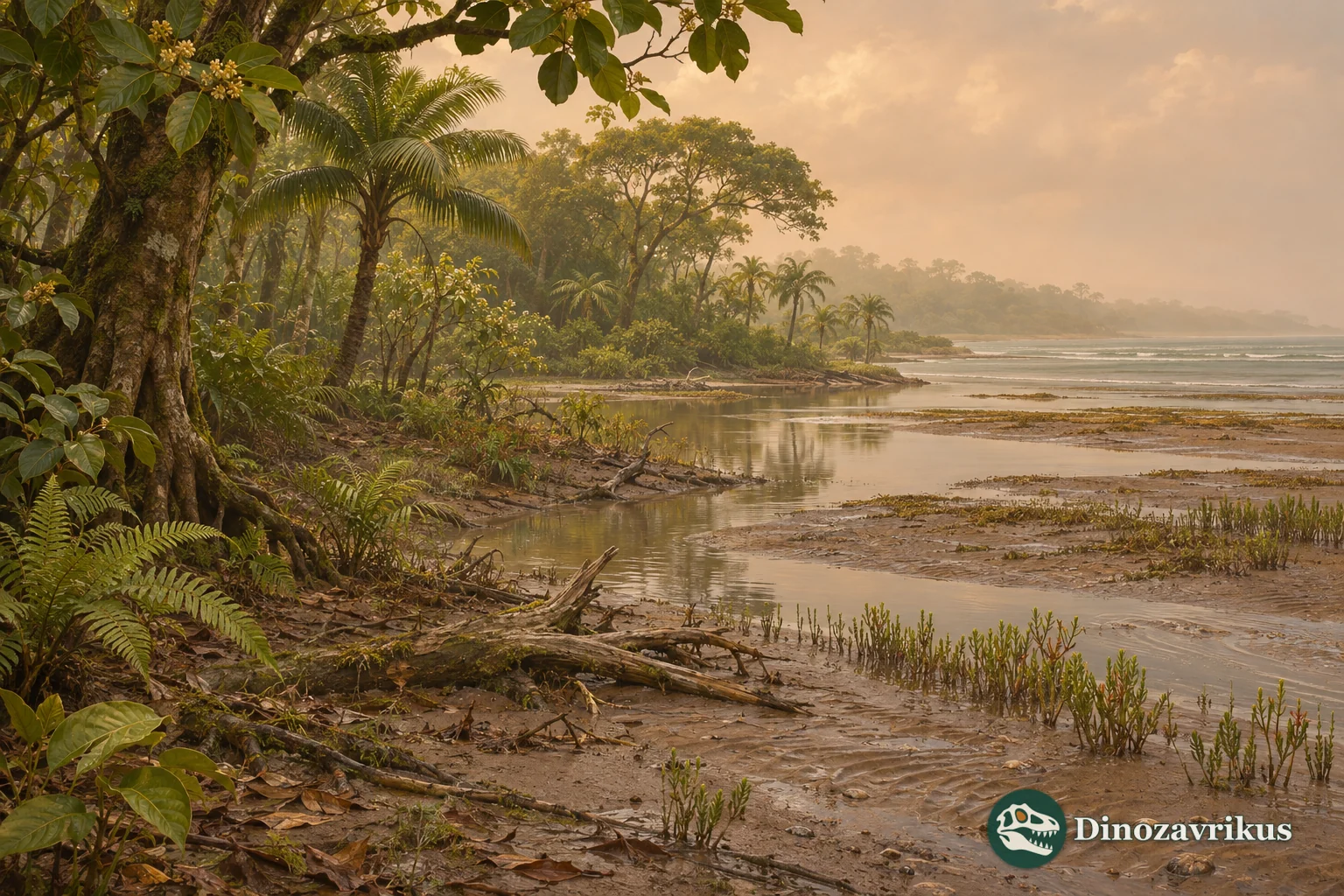
The London Clay accumulated in a marine setting. It also contains remains of birds that were associated with land. The deposit where a bone came to rest does not establish where the animal fed. The deposits of this region also record Lithornis, a member of a separate early bird lineage.
How a tendon canal helps with identification
The back of a bird's tarsometatarsus has a raised area that guides tendons. In the type species, a large canal in this area housed the long toe-flexor tendon. A comparable canal occurs in the Sheppey fossil Percolinus venablesi. That similarity is one reason to place these birds close to the early diversification of galliforms.
The fossil named Argillipes paralectoris lacks this canal. A modern comparison questioned both its assignment to Argillipes and its placement in Galliformes. A foot-bone fragment from Egem in Belgium has also been compared with A. aurorum. The Belgian identification remains tentative.
The limits of a fragment
The fossil offers details of the joint surface and the course of a tendon. It leaves the skull, wings and most of the rest of the body undocumented. Direct evidence of diet is unavailable.
Frequently asked questions
Where was Argillipes found?
The type specimen came from the London Clay of the Isle of Sheppey in southeastern England.
What is a tarsometatarsus?
It is the long bone in a bird's foot between the ankle and the toes. The fossil preserves the upper portion.
What links Argillipes to galliforms?
A canal for the long toe-flexor tendon resembles the arrangement found in other early galliforms.
Did it live beyond England?
A fragment from Egem, Belgium, resembles the type species, but the identification remains tentative.