

Atlantosuchus coupatezi was a long-snouted dyrosaurid from the Early Paleocene of Morocco. The front of its skull accounts for roughly 79% of its reconstructed length. Phosphate rock surrounding the skull preserved remains of sharks and rays that help constrain its age.
Quick facts
| Species | Atlantosuchus coupatezi |
|---|---|
| Group | Dyrosaurid |
| Age | Early Paleocene, Danian |
| Locality | Sidi Chenane, Morocco |
| Principal evidence | Skull, lower jaw and a few bones of the trunk |
What can the fossils tell us?
The figure is based on the reconstructed length of the Moroccan skull. The elongated front was narrow and nearly circular in cross-section.
The skull was acquired from local collectors. Remains of sharks and rays in the surrounding rock are consistent with a Danian phosphate bed.
Most teeth are narrow cones suited to grasping prey. The skull alone cannot settle which animals it ate.
A lower jaw and a skull from Sidi Chenane
The species was described in 1979 from the long portion where the two halves of the lower jaw met. The type came from the Wouters collection and is held by the Royal Belgian Institute of Natural Sciences in Brussels.
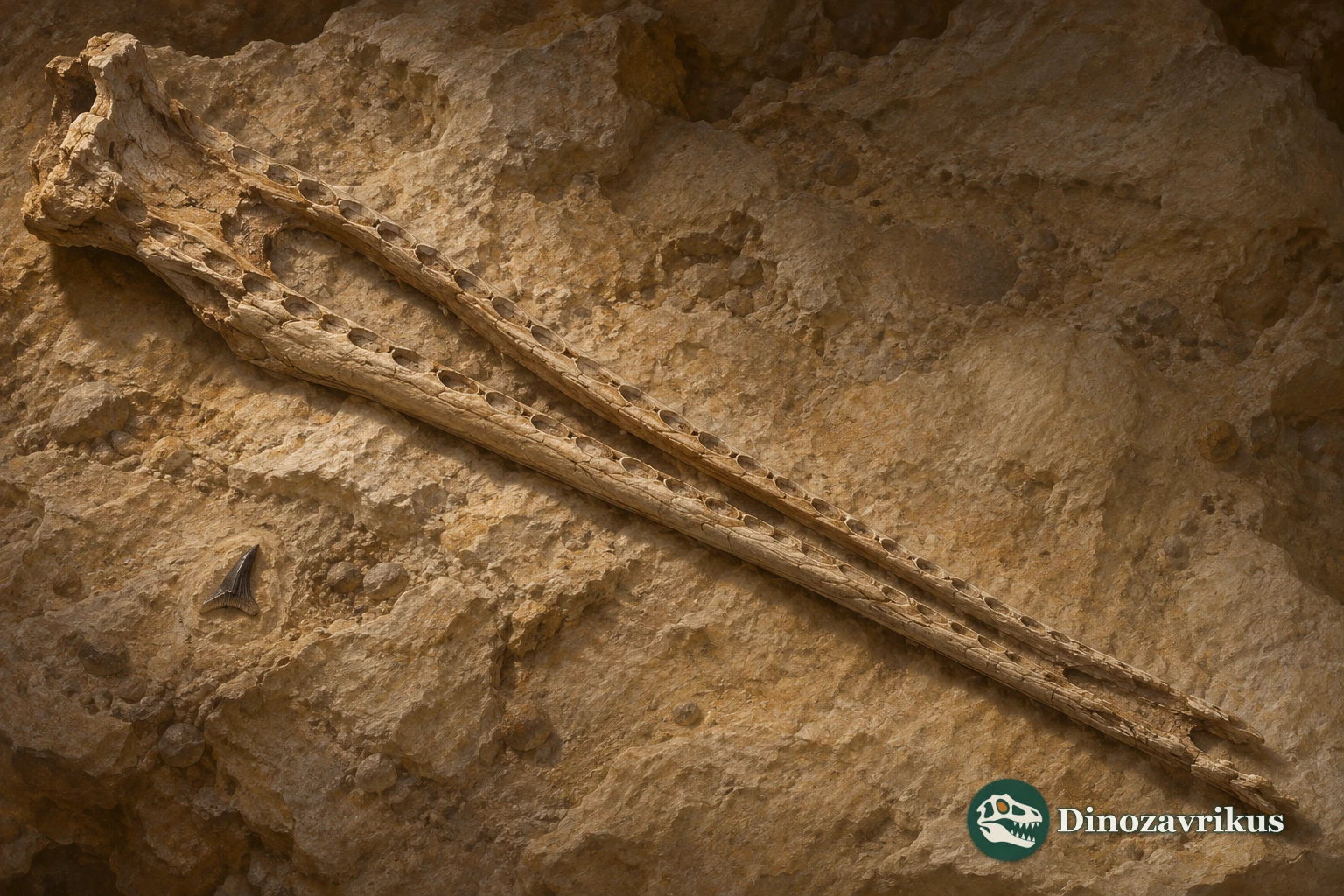
In 2008 Stéphane Jouve, Baadi Bouya and M’barek Amaghzaz described specimen OCP DEK-GE 51 from Sidi Chenane in the Ouled Abdoun Basin. The nearly complete skull is exposed from above. The mandible remains embedded below it. Four dorsal vertebrae and a cervical rib accompany the skull.
A very narrow snout
The researchers estimated that the portion in front of the eyes formed about 79% of the reconstructed length of the skull. The snout was nearly round in cross-section, its lateral margin lacked a notch, and the nasal bones rose into a boss near the eyes.
Most teeth were slender cones with a moderate curve. The crowns toward the back were shorter and thicker. The narrow snout resembles that of Rhabdognathus, which fell close to Atlantosuchus in the 2008 phylogenetic analysis.
The age of the skull and probable food
The skull was acquired from local collectors, leaving its position in the quarry unrecorded. Small remains of sharks and rays in the attached phosphate rock tie the specimen to layer 2b, of Danian age in the earliest Paleocene.
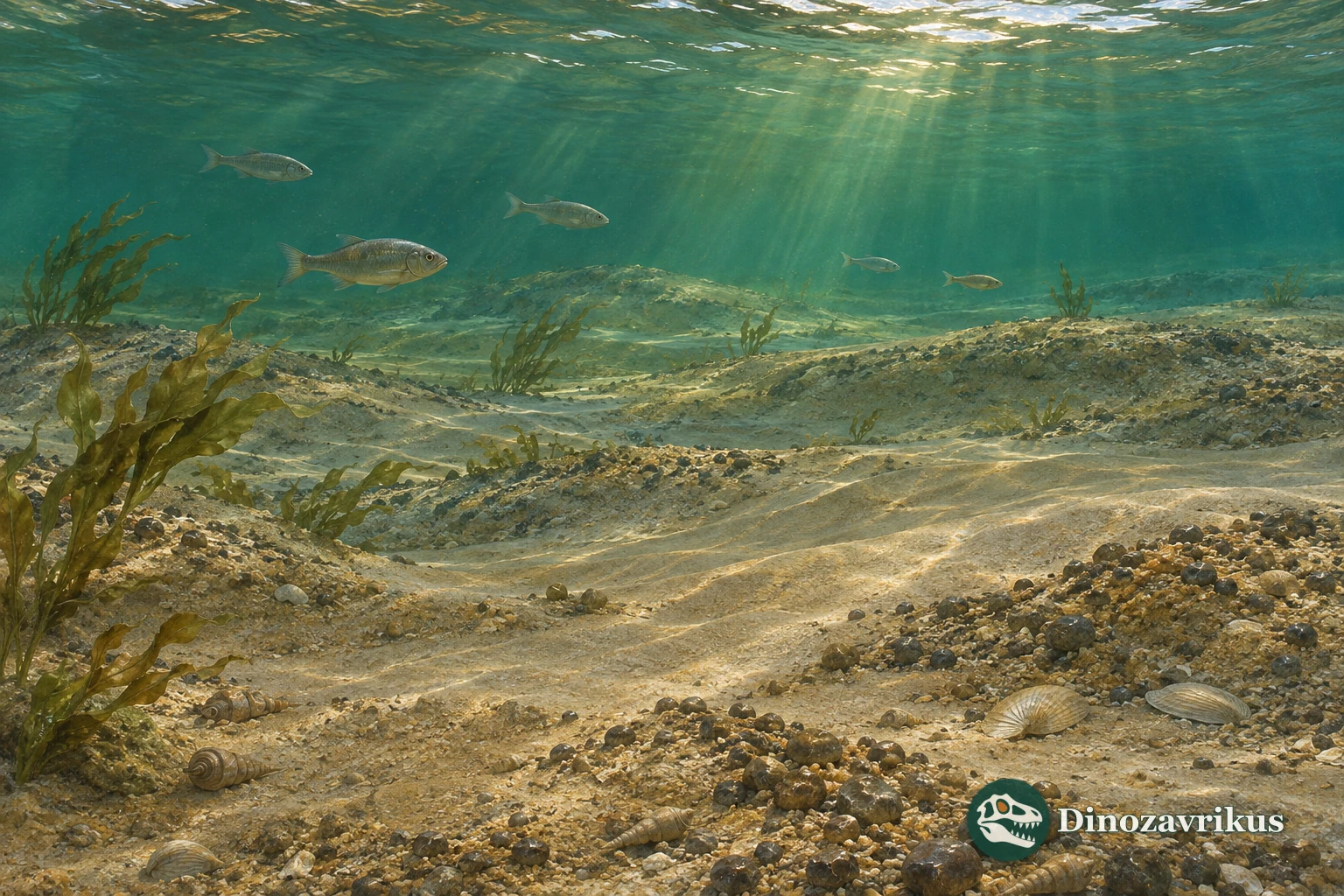
Long narrow jaws lined with conical teeth can grasp small, slippery prey. Fish are plausible food for Atlantosuchus. The fish remains in the surrounding rock inform the study of the deposit, while the animal’s last meal is unknown.
Frequently asked questions
How long was the snout of Atlantosuchus?
The portion of the skull in front of the eyes accounted for about 79% of the reconstructed skull length.
How was the skull from Sidi Chenane dated?
Shark and ray remains in its phosphate rock indicate the Danian stage at the beginning of the Paleocene.
What did the specimen preserve alongside the skull?
The lower jaw is embedded beneath the skull. Four dorsal vertebrae and a cervical rib are also known from the specimen.
What might Atlantosuchus have eaten?
Its long jaws and conical teeth were suitable for grasping fish and other small prey. Direct dietary evidence is lacking.