

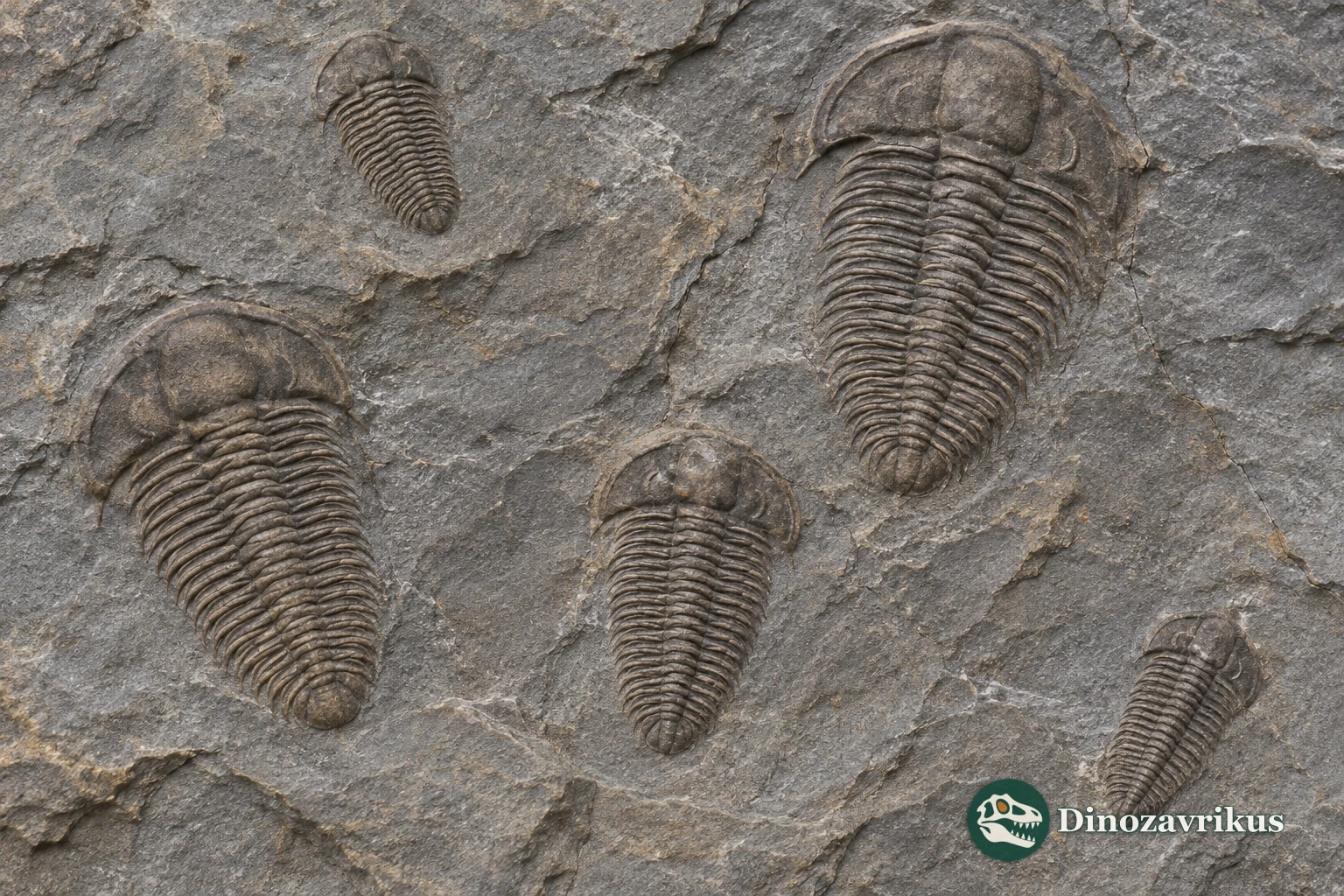
Aulacopleura is a genus of trilobites. Its Silurian species A. koninckii is known from thousands of shells in Bohemia. Adults had anywhere from 18 to 22 thoracic segments. The shells of younger animals show when those differences emerged during growth.
Quick facts
| Group | Trilobita, Aulacopleuridae |
|---|---|
| Age of Czech specimens | Homerian, Silurian, about 429 million years ago |
| Genus named | Ignaz Hawle and August Corda, 1847 |
| Species studied | Aulacopleura koninckii |
| Key site | Na Černidlech near Loděnice, Czech Republic |
| Adult thoracic segments | 18 to 22 |
What can the fossils tell us?
Adult shells carry 18 to 22 freely jointed thoracic segments. Growth in overall size continued after the thoracic count stopped changing.
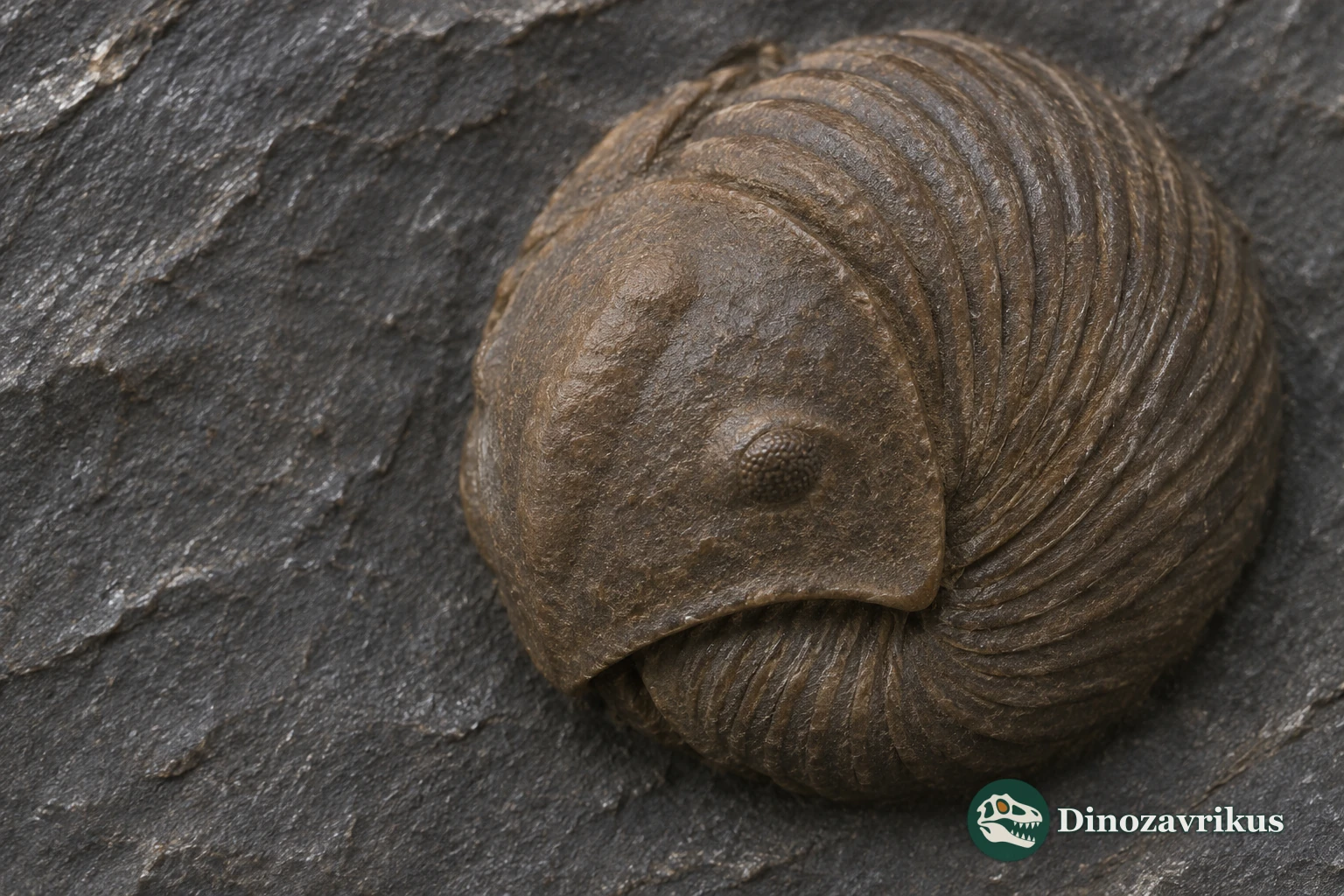
A three-dimensional example helps test how the shields fitted together. Fewer fossils show how young individuals enrolled.
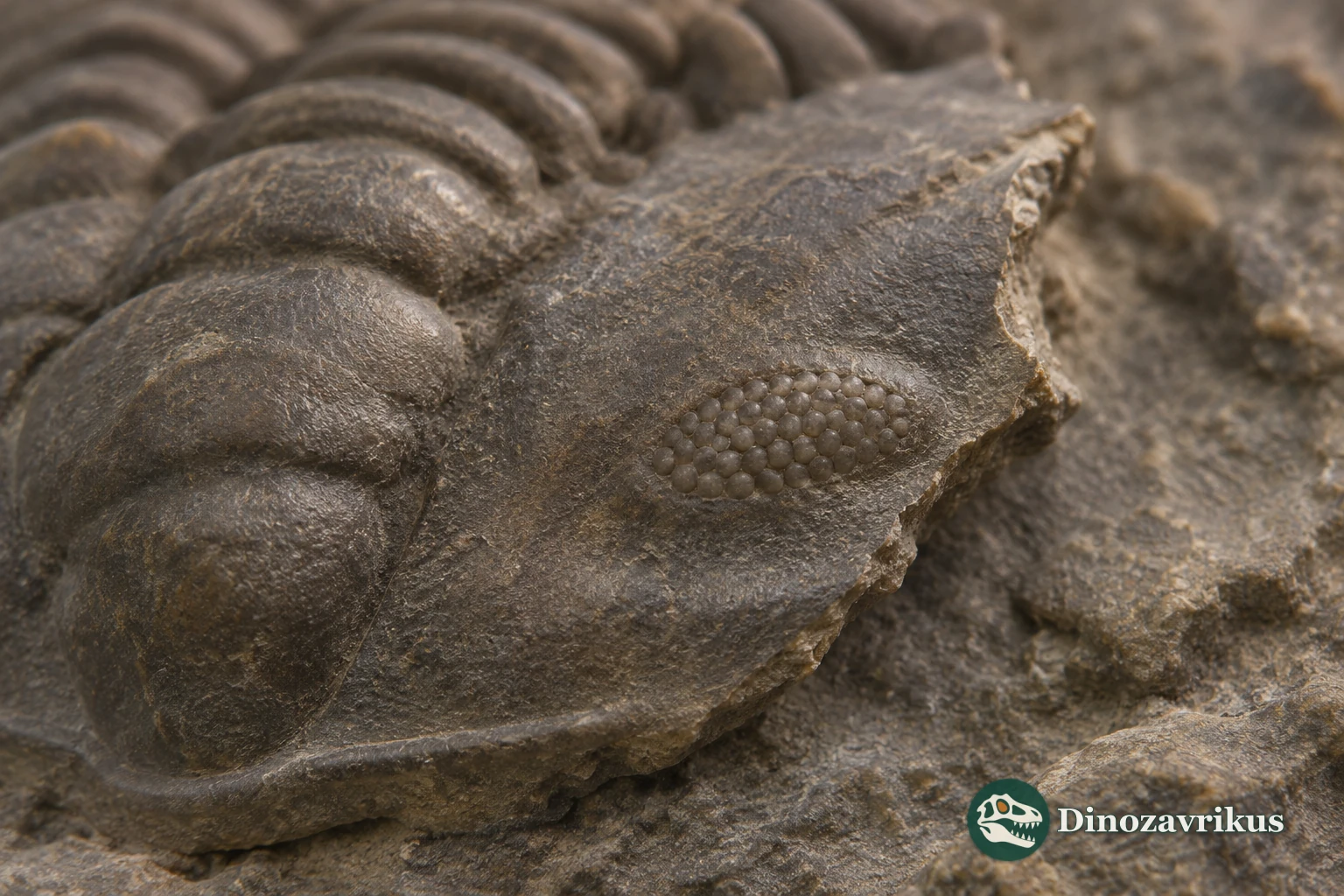
The fossil preserves lenses and structures beneath them. It does not give a direct measure of visual acuity or behaviour.
Silurian shells from Bohemia
Joachim Barrande described the species in 1846 as Arethusa koninckii. Ignaz Hawle and August Corda established Aulacopleura a year later. Some historical studies called the species Otarion (Aulacopleura) koninckii, reflecting a past treatment of Aulacopleura as a subgenus of Otarion.
Many shells came from Na Černidlech hill near Loděnice. They are concentrated in about 1.4 metres of the Motol Formation. Individual bedding surfaces vary in the size of the trilobites they preserve: some are dominated by young specimens, others by adults. They preserve articulated shells as well as detached shields, allowing different stages to be compared within the same rock section.
When the thorax stopped gaining segments
In young trilobites, new segments originated near the back of the trunk. Segments at the front of the tail shield were successively released to become freely articulating rings of the thorax. In A. koninckii this process stopped at different stages, leaving 18, 19, 20, 21 or 22 thoracic segments in adults.
The shell continued to grow through moulting after the last segment entered the thorax. Size and segment count are therefore distinct measures. Longer periods of segment release generally left a proportionally longer thorax and shorter tail shield.
How the shell curled
The three-dimensionally preserved specimen NMP-L12807 was used in a model of enrolment. Its small tail shield could pass underneath the head while the thorax bent around. Several flattened fossils retain an overlap associated with spiral enrolment.
The model also tested a position in which the edges of the shields came closer to meeting. The researchers proposed that the way the shell folded could change during growth. Enrolled young specimens are rare, so the timing and extent of any such change remain debated.
Lenses and receptors
Brigitte Schoenemann and Euan Clarkson studied an exceptionally preserved compound eye of A. koninckii. Under individual thick lenses they identified structures interpreted as eight receptor cells around a central light-sensitive element.
They compared this arrangement with the apposition eyes of living arthropods. In these eyes each visual unit receives light chiefly through its own lens. A possible thin structure below the lens was less clearly preserved, so its interpretation is more tentative.
Frequently asked questions
Why did adults have different numbers of segments?
Individuals stopped adding thoracic segments at different stages. Mature shells therefore retained 18 to 22 segments.
Where were the large fossil collections found?
At Na Černidlech hill near Loděnice, Czech Republic, with many specimens from a short interval of the Motol Formation.
Where did the tail shield go during enrolment?
In spiral enrolment the small tail shield tucked underneath the head.
What can be seen in the fossil eye?
A lens and structures interpreted as receptor cells surrounding a light-sensitive central element survive in individual visual units.