

Avisaurus was an enantiornithine bird from the latest Cretaceous of Montana. Its two named species are known chiefly from tarsometatarsi. The thickness of these bones, their joint surfaces and the position of a muscle attachment led researchers to compare the foot with that of living birds of prey.
Quick facts
| Group | Enantiornithines (Enantiornithes), Avisauridae |
|---|---|
| Age | Late Cretaceous (Maastrichtian) |
| Region | North America (Montana, United States) |
| Diet | Exact diet unknown |
| Type species | Avisaurus archibaldi |
| Second species | Avisaurus darwini |
| Type material | UCMP 117600 and DDM 1577.730, tarsometatarsi of two species |
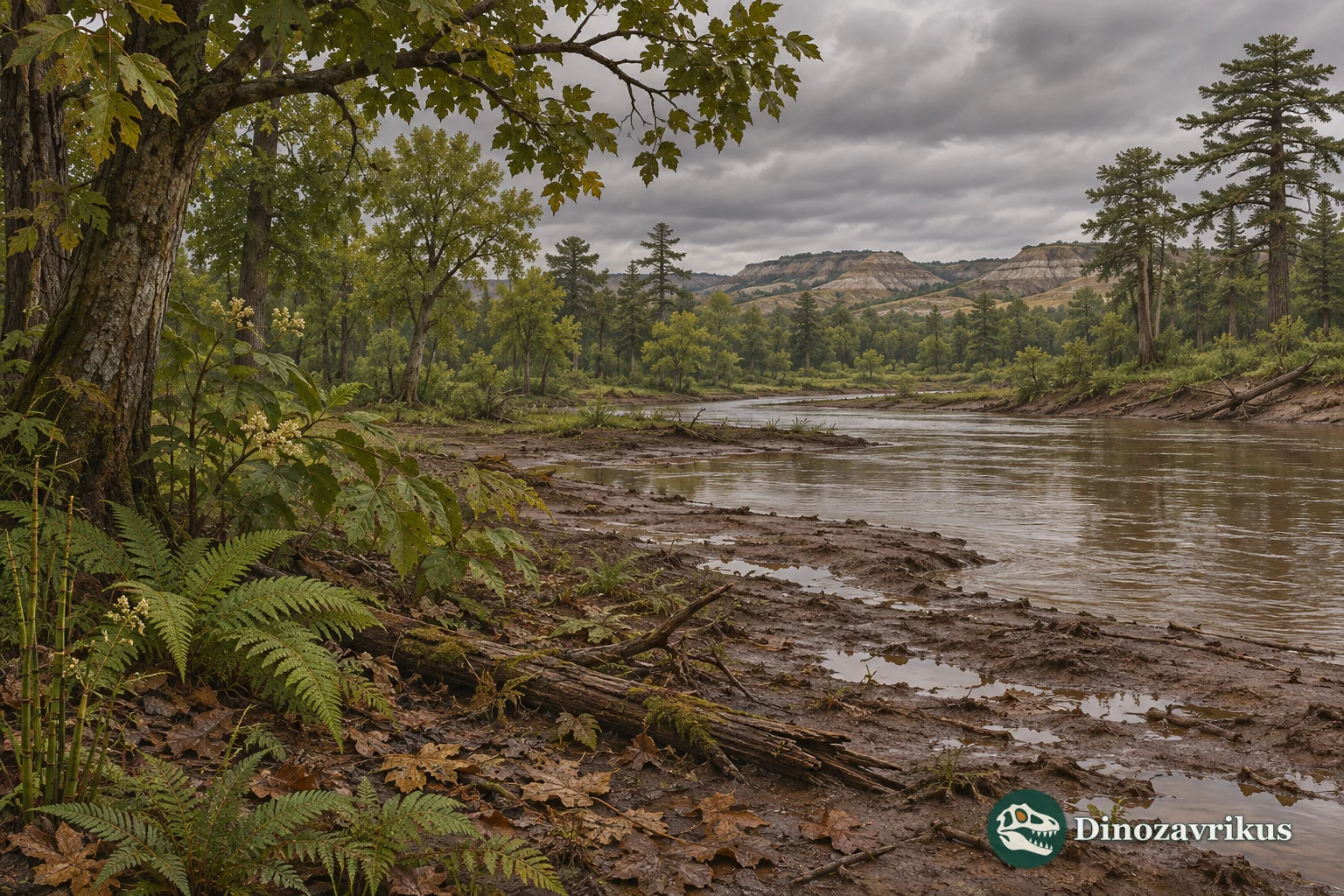
| Deposits | Hell Creek Formation |
What can the fossils tell us?
The types from Garfield and Carter counties differ in the form of the lower bone and its joint surfaces.
The attachment is prominent and sits fairly far down the shaft. Its shape and position support a functional comparison with birds that grasp prey.
The preserved foot bones supplied a scale for proportions inferred from the better represented Mirarce. The resulting mass estimates depend on this comparison.
How two specimens came to define the genus
Michael Brett-Surman and Gregory Paul named Avisaurus archibaldi in 1985 from an isolated foot bone, UCMP 117600, from Garfield County. They initially interpreted it as a non-avian theropod. Subsequent work recognised it as an enantiornithine. The anatomy of Enantiornis offers a comparison with a different branch of these Cretaceous birds.
The second named species, Avisaurus darwini, was described in 2024 from DDM 1577.730, found in Carter County in July 2022. Its name honours Charles Darwin. In 2018, an earlier species from the Two Medicine Formation, Avisaurus gloriae, was assigned to the separate genus Gettyia.
Comparing the foot with those of living birds
The muscle that raised the foot attached to a prominent tubercle on the second metatarsal. In Avisaurus this feature lies relatively far down the shaft. The toe joints include broad surfaces and conspicuous grooves. The 2024 study used these features to infer how strongly the bird could flex its foot and close its toes.
The published comparison supports a powerful grasp and a possible predatory ecology. Researchers drew comparisons with the muscle attachments and toe joints of living raptors. No associated stomach contents or prey remains are known for either Avisaurus species.
From bone measurements to mass estimates
The 2024 authors estimated about 1.7 kg for A. archibaldi and 1.2 kg for A. darwini. They used the length of each tarsometatarsus to scale measurements of the humerus and shoulder joint from the related Mirarce, then compared the scaled measurements with those of living birds. The resulting ranges were approximately 1.49–2.28 kg and 0.91–1.71 kg, respectively.
Frequently asked questions
How many named species are now included?
The 2024 revision recognised A. archibaldi and A. darwini in the genus.
Which bone preserves the evidence for a strong foot?
The tarsometatarsus lies between the lower leg and toes. It preserves muscle attachment points and the joints where toe movement began.
Did Avisaurus hunt?
Its foot has features consistent with a forceful grasp, suggesting a possible predatory lifestyle. The fossils do not identify what it ate.
Are the body masses directly measured?
The estimates come from scaling skeletal proportions from a relative and matching them to measurements of living birds.