

Baptornis was a flightless marine bird from Late Cretaceous North America. Its wings were reduced, while its hind limbs provided underwater propulsion. The foot bones help reveal how it differed from other Cretaceous birds that used a similar swimming stroke.
Quick facts
| Group | Hesperornithiforms (Hesperornithiformes) |
|---|---|
| Age | Late Cretaceous |
| Region | North America (Kansas, United States) |
| Diet | Probably fish and other aquatic prey |
| Type species | Baptornis advenus |
| Holotype | YPM 1465, partial tarsometatarsus |
| Strata | Smoky Hill Chalk Member, Niobrara Formation |
What can the fossils tell us?
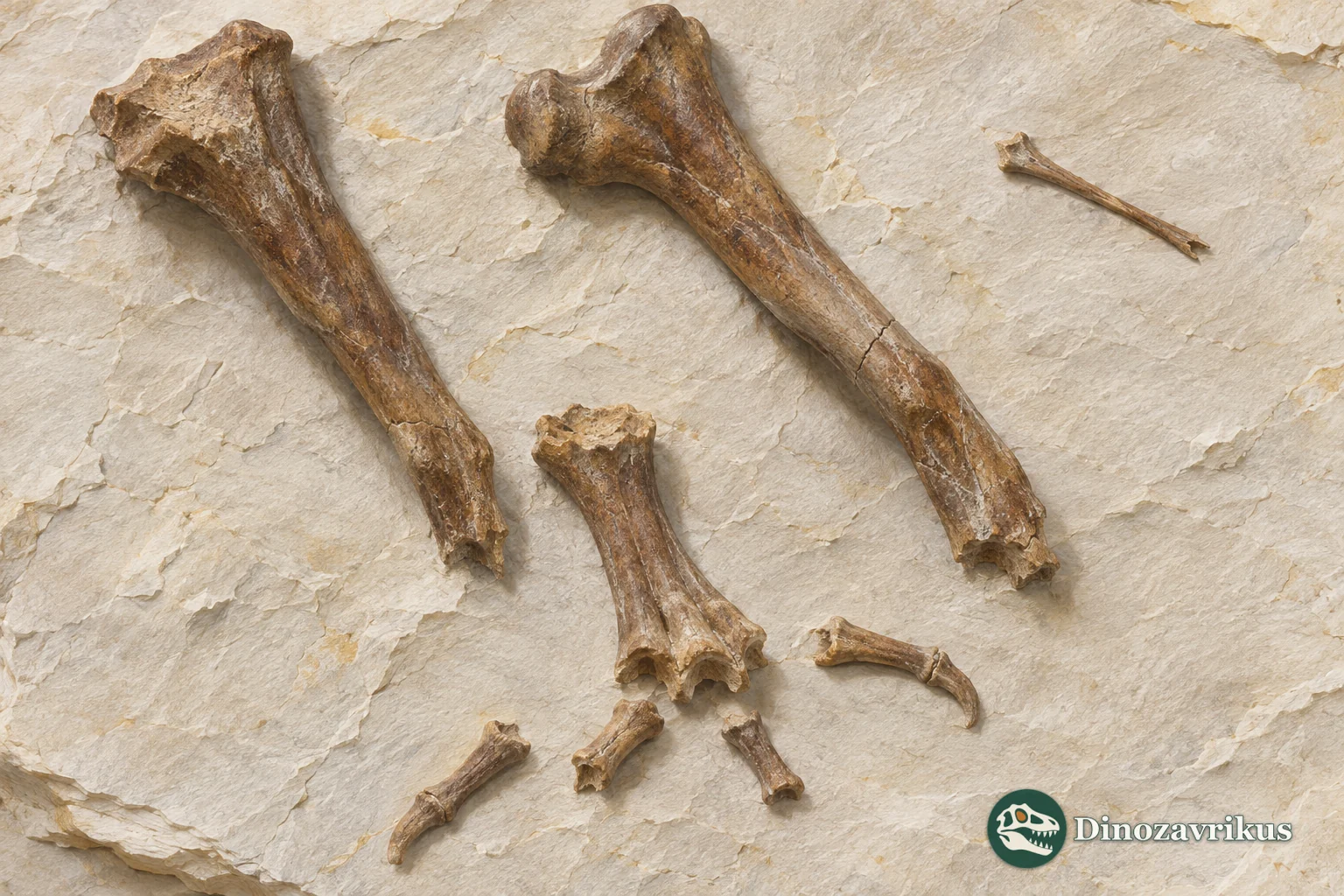
Othniel Marsh described specimen YPM 1465 from part of the tarsometatarsus. Other specimens preserved wing and hind limb bones.
The foot joints and reduced wings support foot-propelled swimming. The exact form of the soft tissues between or around the toes is unknown.
Fish parts were reported with specimen UNSM 20030. That skeleton is now assigned to Fumicollis, so the finds do not directly establish the diet of Baptornis.
A bird from the Niobrara Chalk
Othniel Marsh named Baptornis advenus in 1877 from part of a tarsometatarsus found in Kansas. The more informative specimen KUVP 2290 later provided parts of the shoulder girdle, wing, spine and legs. The Smoky Hill Chalk Member preserves several distinct kinds of aquatic bird from the Late Cretaceous.
What the feet and wings reveal
The reduced upper arm and other wing bones are consistent with propulsion from the legs. The outer toe has asymmetrical joint surfaces. These provide evidence about toe mobility and the swimming stroke even though the soft tissues of the foot did not survive.
The outer toe of Hesperornis was more strongly modified. Comparing the two birds shows that they used a similar mode of swimming with different joint anatomy. The bones alone cannot establish the exact shape of any webs or lobes.
Revisiting the evidence for fish in the diet
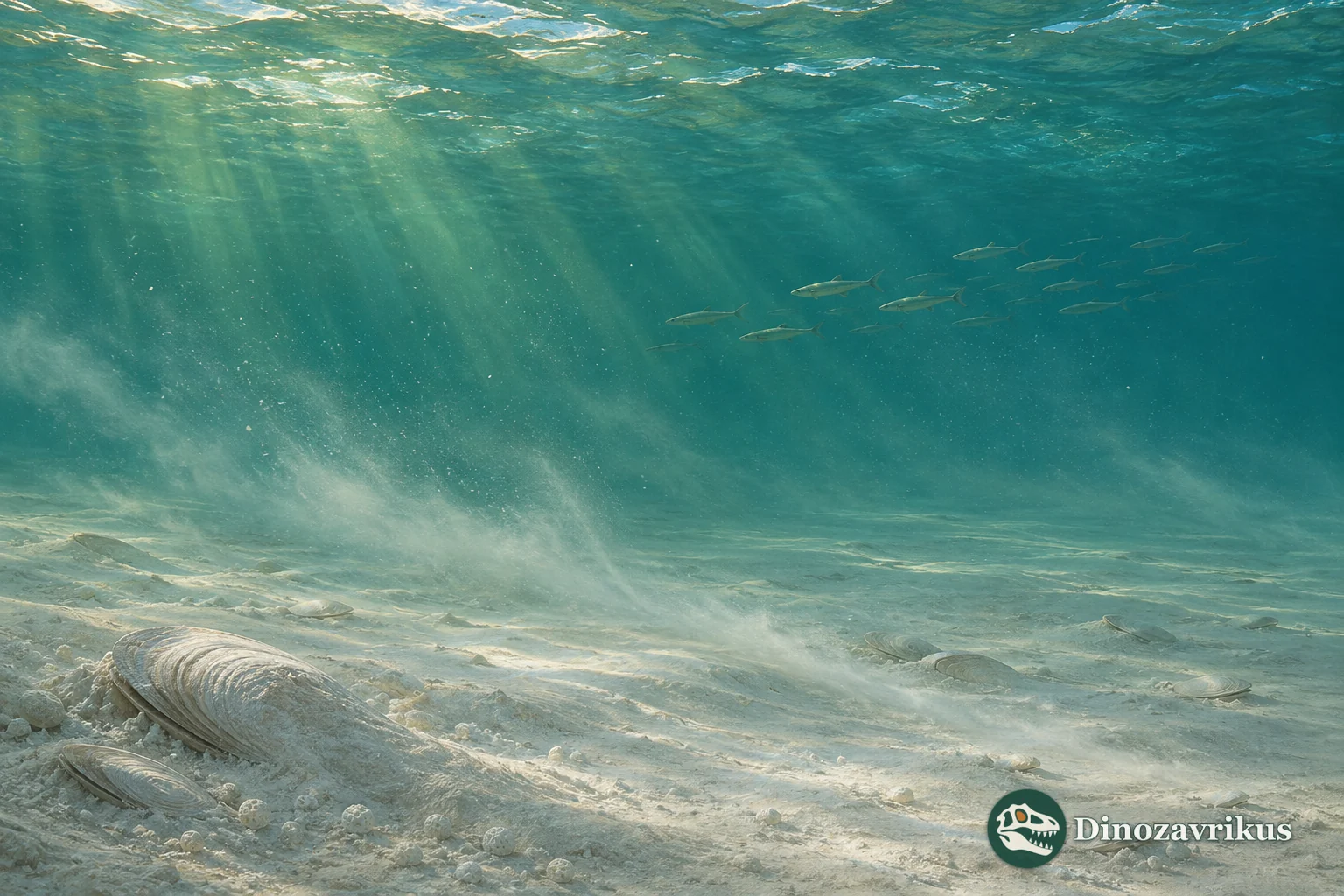
Fossil masses were reported with the skeleton UNSM 20030. One preserved a jaw referred to the fish Enchodus. Researchers originally identified the bird skeleton as Baptornis, but in 2015 distinctive foot anatomy and other features led to its reassignment to Fumicollis. Fish are plausible prey for Baptornis. The association with this particular skeleton is evidence about a different diving bird.
Frequently asked questions
Where was Baptornis found?
The type specimen comes from Late Cretaceous marine deposits of the Niobrara Formation in Kansas.
Could Baptornis fly?
The wings were greatly reduced, consistent with a flightless bird.
How did it propel itself underwater?
The hind limbs generated the main thrust. The foot joints give clues to how the toes moved through the stroke.
Which bird is now associated with the fish remains?
Specimen UNSM 20030 is the type of a different Cretaceous diver, Fumicollis.