

Barracudasaurus was proposed in 2005 for a small mixosaurid ichthyosaur from China's Guizhou Province. Researchers connected an older fragmentary specimen to much more informative skulls and a forefin from documented Anisian rocks. The name's status changed when a 2006 comparison judged the old type specimen undiagnostic.
The cover is an imagined mixosaurid, not a secure portrait of one valid genus. The taxonomic question concerns whether the better fossils can be tied to the name-bearing fragment, not whether Triassic ichthyosaurs occurred in Guizhou.
Quick facts
| Original species name | Mixosaurus maotaiensis Young, 1965 |
|---|---|
| Proposed genus | Barracudasaurus Jiang and colleagues, 2005 |
| Type specimen | IVPP V 2468, fragmentary |
| Newer fossils | GMPKU 2000008 and 2000009 |
| Age of newer fossils | Early Anisian, Middle Triassic |
| Region | Guizhou, China |
| Status | Disputed after the type was judged undiagnostic in 2006 |
What can the fossils tell us?
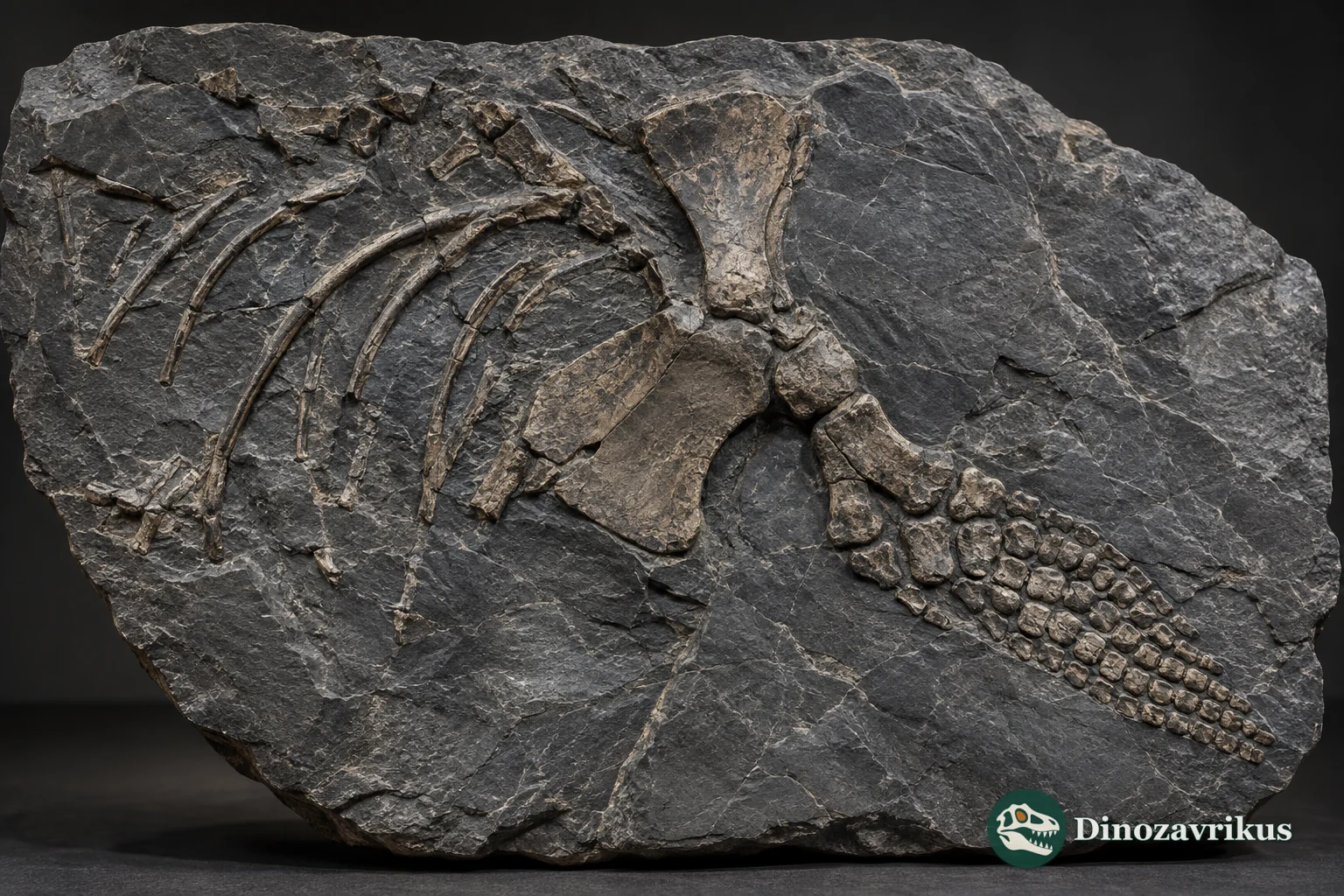
IVPP V 2468 contains fragmentary trunk, girdle and forelimb bones. Its exact collection horizon was not recorded, and a 2006 study judged it insufficient to diagnose a species.
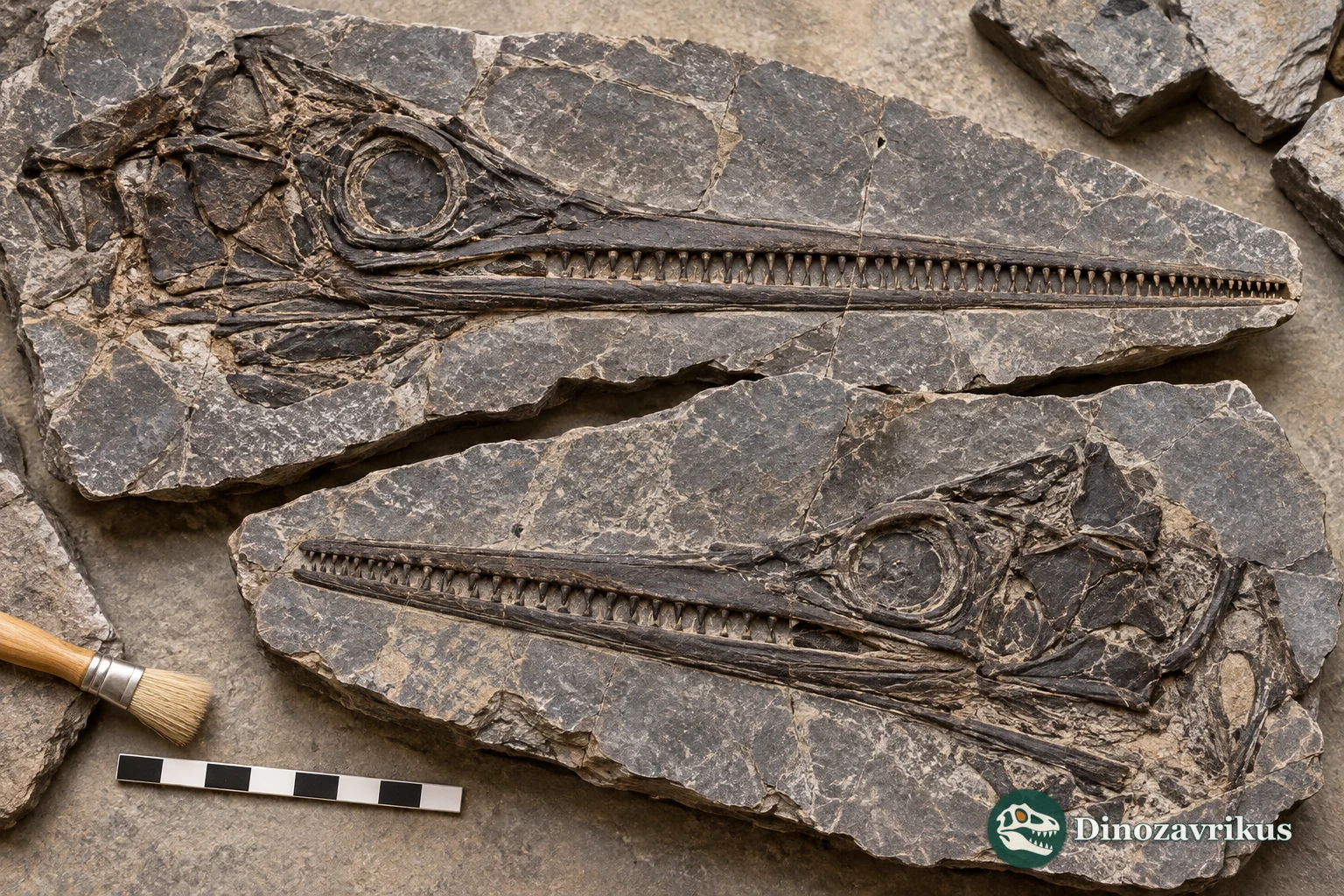
GMPKU 2000008 and 2000009 preserve partial skulls; one also has a right forefin and shoulder girdle. Their documented Early Anisian layer is not automatically the old type's precise horizon.
The 2005 authors linked the new material to maotaiensis and named Barracudasaurus. A 2006 analysis rejected the type species as undiagnostic, making use of the genus contested.
An old fragment and new fossils
C. C. Young originally described the fragmentary IVPP V 2468 as Mixosaurus maotaiensis. It contains ribs, gastralia, shoulder-girdle and forelimb elements. An unknown local collector supplied the specimen, and its exact collection bed was not documented.
Peking University fieldworkers found GMPKU 2000008 and 2000009 near Xinmin, Panxian County, in 2002. These specimens include partial skulls, and one preserves a right forefin and girdle. Their bed in the upper Guanling Formation is assigned an Early Anisian age using the Nicoraella germanicus conodont zone. Jiang and colleagues assigned them to the older species and erected Barracudasaurus in 2005.
Why the name was challenged
The new skulls showed a slender snout, widely spaced anterior teeth and stronger posterior teeth. The 2005 team used jaw and limb characters to separate its reconstruction from other mixosaurids. Yet a genus name remains anchored to its type species, which in turn is anchored to IVPP V 2468.
Jiang and colleagues revisited Guizhou mixosaurids in 2006 and found that the old holotype lacks enough diagnostic characters to distinguish its species. They recommended abandoning the monotypic genus name. Maisch's 2010 review restated the issue. The more complete skulls exist; the uncertainty lies in their connection to the old name.
Similar names and evidence limits
Barracudasauroides is a later name for different material originally described as Mixosaurus panxianensis. It is not automatically a replacement label for every fossil once called Barracudasaurus. Comparisons with Mixosaurus and Phalarodon use teeth, cheek bones and flippers together.
The Guizhou rocks document marine mixosaurids, but not their color, exact diet or observed hunting motions. The barracuda-inspired name refers to superficial jaw resemblance, not kinship with the living fish.
Frequently asked questions
Was Barracudasaurus accepted as a separate genus?
It was proposed in 2005, but a 2006 study judged the name-bearing type undiagnostic. The genus name is therefore disputed.
Why is the old type less precisely dated?
Its collector left no exact bed record, unlike the newer specimens from a documented Guanling Formation horizon.
What do the GMPKU fossils preserve?
They include partial skulls; one also has a right forefin and shoulder girdle.
Is Barracudasauroides the same animal?
No. That later genus name was proposed for different type material and must be evaluated separately.