

Bavarioboa was an extinct booid snake. Its Oligocene and Miocene fossils occur in several parts of Europe. Two vertebrae from eastern Anatolia show that its recorded distribution extended into southwestern Asia.
Quick facts
| Group | Snakes, booids (Booidea) |
|---|---|
| Age | Oligocene and Miocene |
| Region | Europe and western Asia (eastern Türkiye) |
| Type species | Bavarioboa hermi |
| Scientific name | Bavarioboa |
| Diet | Exact prey is unknown |
What can the fossils tell us?
The type species comes from Petersbuch. Other species are known from sets of vertebrae representing different parts of the trunk.
The positions of vertebral processes and the shape of the joints can help distinguish species from isolated bones.
Anatolian fossils extend the known range, but cannot pinpoint the origin of the genus or its direction of dispersal.
A name from Bavaria
Zbigniew Szyndlar and Hans-Hermann Schleich named Bavarioboa hermi in 1993. Its remains came from Petersbuch 2, an Early Miocene locality in Bavaria where bones accumulated in limestone fissure fill. Later work described older species from the European Oligocene.
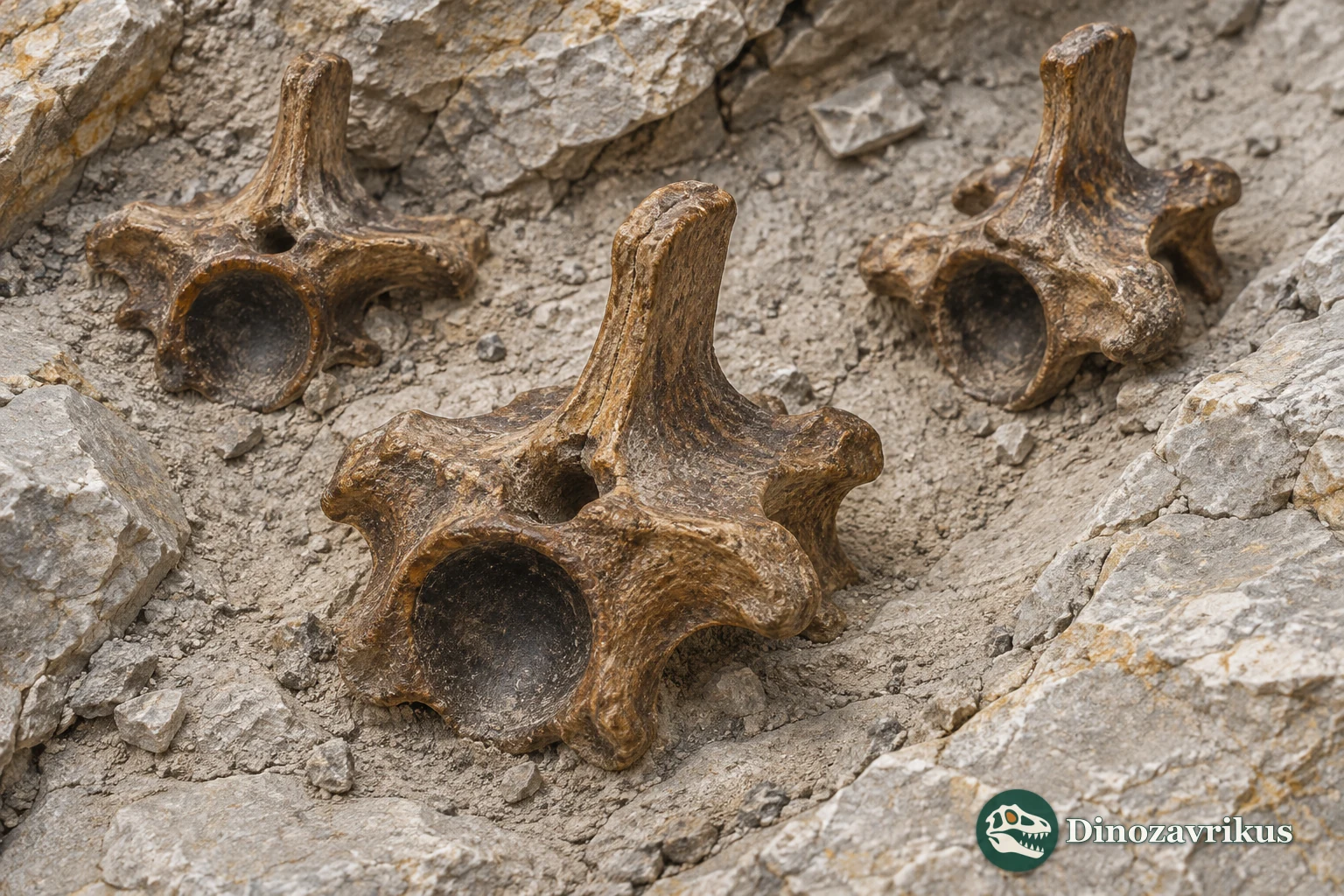
What one vertebra can show
Snake vertebrae meet at several joints. Researchers compare structures such as the zygosphene, the projection above the front of the spinal canal, and the position of the neural spine. Some vertebrae of the Early Miocene B. wintershofensis from Wintershof-West have a three-lobed zygosphene. The middle lobe is absent in the type species. The centrum of the B. wintershofensis type is about 4.4 mm long. That measurement describes one bone.
Across a gap in the fossil record
The genus occurs in Oligocene, Early Miocene and early Middle Miocene deposits in Europe. An interval of roughly five million years separates the youngest Oligocene finds from the earliest Miocene ones there. Two vertebrae from the Mendikdere Formation of eastern Türkiye come from deposits near the boundary. The occurrence supports the possibility of faunal exchange between Europe and Anatolia near the start of the Neogene. It does not establish a direction of travel.
Frequently asked questions
What does the name Bavarioboa refer to?
It combines Bavaria, where the type species was found, with a reference to boas.
How old are the fossils?
European specimens come from the Oligocene and Miocene. The Turkish material is Late Oligocene or Early Miocene.
Where was it found outside Europe?
Two vertebrae from the Mendikdere Formation in eastern Türkiye were referred to the genus.
How can species be distinguished from vertebrae?
Researchers compare the neural spine and joints of trunk vertebrae, taking into account where each bone sat along the spine.