

Becklesius was a lizard known in Europe from the Late Jurassic to the end of the Cretaceous. The Spanish species preserves small bony plates in the skin, called osteoderms, alongside parts of the skeleton. Tooth crowns help distinguish the species found in Portugal and Romania.
Quick facts
| Group | Scincoids and relatives, paramacellodids (Paramacellodidae) |
|---|---|
| Age | Late Jurassic and Cretaceous |
| Region | Europe, Portugal, Spain, Romania and the United Kingdom |
| Type species | Becklesius hoffstetteri |
| Scientific name | Becklesius |
| Diet | Diet unknown |
What can the fossils tell us?
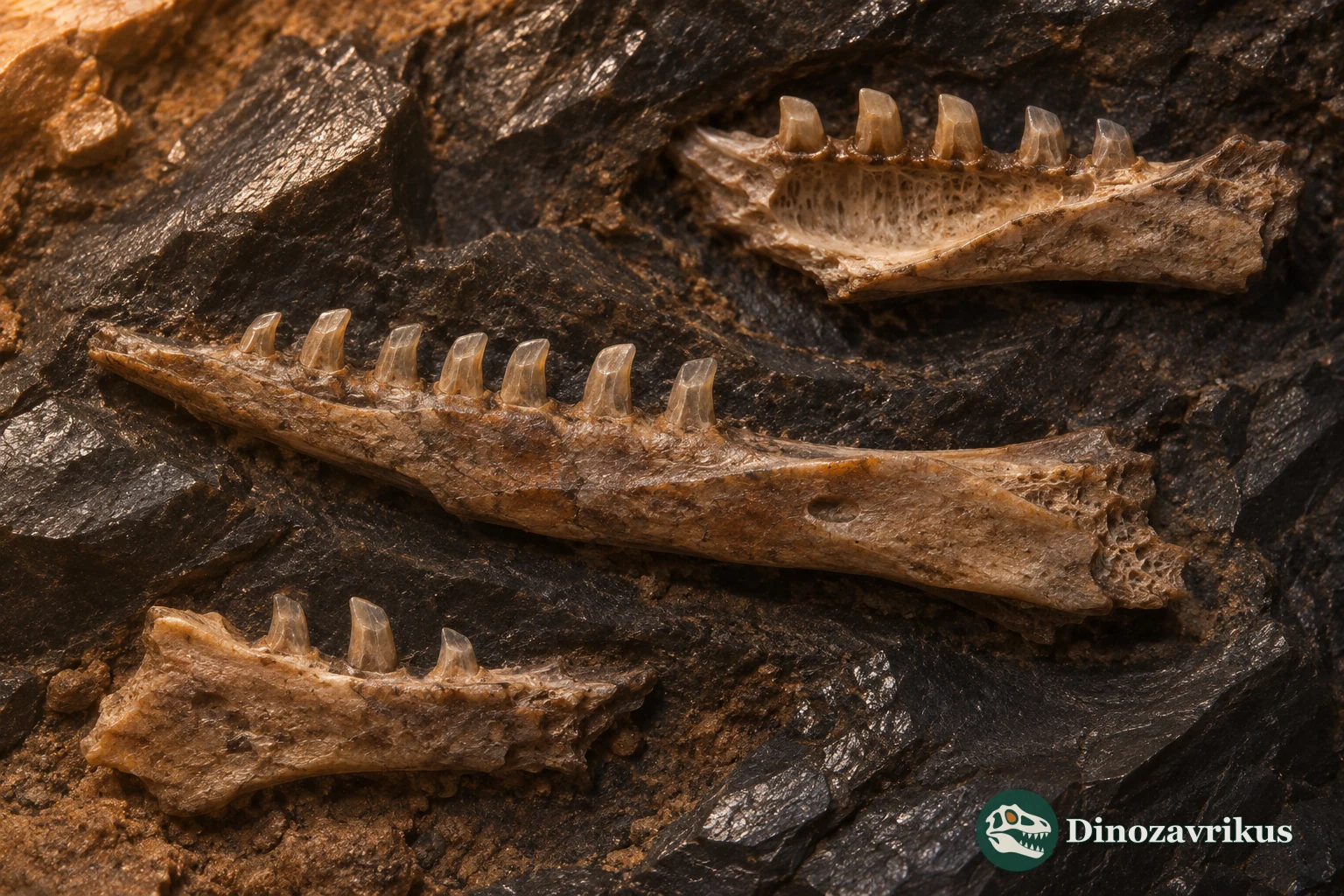
The type species is known from jaws. In the Spanish species, osteoderms were found alongside skull and skeletal bones.
One analysis placed the Spanish species near the base of the scincoid lineage. The results can vary among species and analyses.
The jaw fragments do not reveal how closely the Portuguese and Romanian species resembled the Spanish one in life.
The type species from Portugal
Fossils of Becklesius hoffstetteri come from the Late Jurassic deposits of Guimarota near Leiria. Seiffert originally described the species as Becklesisaurus hoffstetteri. Richard Estes erected Becklesius in 1983. Similar jaw and skull fragments from the British Purbeck deposits have been identified at genus level. The Purbeck fossils also include Paramacellodus, another member of the family.
Bony armour in the Spanish species
Annette Richter described Becklesius cataphractus from the Early Cretaceous of Uña, Spain. The material includes parts of the skull, body and limbs, as well as jaws. It also includes osteoderms, small bones that formed armour within the skin. The epithet cataphractus refers to this covering.
Squarer crowns from Romania
The Maastrichtian species Becklesius nopcsai from the Hațeg Basin is known from several jaw fragments. Its type specimen is a 3.7 mm dentary fragment preserving four complete teeth. Compared with the other two named species, it has a lower outer cusp and a proportionately wider inner cusp. The crown looks squarer in profile. The name honours the palaeontologist Franz Nopcsa.
Frequently asked questions
Is bony armour known in every species of Becklesius?
Osteoderms are well documented in the Spanish species, Becklesius cataphractus. The jaws of the other species give little information about their body covering.
Where was the type species found?
It comes from Late Jurassic deposits at Guimarota near Leiria, Portugal.
How do the Romanian species’ teeth differ?
Becklesius nopcsai has a lower outer cusp and a relatively wider inner cusp than the other named species. Its crown has a squarer profile.
How many teeth does the Romanian holotype preserve?
Four complete teeth and two empty positions are visible in the 3.7 mm jaw fragment.