

Blountia was a Cambrian trilobite preserved on both sides of a major change in Laurentia's marine fauna. One early specimen retains almost its whole shell. Later collections show that the genus crossed the extinction interval as its species composition changed.
Quick facts
| Group | Kingstoniid trilobites |
|---|---|
| Age | Guzhangian to Paibian |
| Genus named by | Charles Doolittle Walcott, 1916 |
| Type species | Blountia mimula |
| Length of the type shell | About 7 mm |
| Trunk segments on the type shell | Seven |
What can the fossils tell us?
This is a count from Blountia mimula. Isolated head and tail shields cannot establish the trunk anatomy of the other species.
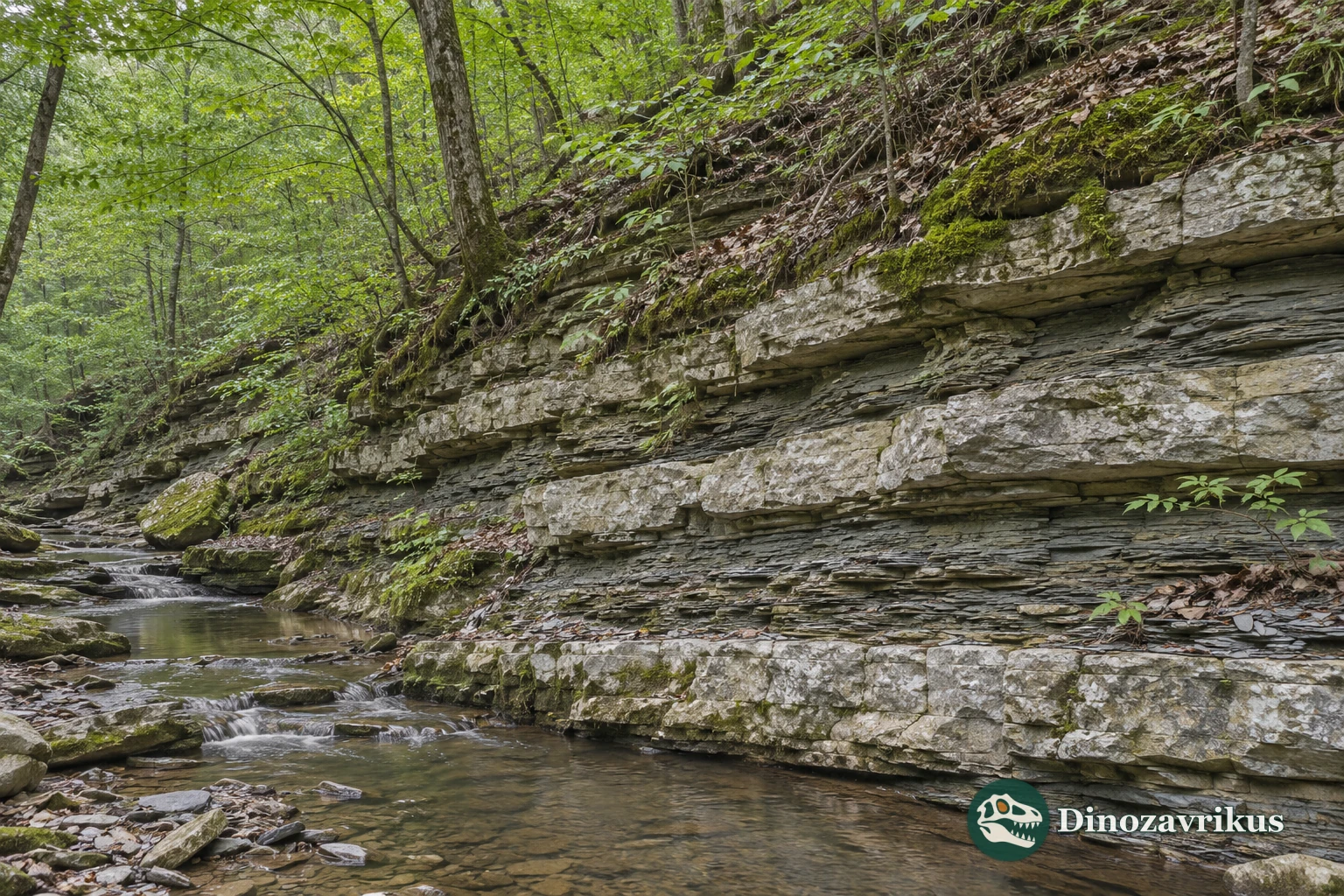
The rocks in eastern Tennessee record a marine setting. Their composition alone does not resolve the animal's exact living depth.
The younger strata contain other species. The genus record alone cannot show that an individual species survived the transition.
Seven trunk segments in the Tennessee shell
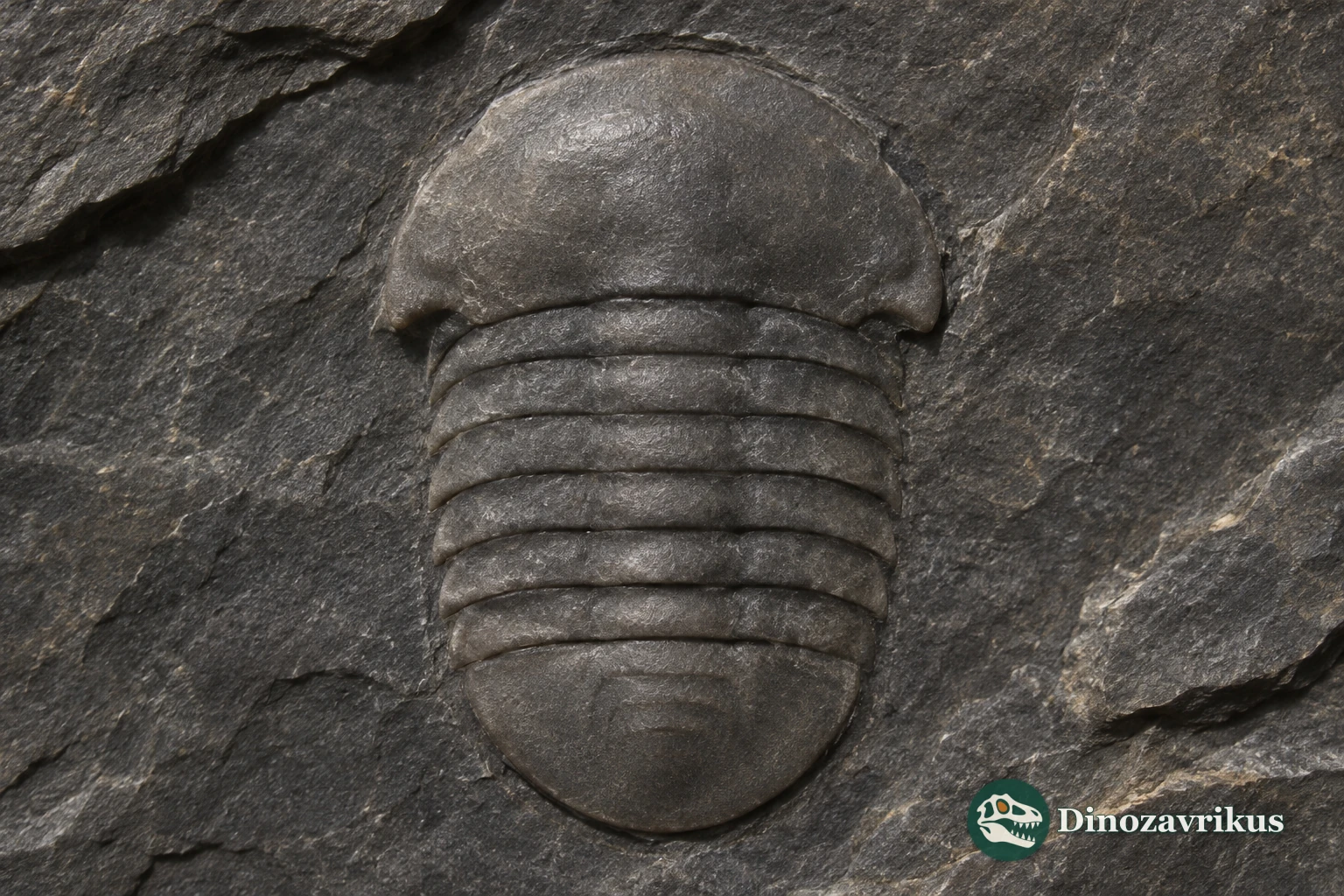
In 1916 Charles Doolittle Walcott established the genus with the North American species Blountia mimula as its type. The holotype, USNM 62781, comes from the Maryville Limestone at Shields Ridge in eastern Tennessee. It is held by the Smithsonian Institution's National Museum of Natural History. Its nearly complete dorsal shell was about 7 mm long. Walcott counted seven articulated trunk segments.
The segments form a convex axis. To either side, they extend almost flat before bending sharply downwards. The semi-oval tail shield has a raised axis and weak grooves on the outer surface. The small articulated specimen offers a direct measurement, while isolated head shields include larger material.
Limestone and shale on the ancient shelf
Walcott recorded remains of Blountia mimula at several sites in eastern Tennessee. Some came from near the top of the Maryville Limestone beside the Nolichucky Shale. At other sites, researchers recovered mainly separate head and tail shields. Beyond these first sections, the genus occurred widely on the Laurentian shelf. A later revision described new species from Tennessee, Nevada and Newfoundland.
Across the boundary between two stages
The Laurentian trilobite fauna changed abruptly at the end of the Guzhangian. Blountia species known from older beds disappear from the studied sections. Other species enter the fossil record during and after the extinction interval. The youngest occurrences in the modern revision lie in the early Paibian Aphelaspis Zone.
New collections and a review of museum specimens increased the number of recognised Blountia species in regional Steptoean strata from two to six. In the authors' evolutionary tree, those species fall on different branches. Their placement gives no support to a single, simple radiation from one recent survivor of the crisis.
Frequently asked questions
Which species anchors the name Blountia?
Blountia mimula, from eastern Tennessee. Walcott established the genus in 1916.
How large is the type specimen?
Its nearly complete dorsal exoskeleton measures about 7 mm. This is a measurement of an individual.
How far does the record of the genus extend after the crisis?
The youngest occurrences in the sections studied are in the Aphelaspis Zone of the early Paibian.
What did the revision add to the Steptoean record?
It identified six species in Steptoean beds. Those species did not form a single branch in the evolutionary analysis.