

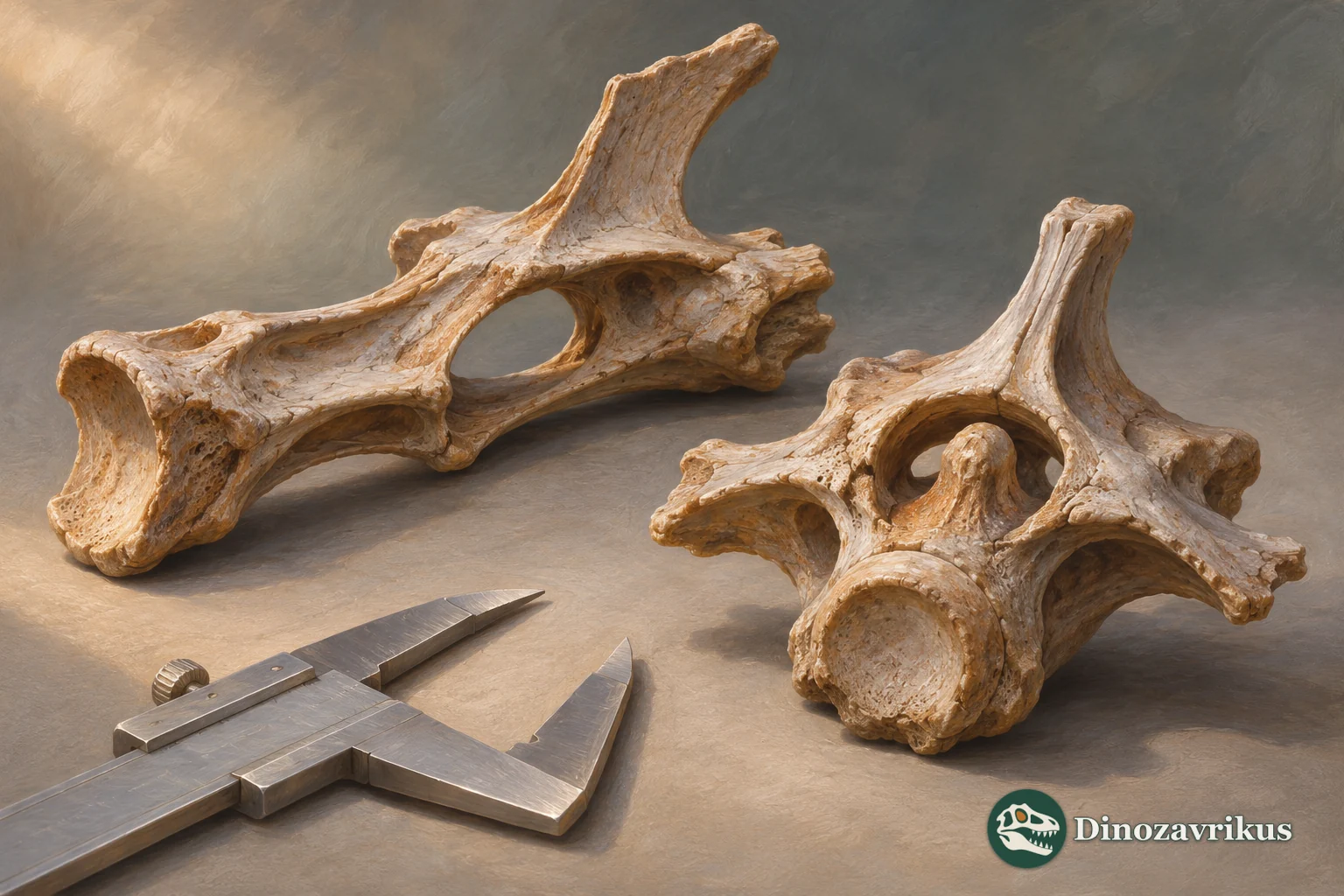
Bogolubovia orientalis comes from Cretaceous deposits near Malaya Serdoba, Russia. Its name was founded on the back of a single neck vertebra described in 1914. A second vertebra from the same locality prompted a reassessment in 2022. These fossils reveal details of the neck and support comparisons with other pterosaurs; they do not directly show the skull, wings or full wingspan.
Quick facts
| Scientific name | Bogolubovia orientalis |
|---|---|
| Locality | Malaya Serdoba, Penza Oblast, Russia |
| Rock unit | Rybushka Formation, Late Cretaceous |
| Material | A middle cervical fragment and an atlantoaxis |
| Affinities | Pteranodontidae in the 2022 reassessment; historically disputed |
| Size | A secure full wingspan cannot be measured from these bones |
What can the fossils tell us?
The original type is the posterior portion of a middle cervical vertebra. A later find is an atlantoaxis. No skull or wing bones are attributed to the species.
The species was named Ornithostoma orientalis in 1914; Bogolubovia was proposed in 1989. Reclassification did not create a complete new skeleton.
The 2022 authors identified a combination of vertebral features as pteranodontid. Older work had considered an azhdarchid assignment or a doubtful name.
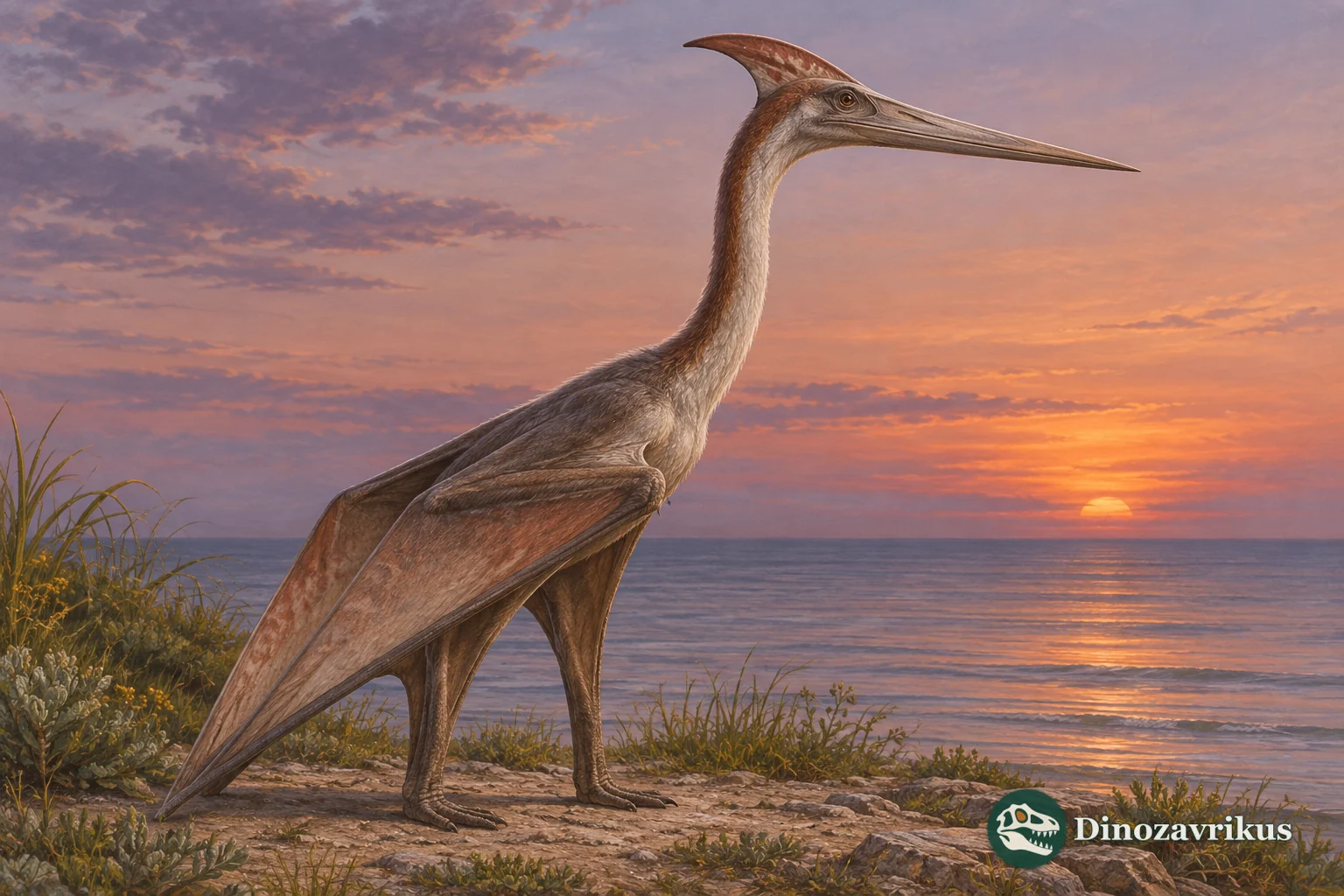
The bones do not establish beak shape, wingspan, colour or food. Life scenes are comparative artwork.
Discovery and names
Geologist V. G. Khimenkov found the original vertebra near Malaya Serdoba in 1911. Nikolai Bogolubov described it as Ornithostoma orientalis in 1914. Lev Nesov and Andrei Yarkov later proposed the genus Bogolubovia, honouring the first researcher. These are successive taxonomic interpretations of the original material.
The fossils come from the Rybushka Formation, assigned an upper Campanian age. Its marine deposits record where a bone was buried. They do not demonstrate that the living pterosaur spent all its time over open sea.
A second cervical vertebra
Alexander Averianov and Andrei Kurin described an atlantoaxis from Malaya Serdoba in 2022. This complex comprises the first two cervical vertebrae. They assigned it to the same taxon as the older middle cervical fragment, noting a rounded joint surface, reduced processes and paired pneumatic openings. Together the two fossils supplied a revised diagnosis.
The authors placed Bogolubovia among pteranodontids and distinguished it from Pteranodon and Volgadraco. Earlier researchers had proposed azhdarchid affinities or considered the name insufficiently diagnostic. The 2022 conclusion is a published interpretation open to further testing.
What the fossils do not reveal
Neither specimen includes a skull, tooth-bearing jaw, wing skeleton or membrane. Beak shape, crest, diet, colour and an exact wingspan therefore cannot be observed directly. Estimates made from a single neck fragment are necessarily indirect.
Other pteranodontids can guide a comparative reconstruction, but their known skulls must not be presented as the skull of Bogolubovia. Even the visual setting in life art is an inference from the geology rather than a record of behaviour.
Why the name still matters
The second find shows how a new bone from the same anatomical region can change the assessment of a rare species. It supports a distinction from other named pteranodontids in the 2022 analysis. Further associated fossils would be needed to test the full body plan and ecological interpretation.
Frequently asked questions
Where was Bogolubovia found?
Both attributed neck vertebrae come from the Malaya Serdoba area of Penza Oblast, in the Rybushka Formation.
Why did its genus name change?
The first vertebra was described as Ornithostoma orientalis. A separate genus, Bogolubovia, was later proposed for the species.
Is its wingspan known?
No secure full wingspan can be measured: neither attributed specimen preserves wing bones.
How is it classified now?
The 2022 reassessment placed it among pteranodontids on cervical anatomy, after earlier conflicting identifications.