

Bothriagenys is a Cretaceous lizard first described from jaw fragments in Utah. Its name refers to a narrow groove inside the lower jaw. A younger species was named from Texas. The jaws permit comparisons with other lizards, while the exact family of the type species remains unresolved.
Quick facts
| Group | Squamate lizards, family uncertain |
|---|---|
| Age | Cretaceous, Albian–Cenomanian boundary to Campanian |
| Region | North America, United States, Utah and Texas |
| Type species | Bothriagenys mysterion |
| Scientific name | Bothriagenys |
| Diet | No direct evidence |
What can the fossils tell us?
Holotype OMNH 28119 has sixteen tooth positions and two complete teeth at the back of the preserved row.
The Meckelian groove widens near the back of the bone. Its shape was among the features used to compare the jaw with those of scincomorphs.
The jaw fragments provide no clear family diagnosis or direct dietary evidence.
The Cedar Mountain Formation material
Randall Nydam named Bothriagenys mysterion in 2002 from the Mussentuchit Member in Emery County, near the Albian–Cenomanian boundary. The same deposits contain other lizards, including Dicothodon, whose tooth crowns differ in form.
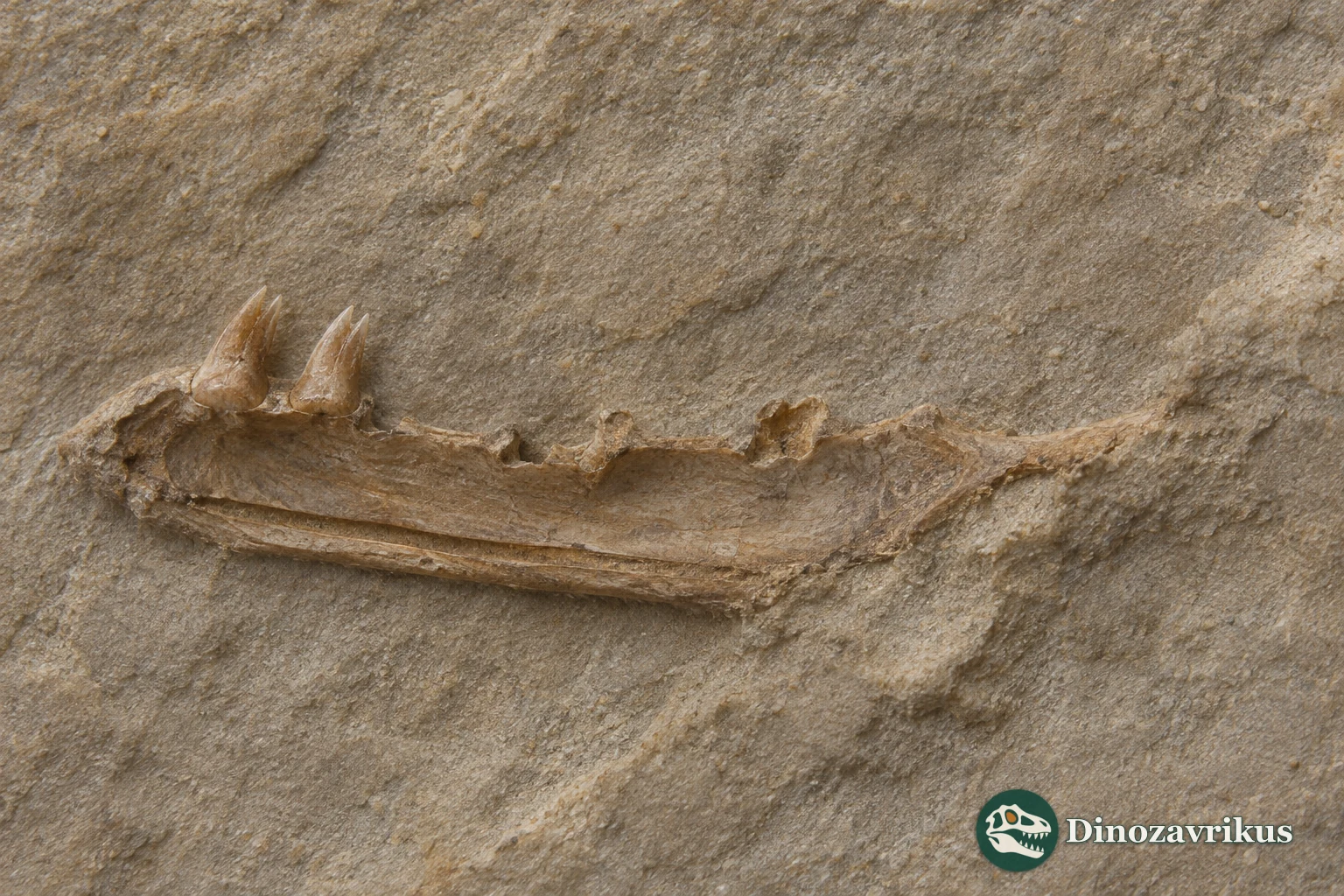
What survives on the inside of the jaw
In holotype OMNH 28119, the Meckelian groove is open as a narrow slit along most of the bone and widens towards the back. Sixteen tooth positions can be distinguished. The two intact teeth are tall and narrow, with short cutting margins on their crowns. Hollows at their bases were interpreted as evidence of tooth replacement.
A second species from west Texas
Wick and Shiller described Bothriagenys flectomendax in 2020 from the lower Campanian part of the Aguja Formation. It is younger than the type material from Utah. Similarities in the jaws supported placing it in the same genus. More complete remains would allow a stronger test of the scincomorph placement.
Frequently asked questions
What does the name Bothriagenys refer to?
It combines Greek roots for a small trench and a jaw, in reference to the narrow Meckelian groove.
Did it have only two teeth?
Two complete teeth survive in the type, but the preserved part of the jaw has sixteen distinguishable tooth positions.
Where was the second species found?
Its fossils came from the lower Campanian part of the Aguja Formation in west Texas.
Was Bothriagenys a skink?
Jaw anatomy suggests a broad scincomorph affinity. It does not securely place the genus in the skink family.