

Brachyprotoma was an extinct North American skunk whose fossil record is dominated by crania, jaws and teeth. The short, massive lower jaw is more informative than the animal's exterior: no fossil coat preserves the stripe pattern shown in the cover. This image is an artistic suggestion.
The genus occurs in Pleistocene deposits ranging from eastern American caves to northern Yukon. These finds place a small carnivore within the changing Quaternary fauna, but the sparse record leaves both species boundaries and the exact range uncertain.
Quick facts
| Group | Carnivora, Mephitidae |
|---|---|
| Genus | Brachyprotoma Brown, 1908 |
| Earlier species name | Mephitis obtusata Cope, 1899 |
| Age | Pleistocene |
| Range | United States and northern Yukon |
| Main material | Skulls, lower jaws and isolated teeth |
| Species question | B. brevimala has also been included within B. obtusata |
What can the fossils tell us?
Short, broad jaws with crowded premolars recur in Brachyprotoma. A Mineral Hill specimen lacks one premolar, demonstrating that tooth number varies.
A northern Yukon jaw and a provisionally assigned tooth extended the reported range into Beringia. They do not map a continuous distribution.
The researchers preserved it rather than destroy material for radiocarbon work. Dates on other cave bones provide context, not the exact age of this jaw.
Historical names and the Utah species
Edward Drinker Cope named Mephitis obtusata in 1899 from Port Kennedy cave material in Pennsylvania. Barnum Brown established Brachyprotoma in 1908 and named additional Arkansas forms. The historical names document successive classifications, not a secure count of biological species.
Timothy Heaton described B. brevimala from Utah's Crystal Ball Cave in 1985, arguing that its skull differed from eastern material. Elaine Anderson later grouped eastern and western fossils under B. obtusata. Authors studying Mineral Hill Cave adopted her broad treatment while noting the earlier disagreement. Whether the Utah form merits separate status depends on comparative evidence, not on the number of old names.
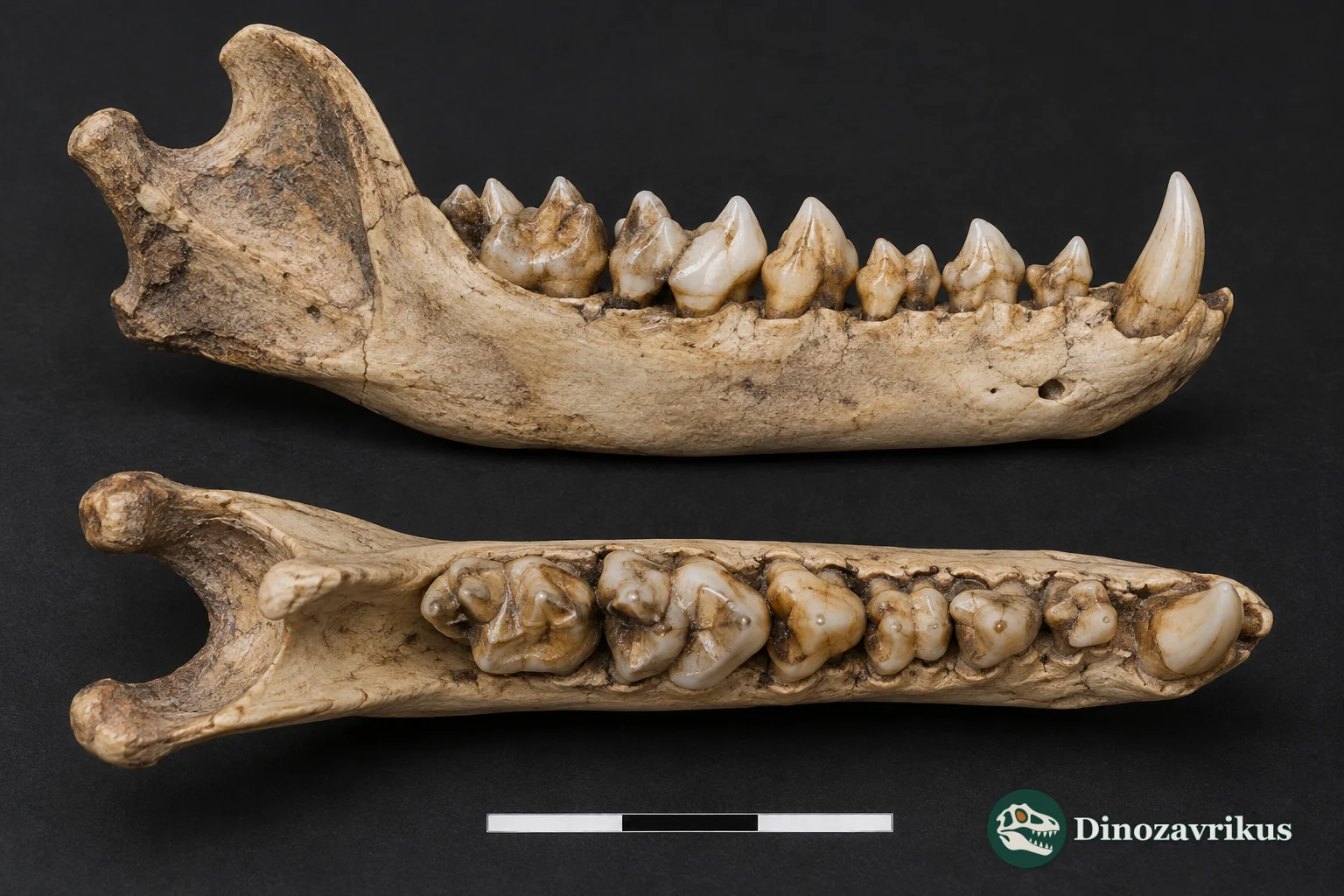
A jaw that lacks a premolar
Brachyprotoma jaws are relatively short and broad, with usually crowded premolars. The Mineral Hill Cave jaw in Nevada departs from the usual pattern because a lower second premolar never developed. A single missing tooth therefore cannot exclude an otherwise suitable specimen from the genus.
A Smithsonian record documents Pleistocene skull and tooth material collected by Frederick V. Grady in West Virginia. That museum entry is a separate specimen record, not an identification of Cope's type. Phillip Youngman reported a jaw and a provisionally assigned tooth from northern Yukon in 1986, extending the documented geographic range into Canadian Beringia.
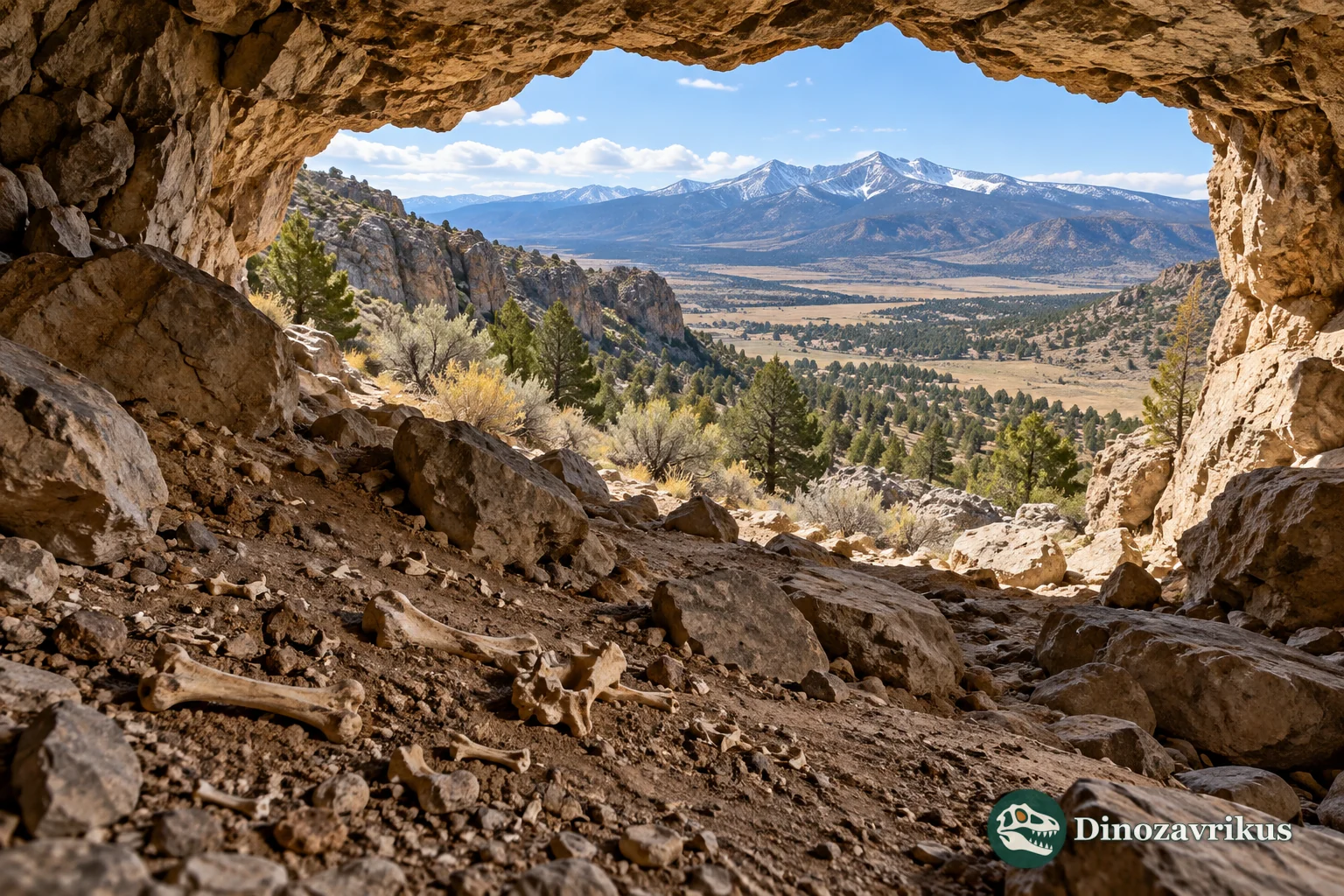
Cave deposits and limits of a life reconstruction
Crystal Ball Cave accumulated bones over a long interval. Radiocarbon dates show deposition beginning at least 23,000 years ago, but not every fossil entered at once. Its faunal list also includes Camelops and Smilodon; that list does not imply that every named animal died together.
The rare Mineral Hill jaw was left intact instead of directly dated. Similar coloration to other old cave bones offers an age clue, not a measurement of that skunk's age. The fossil teeth cannot reveal its diet in the detail known for a living skunk, whether it had defensive scent glands, or the pattern of its fur. The cave illustration is a generic setting rather than a photograph of the named site.
Frequently asked questions
Why is Brachyprotoma called a short-faced skunk?
Its known skull and lower jaw are compact and broad. The name describes bone structure, not measured soft tissues.
Was B. brevimala a separate species?
Heaton described it from Utah as separate. Anderson later included western and eastern fossils within B. obtusata; the classification remains an interpretation of sparse material.
Do fossils preserve its black-and-white stripes?
No. The known skulls and jaws do not preserve fur, so the cover's pattern is artistic.
Was the Mineral Hill jaw directly dated?
No. It was left intact. Other bones and cave context provide indirect age evidence.