

Broiliellus is a genus of Early Permian temnospondyls from Texas and New Mexico, assigned to the family Dissorophidae. The group is known for bony elements associated with the back, but different species preserve different pieces of the skeleton.
The genus belongs in the ancient amphibian catalogue. A skull and partial skeleton of B. reiszi described in 2013 added useful cranial evidence, while museum specimens of B. brevis anchor details to individual catalogued fossils. Similar armour in Cacops is a comparison, not proof that the two genera had identical biology.
Quick facts
| Genus | Broiliellus; type species B. texensis |
|---|---|
| Group | Temnospondyl; family Dissorophidae |
| Age | Early Permian, Cisuralian |
| Region | Texas and New Mexico, United States |
| Notable species | B. reiszi, described from a skull and partial skeleton |
| Skin bones | Dorsal osteoderms are known in some dissorophid material |
| Total body length | No genus-wide estimate is secure |
What can the fossils tell us?
Williston named Broiliellus in 1914 and designated B. texensis as the type species. Later finds expanded the genus, but the type material does not amount to a complete skeleton.
Holmes, Berman and Anderson described B. reiszi from the El Cobre Canyon Formation. The skull character combination and a phylogenetic analysis supported its relationship with B. brevis while distinguishing it from other dissorophids.
Some dissorophids preserve small osteoderms along the back. Their position is compared with Cacops and other relatives, but one feature is insufficient to settle classification or prove a particular defensive behaviour.
A 2021 phylogenetic study treated five species of Broiliellus. Dissorophid relationships have changed among analyses, partly because many fossils are incomplete and osteoderm characters have limited diagnostic value.
Several species, separate fossil records
Williston introduced Broiliellus in 1914 for Permian amphibian material from Texas; the type species is B. texensis. Later authors named additional species from different localities and specimens. B. brevis, described by Robert Carroll in 1964, is anchored by holotype MCZ:VP:VPRA-1424, a skull now catalogued at Harvard’s Museum of Comparative Zoology.
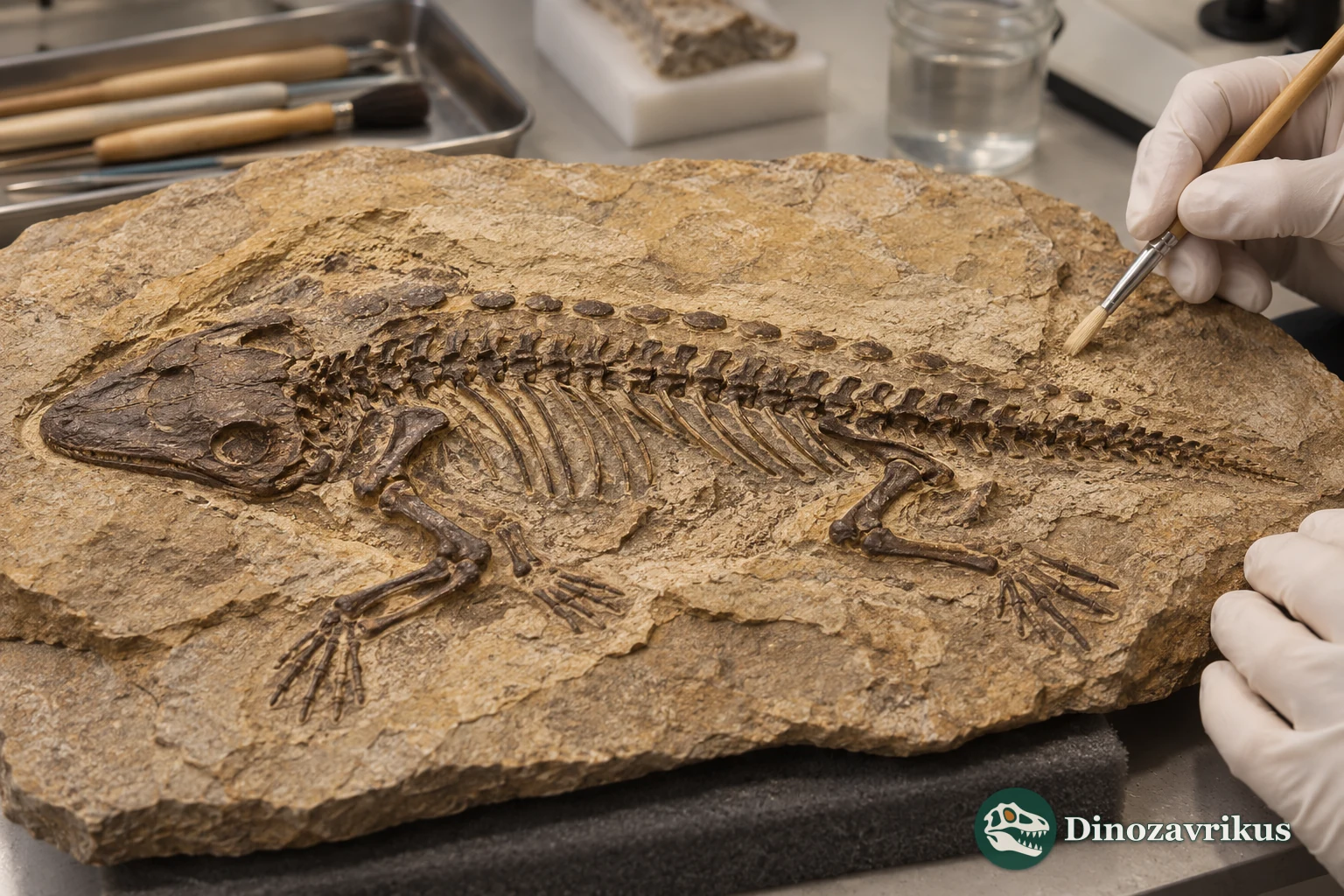
This is not a single fossil skeleton gradually filled in by later discoveries. The genus-level picture comes from material assigned to several species. One taxon may preserve a clear skull, while another contributes a partial skeleton or separate osteoderms. Those pieces should not be combined into one specimen without evidence of association.
What Broiliellus reiszi added
In 2013, Robert Holmes, Donald Berman and Jason Anderson described B. reiszi from the Early Permian El Cobre Canyon Formation of New Mexico. The material includes a skull and partial skeleton. Its diagnosis relies on a combination of cranial features, including proportions of the preorbital region, palate and lower jaw.
The authors’ phylogenetic analysis supported a close relationship with B. brevis and distinguished the new species from another dissorophid previously called “Broiliellus novomexicanus.” The study also noted osteoderms whose restricted position resembles those of Cacops. That similarity is useful for comparison, but a single feature should not determine the identity of a taxon.
Skull anatomy and small dorsal bones
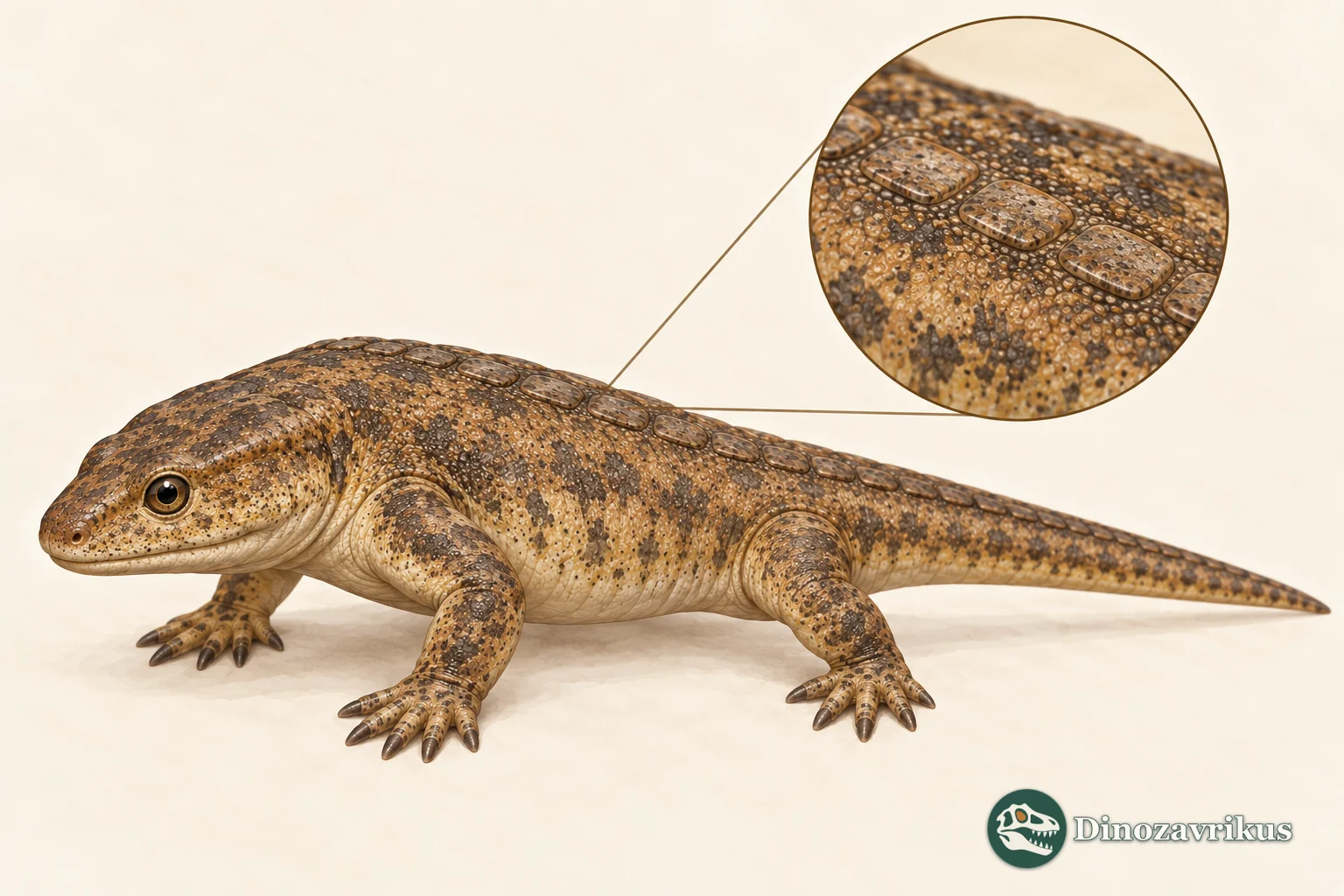
Dissorophids combined a relatively compact body with robust skulls and bony elements associated with the vertebral column. In Broiliellus, the combination and preservation of these features vary among specimens and species. A single idealized armour pattern for the entire genus would therefore overstate what the fossils show.
Osteoderms are bones that form within the skin. Their size, shape and position can be compared when they are preserved in context. A protective role is plausible from their location and comparison with other dissorophids, but the flexibility of the living covering and its effectiveness cannot be observed directly in fossils.
Early Permian landscapes and movement
Texas specimens come from continental Early Permian deposits, while B. reiszi comes from the El Cobre Canyon Formation in New Mexico. Stratigraphic placement gives the fossils a Cisuralian context, but individual bones have not been directly radiometrically dated.
Dissorophidae are often described as terrestrially adapted temnospondyls. This is an inference from combinations of limb, vertebral and integumentary anatomy across the family. It makes movement on land plausible for Broiliellus, but does not establish how much time it spent near water, where it reproduced or what exact prey it ate.
Why the family tree keeps being tested
Phylogenetic analyses have grouped Broiliellus with Dissorophus in Dissorophinae, while other branches include Cacops and related genera. Schoch’s 2012 analysis found osteoderms less useful for resolving relationships than earlier authors had assumed. A 2021 reanalysis treated five Broiliellus species but also emphasized how incomplete samples and character coding affect results.
The genus name remains tied to its type species and published diagnoses, yet the exact branching order can change as specimens and character matrices are revised. A phylogenetic relationship is a tested hypothesis, not evidence that one named species directly descended from another.
What the record cannot tell us
The known fossils support cranial comparisons, the presence of osteoderms in some material and a broad Early Permian distribution across Texas and New Mexico. They do not provide a complete articulated skeleton for every species. A genus-wide body length, body mass, exact diet, skin colour and detailed reproductive behaviour remain unestablished.
Frequently asked questions
When did Broiliellus live?
The described species are known from Early Permian deposits in Texas and New Mexico.
What is Broiliellus reiszi?
It is a species described in 2013 from a skull and partial skeleton in the El Cobre Canyon Formation of New Mexico.
What are osteoderms?
They are bones that form in the skin. Some dissorophids preserve small dorsal osteoderms, but their exact function cannot be observed directly.
Was Broiliellus fully terrestrial?
Dissorophid anatomy supports adaptations for movement on land, but the exact habitat and dependence on water are not established for the genus.