

Buttsia was a trilobite genus found in Late Cambrian marine deposits. B. drabensis dominates some of the trilobite assemblages preserved in microbial reefs in Pennsylvania. The genus is also abundant in a collection from limestone boulders in western Newfoundland.
Quick facts
| Group | Trilobites |
|---|---|
| Age | Cambrian, including the Furongian |
| Region | North America (United States and Canada), Asia (Siberia) |
| Diet | Unknown |
| Type species | Buttsia drabensis |
| Genus named by | James Lee Wilson, 1951 |
What can the fossils tell us?
The fossils come from microbial carbonate buildups in Pennsylvania. The association with the reef does not reveal what the trilobite ate.
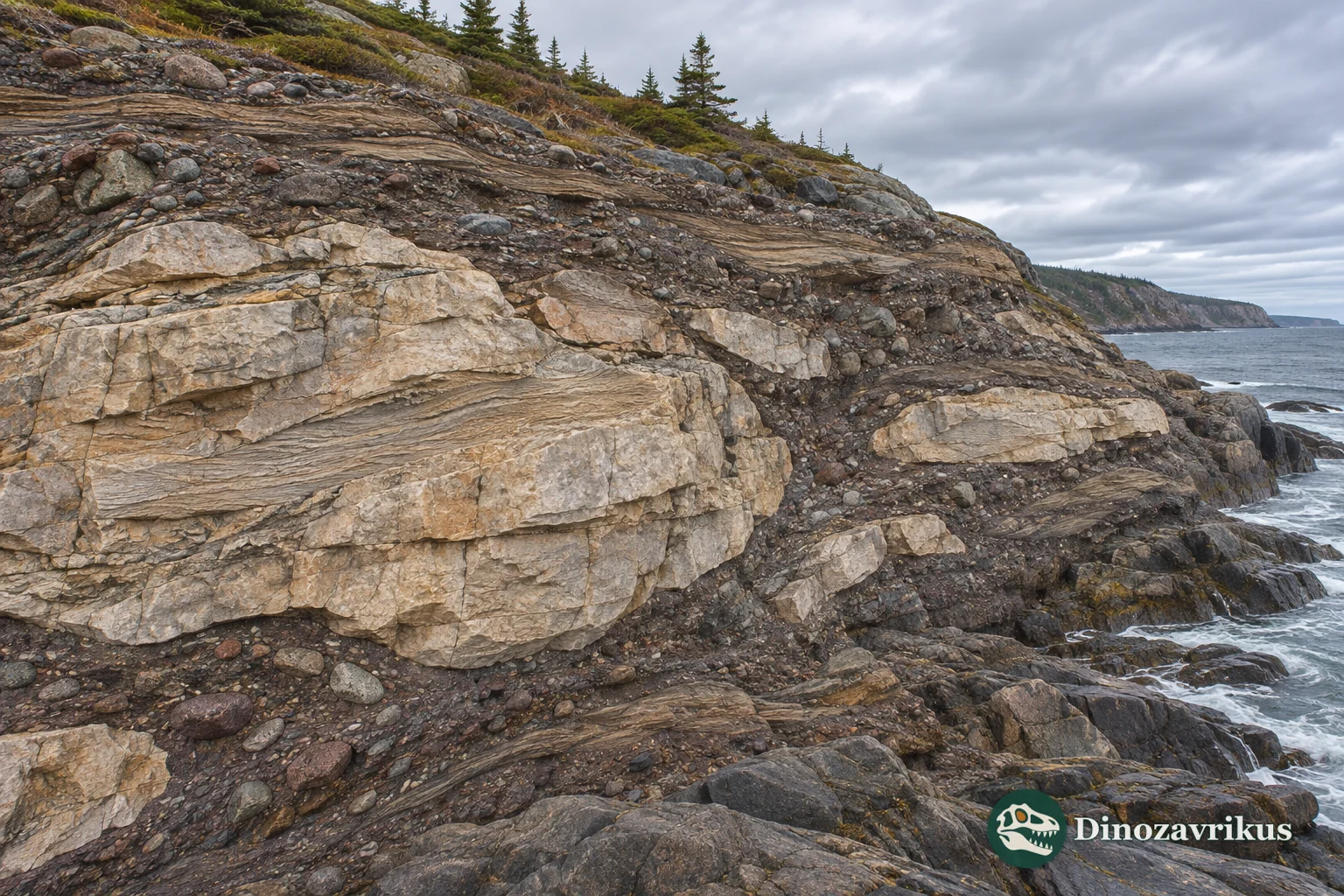
The limestone formed on a shelf before it was incorporated into a conglomerate. Its fossils sample the community preserved in the original rock.
In 2026, Varlamov and Makarova assigned specimens from the Siberian Platform to Buttsia. The material represents a separate species from the Pennsylvania one.
The Pennsylvania reef assemblages
James Lee Wilson established Buttsia in 1951 using material from the Gatesburg Formation. Later work recorded the type species B. drabensis in microbial reefs at Imler Quarry and in the Drab–Beavertown section. Microbial communities built up the carbonate structures preserved in these limestones. B. drabensis dominates the trilobites in both reef collections.
Associated species place the two collections near the top of the Cliffia lataegenae Subzone of the Elvinia Zone. The Drab–Beavertown reefs are slightly younger than those at Imler Quarry. Other trilobite assemblages, including those with Eurekia, help correlate still younger Late Cambrian strata in North America.
Newfoundland boulders and a separate Siberian record
Stephen Westrop and Jennifer Eoff studied three shelf-derived boulders from the Shallow Bay Formation of western Newfoundland. Their fossils date to the Jiangshanian. Buttsia dominates the assemblage, which resembles the reef faunas from the Gatesburg Formation in Pennsylvania.
On the northern Siberian Platform, Tatiana Pegel documented B. contracta and B. parvula among the reef-flank trilobites of the Diringde complex. In 2026, A. I. Varlamov and A. L. Makarova named B. mala from the Kulyumbe River section in the northwestern Siberian Platform. B. australis is an older published assignment from the Early Ordovician of Argentina. Its generic placement warrants a separate comparison with the North American type material.
Frequently asked questions
Which species defines Buttsia?
Wilson named B. drabensis from the Gatesburg Formation in 1951.
Where does Buttsia occur in reef limestone?
B. drabensis dominates the trilobite collections from reefs at Imler Quarry and in the Drab–Beavertown section in Pennsylvania.
Why were the Newfoundland fossils found in boulders?
The boulders are pieces of limestone carried from the shelf into a conglomerate. They retain fossils from the original shelf deposits.
Has Buttsia been described from Siberia?
Yes. B. mala was named from the Kulyumbe River section in 2026.