

Cadurcogekko was a gekkotan lizard from the Quercy phosphorites of southwestern France. Historical collections preserve jaws, parts of the skull roof and other small bones. Re-examination of the material has repeatedly changed how the fossils are classified.
Quick facts
| Group | Geckos (Gekkota) |
|---|---|
| Age | Eocene (dated records) |
| Region | Europe, France |
| Type species | Cadurcogekko piveteaui |
| Scientific name | Cadurcogekko |
| Diet | Exact prey is unknown |
What can the fossils tell us?
Upper and lower jaw bones survive from Quercy. Some preserve sculpturing on their outer surface.
The number of tooth positions and the structure of the jaw help distinguish the genus from other small lizards.
Cranial bones preserve no soft tissues of the toes. They cannot show whether this gecko had adhesive pads.
A jaw first identified as a frog
In 1927 Jean Piveteau referred part of the Quercy material to marsupial frogs. Robert Hoffstetter recognised the lizard jaw and named Cadurcogekko piveteaui in 1946. The earliest specimens lack precise locality information within Quercy. Dated material from several deposits provides secure Eocene records.
Fine teeth and a sculptured surface
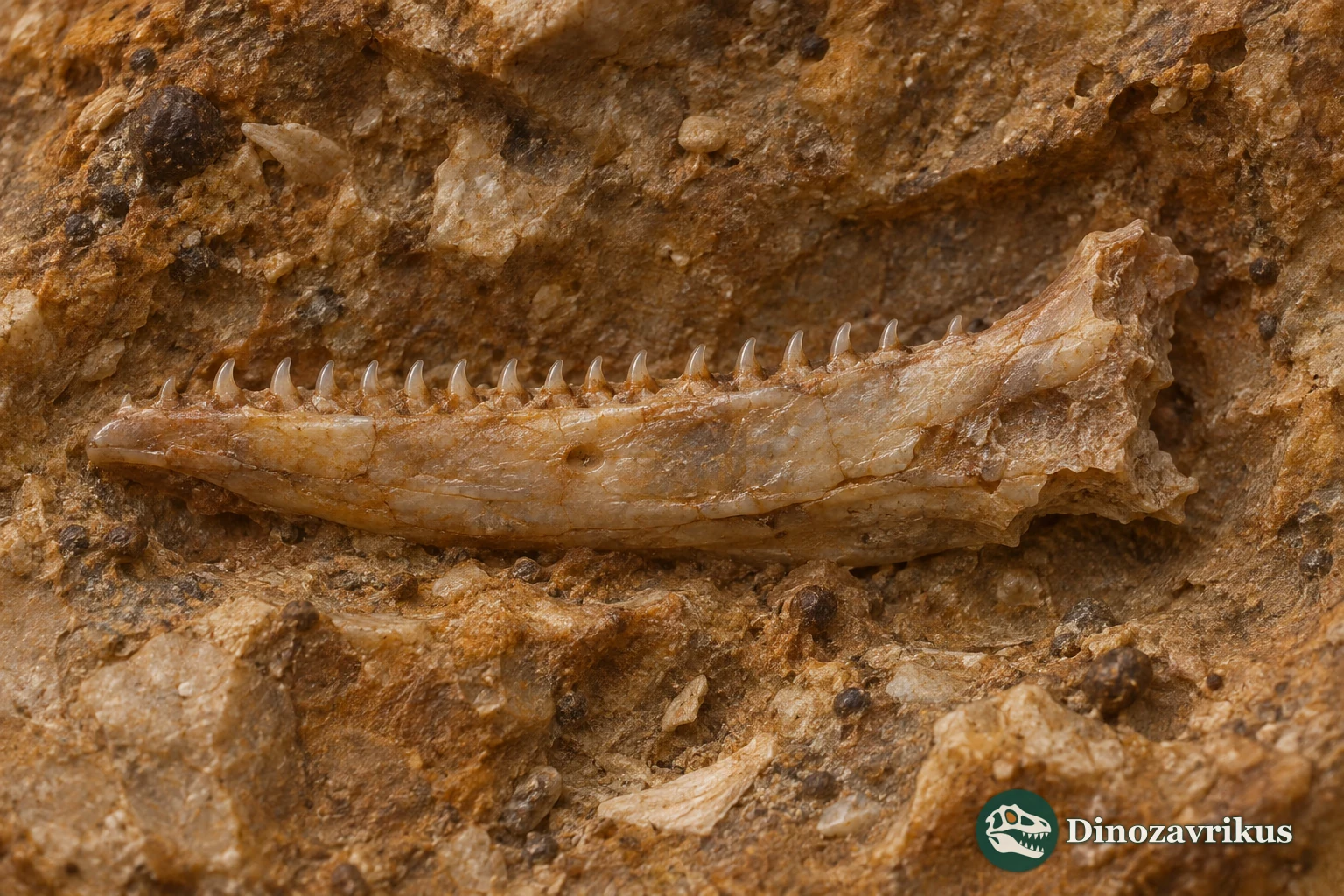
The dentary of the type species is long and low. An incomplete upper jaw bone from Perrière preserves 38 tooth positions. Its rear portion is missing. Identification also draws on the sculptured outer surface of the upper jaw and its contacts with adjoining bones. Quercy preserved other lizards with distinctive jaws, including Pseudolacerta, whose front and back teeth differ markedly.
A new species from a mixed series
In 2015 researchers re-examined material that had been called C. rugosus. Its type jaw proved to belong to a skink and was transferred to Gekkomimus. Some of the remaining fossil bones formed the basis of the gecko C. verus. Its holotype, UM PRA 9, is a right maxilla from Les Pradigues. Two species are currently recognised in Cadurcogekko.
Frequently asked questions
Who named the type species?
Robert Hoffstetter named Cadurcogekko piveteaui in 1946.
Where were the fossils found?
The main record comes from the Quercy phosphorites in southwestern France.
Which species are recognised today?
Cadurcogekko piveteaui is the type species. Cadurcogekko verus was named in 2015.
Could it climb smooth surfaces?
The fossil jaws give no evidence of adhesive toe pads. Its ability to climb a smooth surface remains unknown.