

Most records of Calamagras consist of trunk vertebrae. In the specimen Edward Drinker Cope used to describe the type species, six consecutive bones remained articulated. Many subsequent finds consist of single vertebrae, which can be difficult to identify to species.
Quick facts
| Group | Snakes, constrictor affinities unresolved |
|---|---|
| Age | Early Oligocene for the type species |
| Region | North America, USA and Canada |
| Type species | Calamagras murivorus |
| Scientific name | Calamagras |
| Diet | Exact prey is unknown |
What can the fossils tell us?
The type AMNH 1603 comprises six articulated trunk vertebrae. The centrum Cope measured was about 3 mm long.
The short neural spine and the keel on the underside of the vertebra provide points for comparison with other fossil snakes.
Fossil vertebrae leave its precise relationships, appearance in life and total length unresolved.
Cope's specimen from Cedar Creek
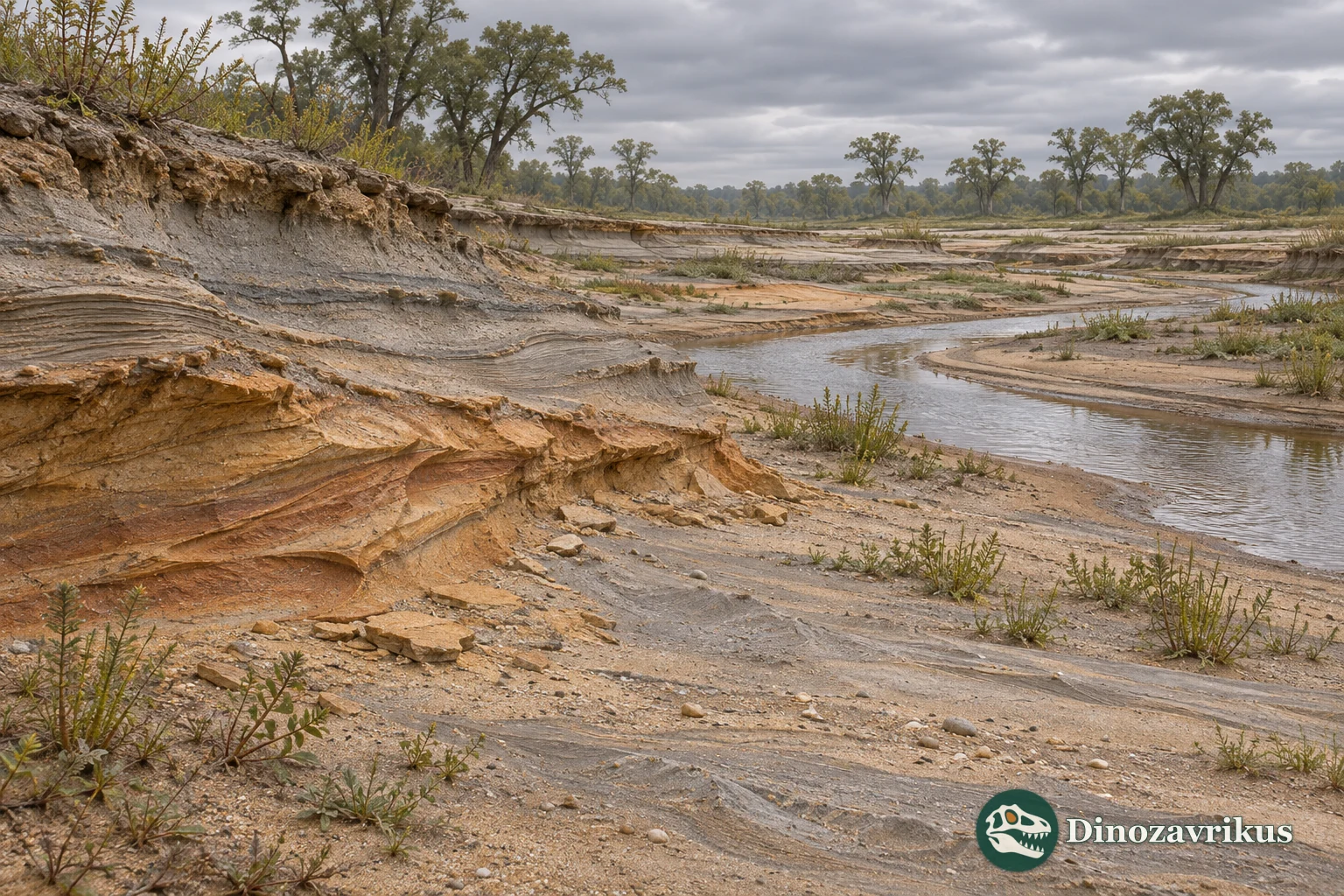
Edward Drinker Cope named Calamagras murivorus in 1873. The type, AMNH 1603, came from the Early Oligocene White River Formation at Cedar Creek in Colorado. In the published measurements, the centrum, or main weight-bearing body of a vertebra, is about 3 mm long. That figure excludes the arch and projections above and below it.
What changes along the spine
The type material has a short spine above the neural arch and a keel along the underside. At Pipestone Springs in Montana, an anterior trunk vertebra stayed attached to the next two bones. The downward projection is more developed on the first bone than on its neighbours. The researchers assigned this group of fossils to Calamagras but left the species indeterminate.
Where the genus fits among snakes
Calamagras was long compared with sand boas. Vertebrae with similar proportions occur in several living and extinct snake lineages. Fossils of Palaeopython offer another example of how vertebrae inform snake classification. Similar bones alone do not demonstrate a close relationship between these two genera.
Frequently asked questions
Where was the type found?
At Cedar Creek in Colorado, in the White River Formation.
How many bones make up the original find?
Six consecutive trunk vertebrae from one snake.
What is about three millimetres long?
The measurement refers to a vertebral centrum, the body of the bone.
What did Calamagras eat?
The known bones provide no direct evidence of its prey.