

Calyptocephalella parodii was a large frog from Miocene Patagonia. The original description named it Gigantobatrachus from disarticulated fossil bones. More complete specimens from the Río Chalía preserved a combination of skull and limb features that allowed researchers to place the species within Calyptocephalella.
Quick facts
| Group | Frogs (Anura), calyptocephalellids |
|---|---|
| Age | Miocene |
| Region | South America, Argentina (Patagonia) |
| Original name | Gigantobatrachus parodii |
| Scientific name | Calyptocephalella parodii |
| Diet | Exact prey is unknown |
What can the fossils tell us?
The holotype is housed at the Museo de La Plata. Río Chalía specimen MPM-PV 21842 preserves around half of the skeleton, including parts of the skull and limbs.
The bony passage for the occipital artery and the form of the shoulder girdle helped support the placement in Calyptocephalella in the 2025 revision.
The teeth and jaw bones document the shape of the mouth. The available fossils leave the prey of this particular species uncertain.
The bones collected by Santiago Roth
Rodolfo Casamiquela described Gigantobatrachus parodii in 1958 from material collected by Santiago Roth. The 2025 revision used historical place names to clarify the source of holotype MLP-PV 59-VIII-30-1. The Laguna Blanca of the original account corresponds to present-day Lago Blanco in southern Chubut Province. The type specimen comes from the Middle Miocene Río Mayo Formation.
More complete fossils at Río Chalía
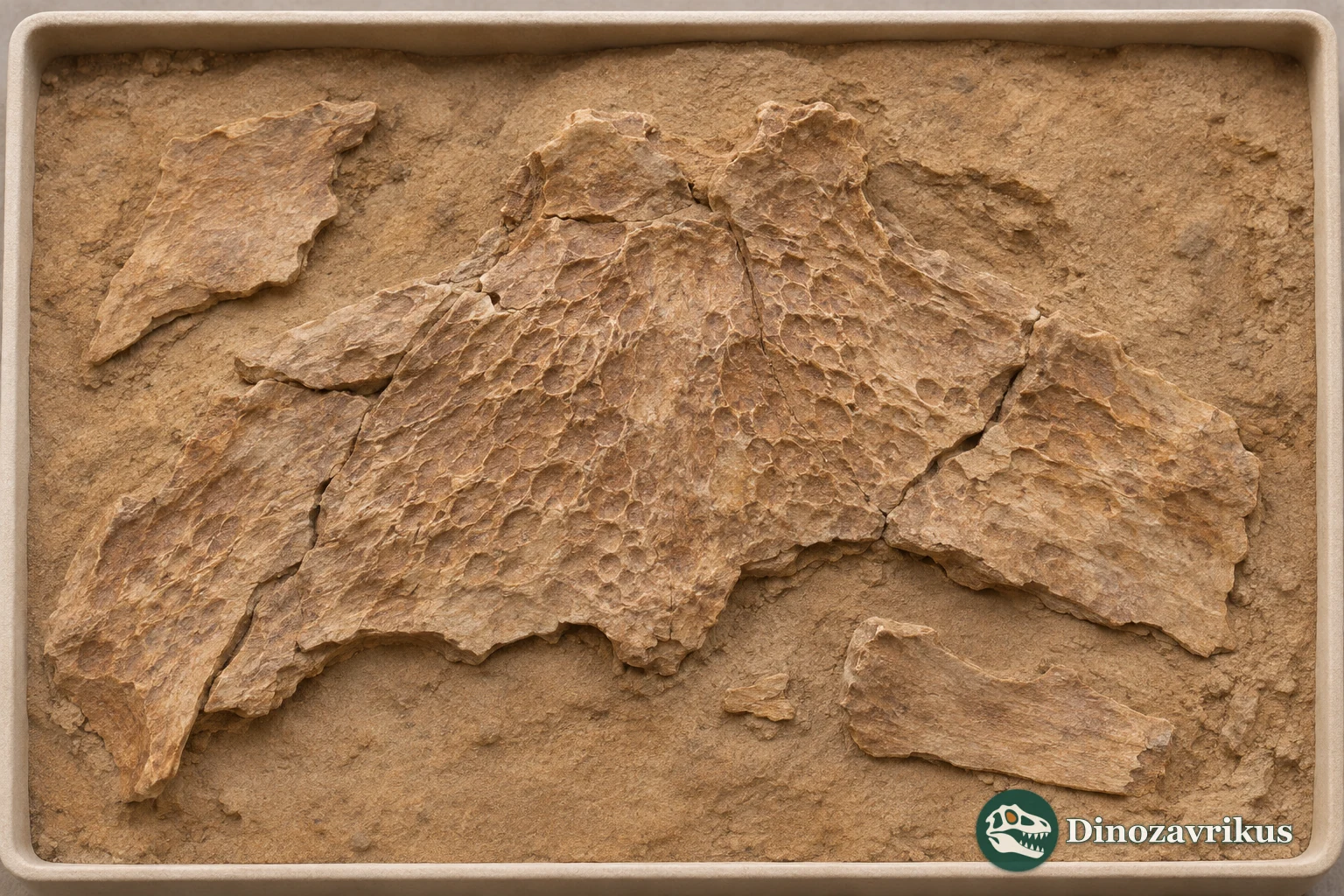
Two large Santa Cruz Formation specimens are catalogued as MPM-PV 21842 and 21843. Around half the skeleton of the former was recovered. The identifiable elements include portions of the skull roof and fragments of the upper and lower jaws. These associated bones made it possible to compare different parts of the same skeleton with the older material from Roth’s collection.
A comparison across the skeleton
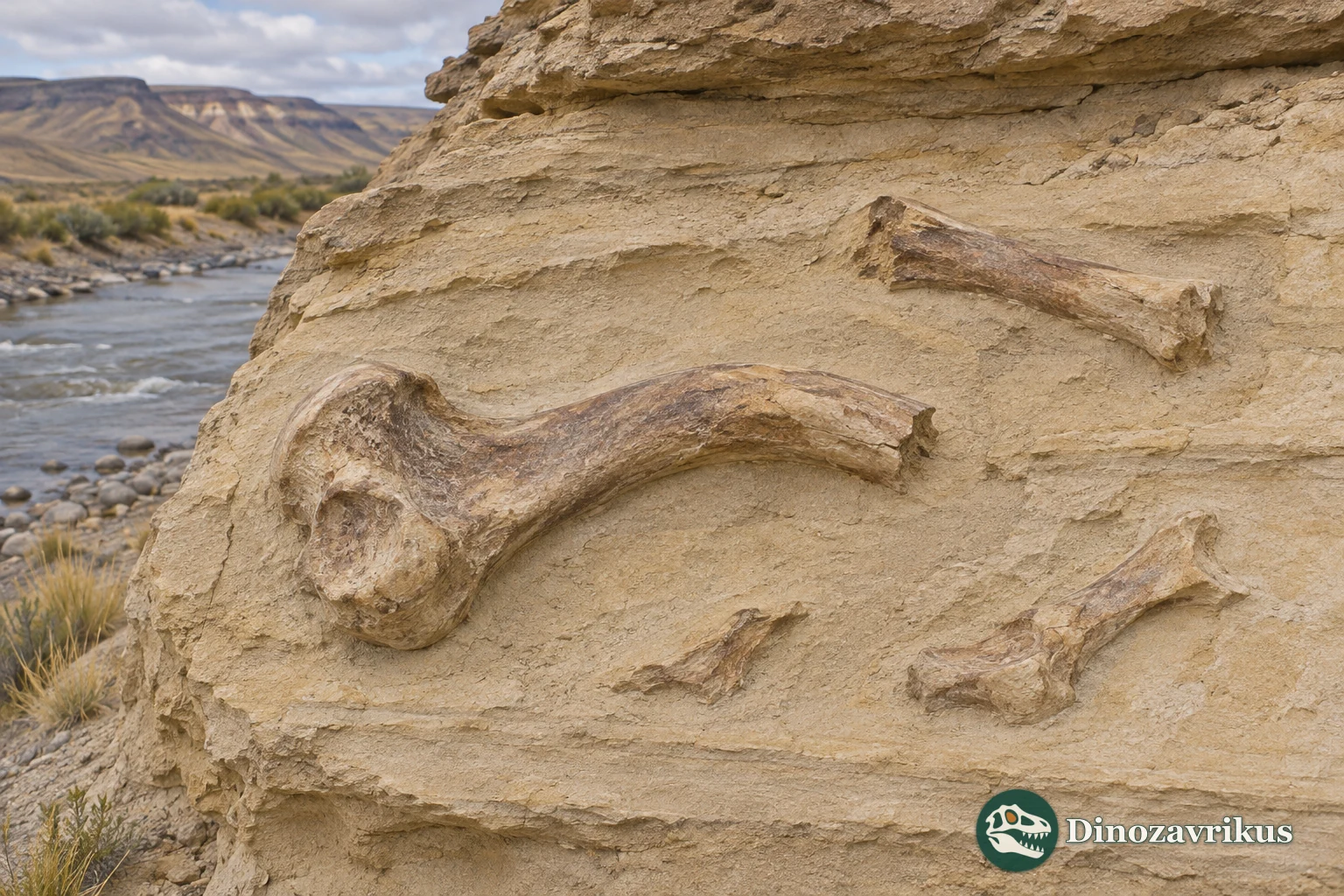
The canal for the occipital artery passes through the otoccipital and frontoparietal. The revision used this feature alongside other evidence to place the species in Calyptocephalella. The scapula has a prominent anterior lamina and the upper arm bone curves laterally. The iliac crest in material of the fossil species is about twice as tall as in the living Chilean relative used in the comparison.
Size and geological age
Casamiquela estimated a trunk length of more than 30 centimetres from the incomplete bones. This does not give a maximum length for the species. Beelzebufo from Madagascar also had a massive skull, but it lived much earlier, in the Cretaceous. The confirmed fossils of Calyptocephalella parodii come from the Miocene of Patagonia. Some separate, younger finds once assigned to the species still require re-examination.
Frequently asked questions
What happened to the name Gigantobatrachus?
It was the original genus name. The 2025 revision placed the type species in Calyptocephalella and retained the species epithet parodii.
Where is the type locality?
The holotype is from the Middle Miocene Río Mayo Formation at Lago Blanco in southern Chubut Province, Argentina.
Is there a complete skeleton?
The described specimens are incomplete. One Río Chalía individual preserves approximately half of its skeleton.
How large was the frog in the original description?
Casamiquela estimated a trunk length of more than 30 centimetres from incomplete fossil bones.