

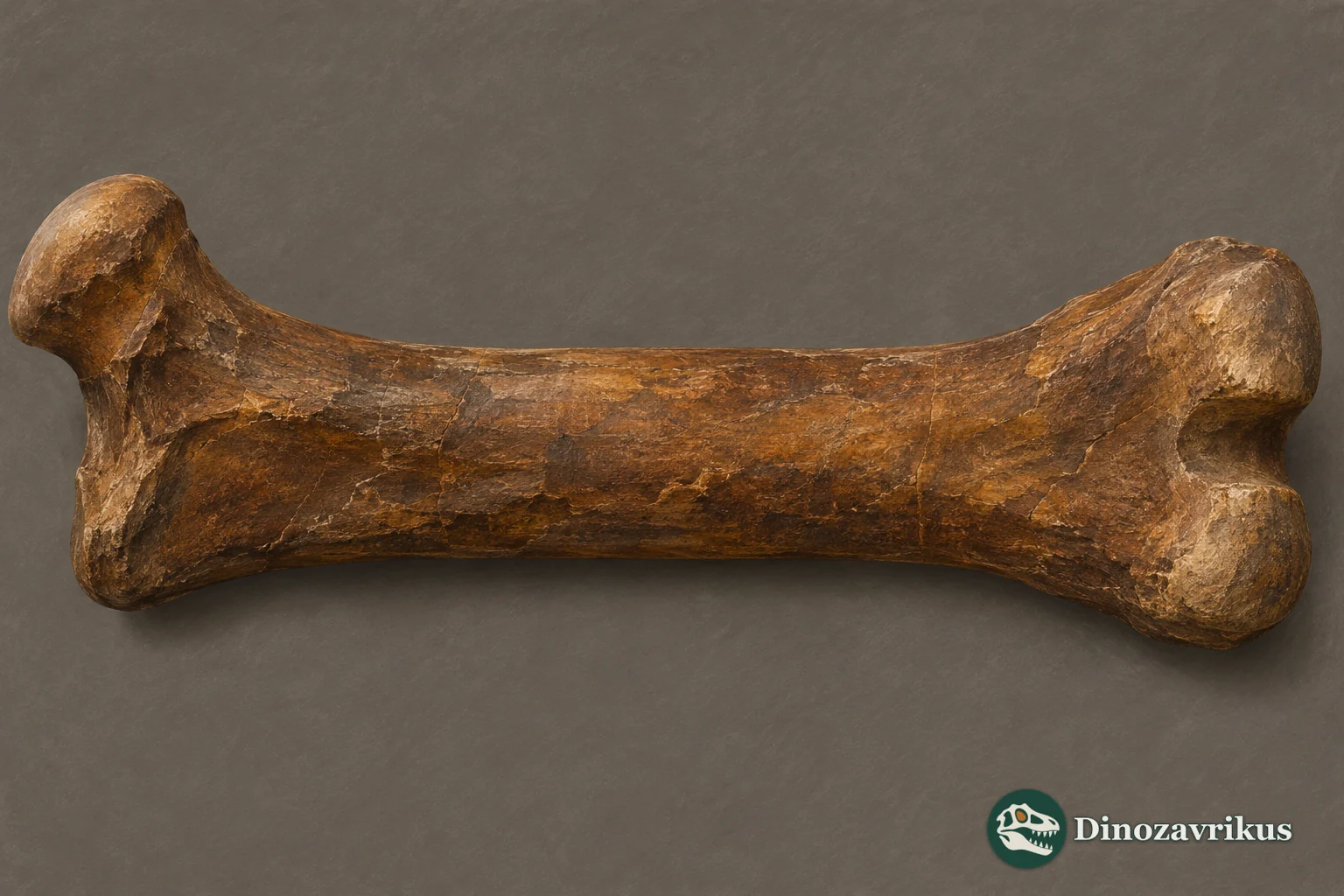
Camelotia borealis was a large sauropodomorph from the Late Triassic of Somerset. It is known from vertebrae, parts of the pelvis and hindlimb bones. One of the most informative pieces is a left femur about a metre long, which allows comparison with early dinosaurs on the sauropod lineage.
Quick facts
| Group | Sauropodomorphs (Sauropodomorpha) |
|---|---|
| Age | Late Triassic (Rhaetian) |
| Region | Europe (Wedmore Hill, Somerset, England) |
| Diet | Exact diet unknown |
| Type species | Camelotia borealis |
| Type material | NHMUK PV R 2870–2874 and R 2876–2878, parts of a skeleton |
| Size | Femur about 1 m long |
| Deposits | Westbury Formation |
What can the fossils tell us?
The femur establishes the size of this part of the hindlimb. Whole-body length requires reconstruction of missing regions.
Camelotia was named for the sauropodomorph material from Wedmore. Its type series consists of bones from behind the head.
The Westbury Formation records the setting in which the fossils accumulated. This constrains the age and preservation of the animal.
The bones from Wedmore Hill
The fossils were collected in Somerset in the nineteenth century. Early publications grouped the large skeletal bones with specimens named Avalonia and Picrodon. Avalonia was subsequently renamed Avalonianus. Peter Galton established Camelotia borealis in 1985, using the sauropodomorph skeletal material as the type.
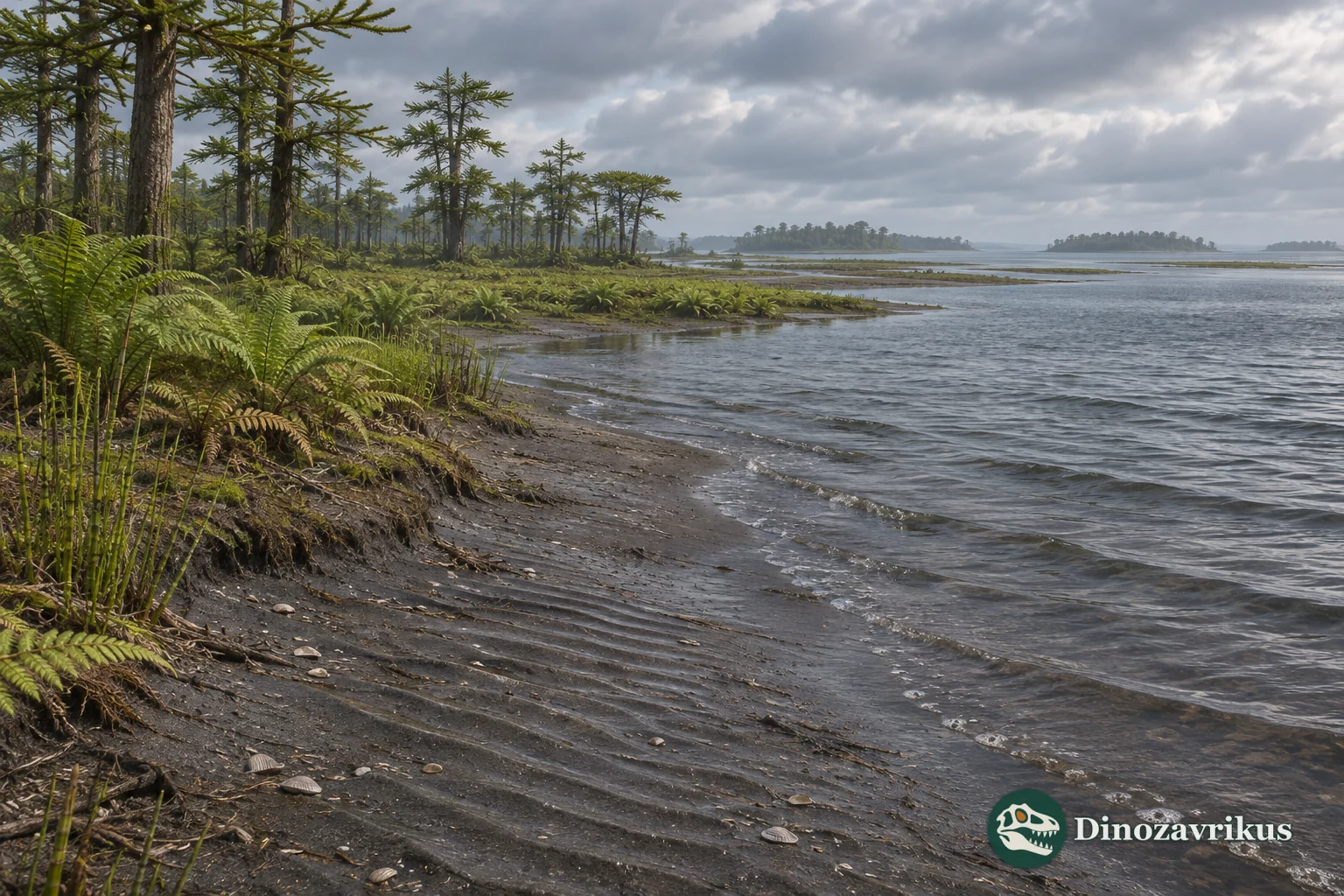
The numbered type series includes back and tail vertebrae, pelvic bones and remains of the hindlimb. Isolated teeth formerly grouped with those bones were treated separately. The Rhaetian Westbury Formation was deposited in marine conditions, so the dinosaur remains show where the bones were buried after death.
A substantial hindlimb
The straight shaft of the left thigh bone and its length of roughly a metre make it valuable for comparing early sauropodomorphs. The referred measurements describe the fossil itself. The skull, much of the neck and other parts of the skeleton are missing, which limits estimates of overall size and proportions.
New surface scans reported at a 2025 conference allowed comparison of the femur and details of cavities on the vertebrae. The authors provisionally placed Camelotia close to the deepest branches of Sauropoda. Its exact place varies with the set of skeletal characters used in the analysis.
A comparison with other early sauropodomorphs
The original taxonomic work compared Camelotia with Melanorosaurus. Both preserve parts of the skeleton that bear on the evolution of weight-bearing limbs. A secure assignment among the earliest sauropods remains more difficult than recognising its broader membership in Sauropodomorpha. The fossils leave the details of its feeding, skull shape and habitual gait open.
Frequently asked questions
Where were the Camelotia fossils found?
They came from the Westbury Formation at Wedmore Hill in Somerset, southwestern England.
What does the metre-long measurement describe?
It describes the left femur. More of the skeleton would be needed to establish total body length closely.
How closely was Camelotia related to sauropods?
It was a sauropodomorph close to the early branches of Sauropoda. Its precise placement remains under study.
Are teeth known from the type skeleton?
The type series was defined using bones from behind the head. The isolated teeth mentioned in earlier publications have a separate history.