

Campinasuchus dinizi was a Late Cretaceous baurusuchid from Brazil, with a short snout and a few teeth much larger than their neighbours. The fossil record also includes limbs and vertebrae. Those bones were used to infer how it carried itself on land and identify a young individual.
Quick facts
| Species | Campinasuchus dinizi |
|---|---|
| Group | Baurusuchid notosuchian |
| Age | Late Cretaceous |
| Localities | Minas Gerais and São Paulo, Brazil |
| Principal evidence | Skulls, jaws, vertebrae and limb bones |
| Formation | Adamantina, including Vale do Rio do Peixe deposits |
What can the fossils tell us?
The third tooth in the maxilla and fourth in the dentary are larger than their neighbours. A closely related species shares these features, so other parts of the skull matter for identification.
A specimen from São Paulo preserves a broad, flattened surface on the palatine. That surface and other details support its referral to Campinasuchus.
The long bones and joints support a posture with the legs more upright. They provide no direct measure of speed.
The Três Antas fossils
Ismar de Souza Carvalho and colleagues described the species in 2011. The type, CPP 1235, came from Três Antas Farm in the Honorópolis district of Campina Verde, Minas Gerais. It preserves the rear of the skull, part of the snout and an articulated lower jaw. The specimen is held by the L. I. Price Palaeontological Research Centre in Peirópolis.
The same bed of the Adamantina Formation yielded other specimens. CPP 1234 includes a partial skull with the lower jaw in place, while CPP 1237 also includes bones behind the skull. The genus name refers to Campina Verde. The species name honours Izonel Queiroz Diniz Neto and the Diniz and Martins Queiroz families who owned the farm.
A short snout and large cutting teeth
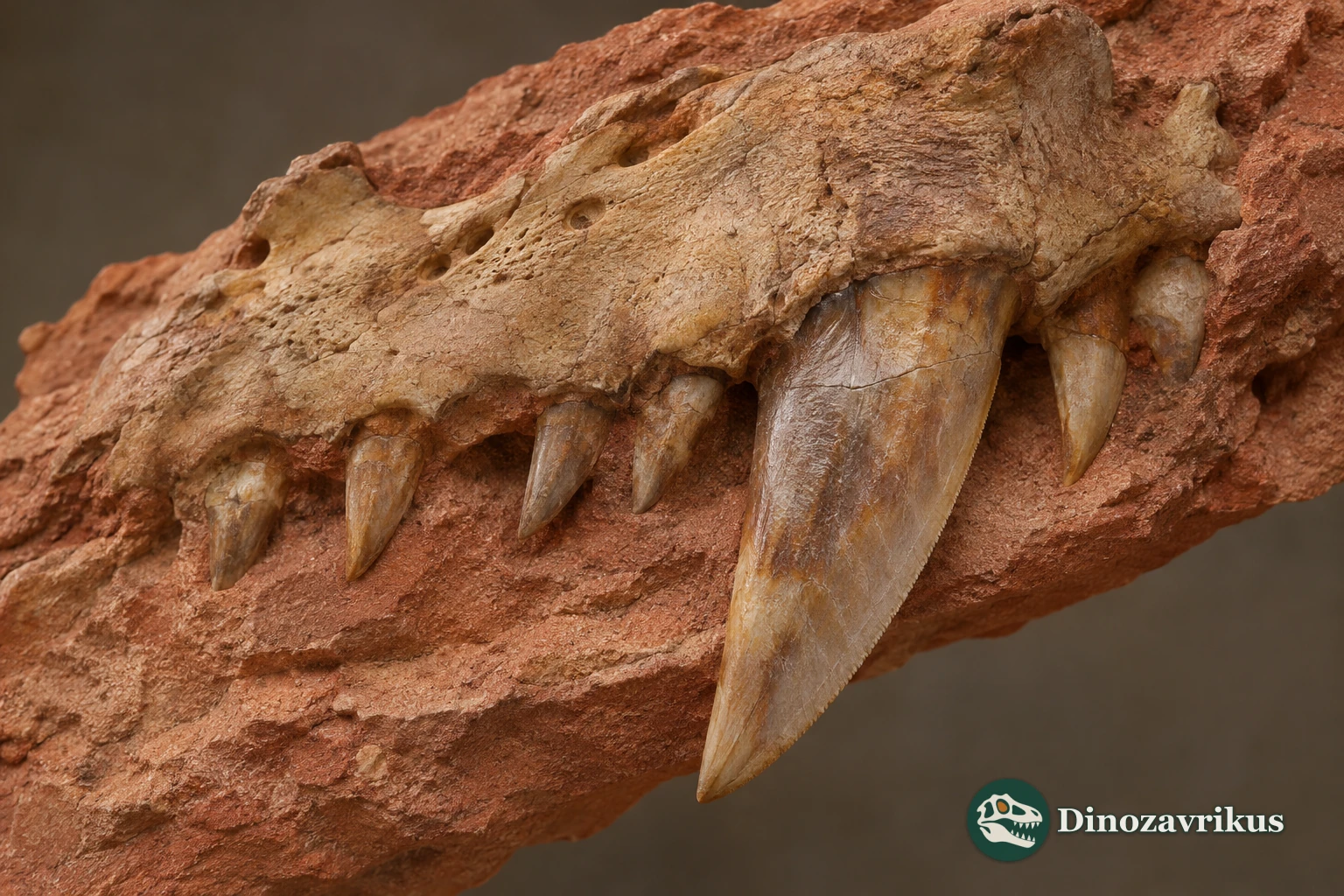
Campinasuchus had a comparatively short, low snout that tapered towards its tip. The snout of Baurusuchus was deeper. The original description counted four teeth in each premaxilla, usually five in the maxilla and ten in the dentary.
The third maxillary tooth and fourth dentary tooth were conspicuously enlarged. When the jaws closed, the large serrated lower tooth fitted a notch between the bones at the front of the upper jaw. The tooth shapes are consistent with grasping and cutting prey. They do not identify particular prey animals.
Limbs, skin bones and growth
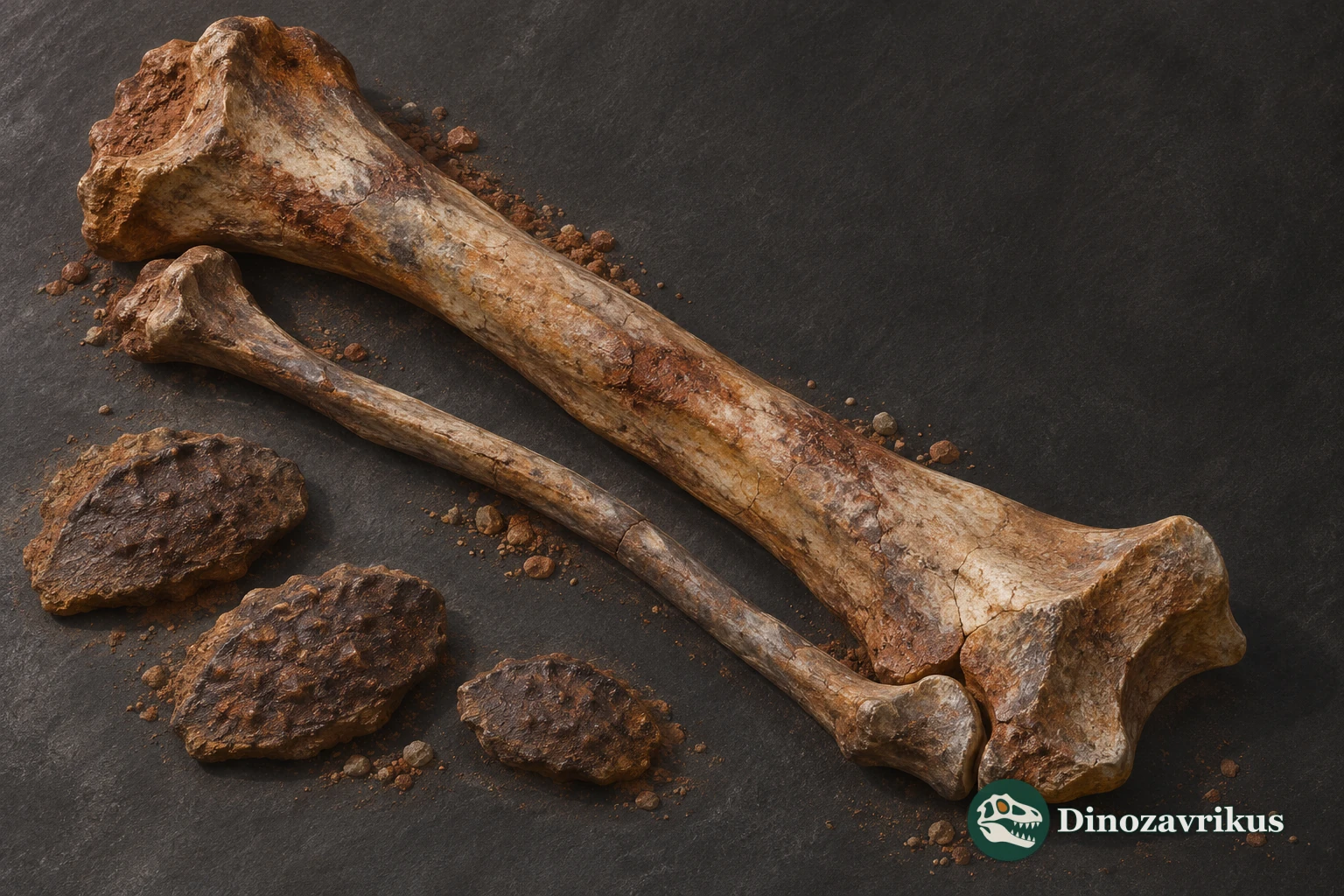
In 2017 Leonardo Cotts and colleagues described vertebrae, parts of the shoulder and hip girdles, long limb bones and osteoderms, or bones that form in the skin. The relatively straight, elongated limbs and their joints support movement on land. The team suggested the animal could have used a range of limb postures, from partly upright to more erect.
In CPP 1237, some of the joints between the vertebral arches and bodies remained incompletely fused. The generally weaker muscle attachment marks also point to a young individual. Scaling from the length of its thighbone gave a mass estimate of about 28 kg for this specimen. Adult mass remains uncertain.
A new skull from São Paulo
In 2021 Gustavo Darlim and colleagues referred specimen UFRJ DG 402-R from São José Farm near General Salgado to Campinasuchus. Its palate includes a broad, flattened lower surface. The team used that feature to distinguish it from Pissarrachampsa. The enlarged teeth formerly used to identify Campinasuchus alone are shared by both.
The same study tentatively reassigned the original specimen CPP 1236 to Pissarrachampsa based on its palate. The São Paulo fossil also challenged a proposal that the two main branches of baurusuchids in the Bauru Basin were separated by geography or time. The precise ages of individual localities remain under study.
Frequently asked questions
What does the name Campinasuchus refer to?
The genus name refers to Campina Verde. The species name honours the owners of the farm that yielded the type.
How did Campinasuchus differ from Baurusuchus?
Its snout was lower and shorter. A few teeth stood out more sharply in size from the rest of the tooth row.
How was a young individual identified?
Some sutures in the vertebrae of CPP 1237 were still open, and muscle attachment sites were less pronounced than in larger specimens.
Which Brazilian states have yielded Campinasuchus?
The type series came from Minas Gerais. A later study identified a specimen of the same species in São Paulo.