

Candidodon itapecuruense was a small notosuchian from Early Cretaceous Brazil. The first finds were loose teeth. Small cusps around the base of a rear crown led researchers to identify it as a mammal until a jaw and later a skull revealed its anatomy.
Quick facts
| Species | Candidodon itapecuruense |
|---|---|
| Group | Notosuchian |
| Age of type material | Early Cretaceous, Albian |
| Locality | Itapecuru-Mirim, Maranhão |
| Principal evidence | Teeth, skull and limb bones |
| Formation | Itapecuru |
What can the fossils tell us?
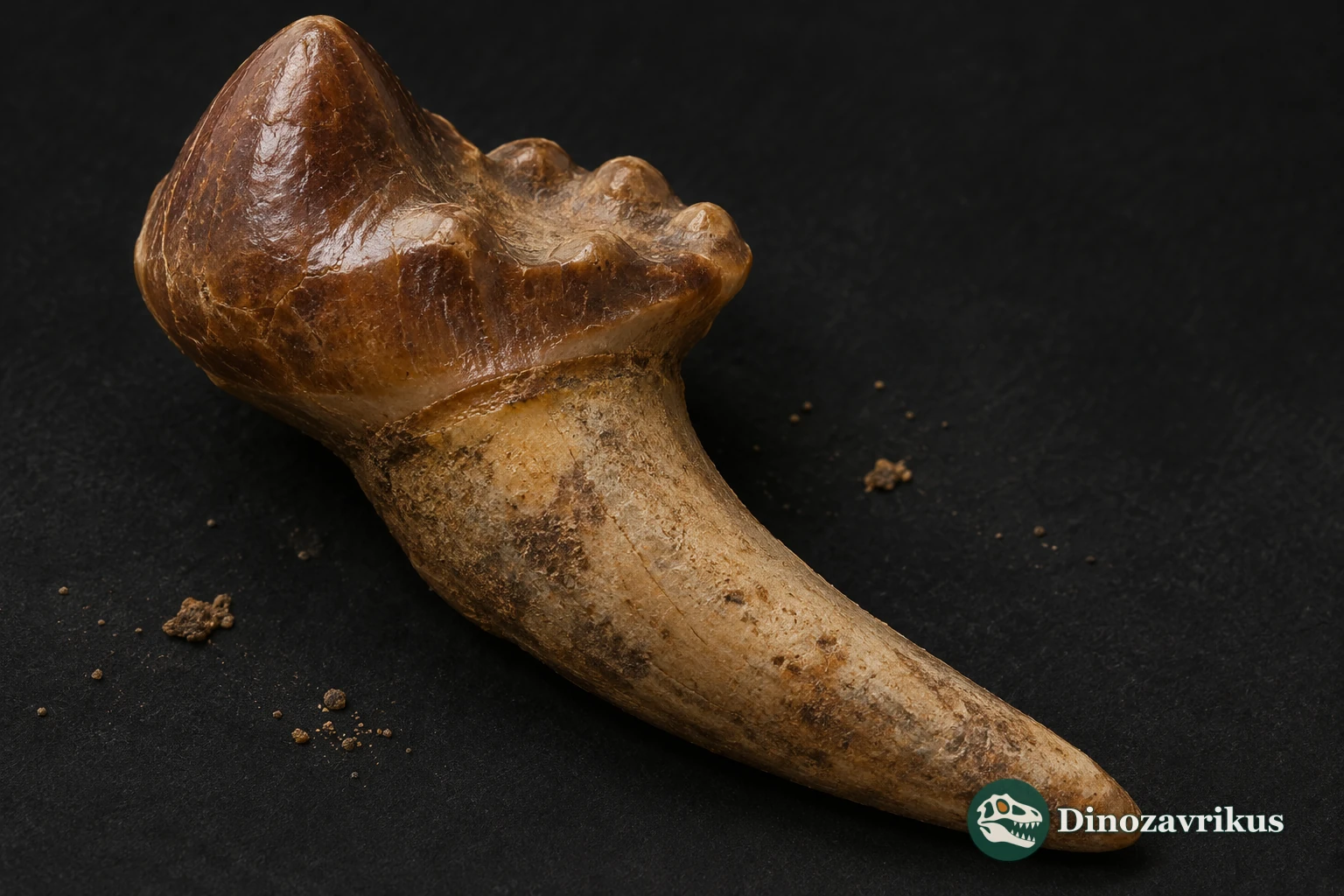
The crown has a prominent cusp and smaller projections along a shelf on the tongue side. It sits on one elongated root. Considered alone, the crown was hard to assign.
A lower jaw and the upper tooth row show where the different crowns sat. These features inform how food was processed, while the diet remains unresolved.
These features fit the interpretation of a land-dwelling notosuchian. They leave its speed and gait unknown.
The tooth on which the name was based
Ismar de Souza Carvalho and Diógenes de Almeida Campos named Candidodon in 1988 from three isolated teeth from the Itapecuru Formation in Maranhão. The holotype, MN 4154-V, is a molariform with a distinct crown and neck. The inner edge of its crown carries a low shelf lined with small cusps. A single elongated root projects beneath it.
In 1994 Carvalho reassessed the teeth with material from a partial lower jaw, MN 4355-V. The tooth row combined simpler front teeth and more elaborate back teeth. Their arrangement and the jaw anatomy supported a notosuchian identification. The type tooth is recorded in the National Museum collection catalogue in Rio de Janeiro.
The upper tooth row
Pedro Nobre and Carvalho presented a skull study in 2002. The skull has a short snout. Its nostrils face forwards, its eye sockets face sideways and a small oval opening sits in front of each eye. Pointed teeth occur at the front. A larger fanglike tooth is followed by a short gap and then four molariform teeth.
The rear crowns have a large cusp with small projections around the base. Nobre compared their structure and contact surfaces with the teeth of Malawisuchus from Africa. These similarities inform how the teeth processed food. Which food Candidodon commonly ate remains uncertain.
A fossil from river deposits
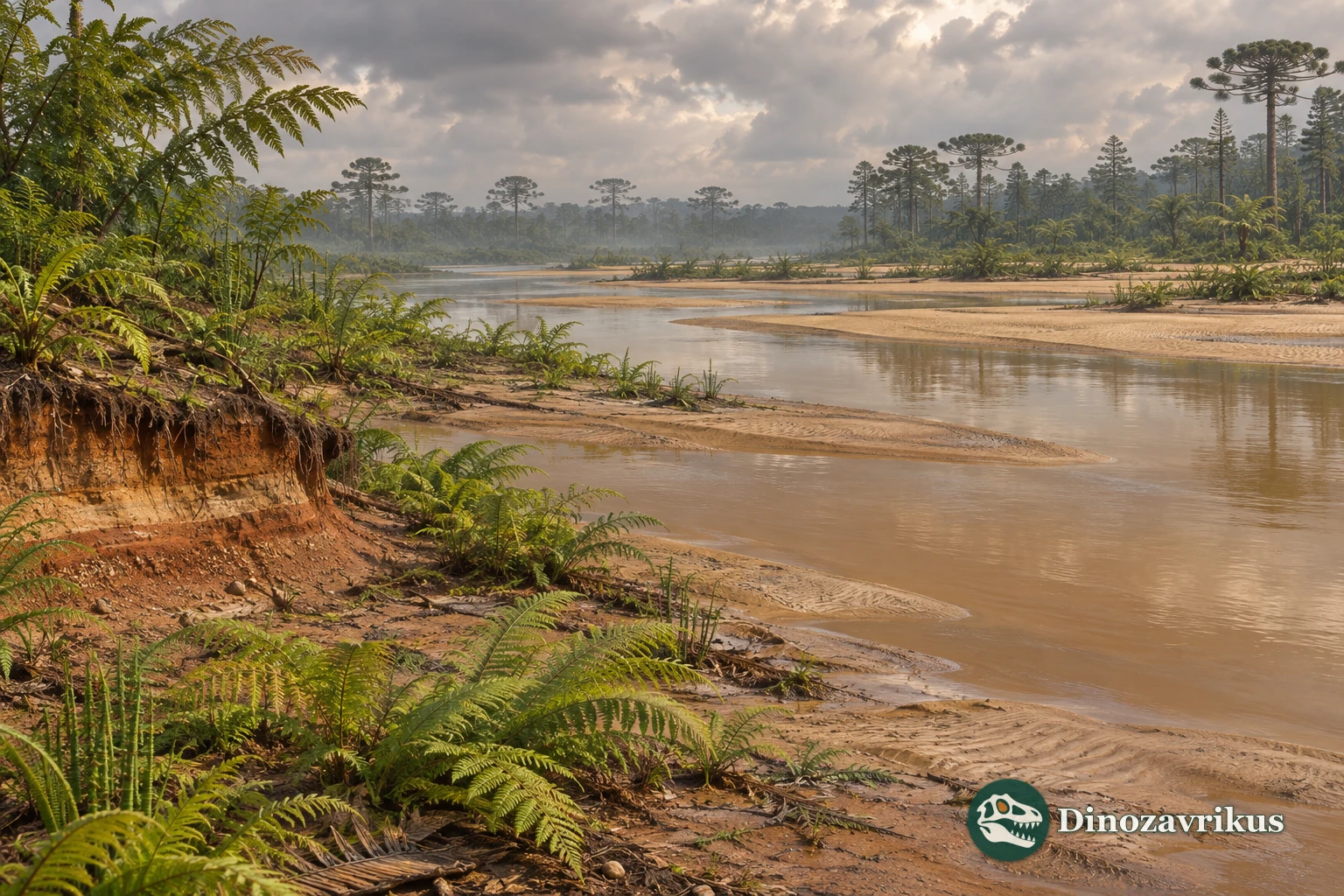
The skull came from fine-grained Albian sandstone of the Itapecuru Formation in the Parnaíba Basin. The rock has been interpreted as a river deposit. Features including the forward nostrils and lateral-facing eyes fit a terrestrial interpretation of this notosuchian, although its time spent in water cannot be inferred from the burial setting.
Vertebrae, limbs and skin armour
In 2004 Nobre described bones from two specimens, UFRJ-DG 113-R and UFRJ-DG 114-R. They include vertebrae, parts of the shoulder and limbs, and small bony skin plates. Some plates are around 8 mm long and wide, and no more than 1 mm thick. A low ridge marks the outer surface, while the inner side is smooth.
Frequently asked questions
Why was it first identified as a mammal?
The first discoveries were loose teeth. The cusps of a rear tooth resembled those of some extinct mammals.
What survives of the type specimen?
MN 4154-V is one molariform with small cusps around the main part of the crown and a single elongated root.
What were the back teeth in the upper jaw like?
Behind the enlarged fanglike tooth and a short gap were four molariforms bearing a dominant cusp and smaller projections.
What did Candidodon eat?
The tooth row shows adaptation for processing food in the mouth. The precise diet is unresolved.