

Cathayornis was a small Early Cretaceous bird from what is now Liaoning, China. Its type specimen lies on two halves of a split slab. Details of its breastbone, wing and skull have helped researchers distinguish it from the very similar Sinornis.
Quick facts
| Group | Enantiornithines (Enantiornithes) |
|---|---|
| Age | Early Cretaceous (Aptian) |
| Region | East Asia (Liaoning Province, northeastern China) |
| Diet | Exact diet unknown |
| Type species | Cathayornis yandica |
| Holotype | IVPP V9769, incomplete articulated skeleton |
| Formation | Jiufotang Formation at Xidaogou near Boluochi |
What can the fossils tell us?
IVPP V9769 preserves parts of the skull, breastbone and wings. The ends of the hindlimbs are incompletely represented.
The outer projections flare into a fan shape at the ends and reach farther back than the central projection.
Study of the two type skeletons revealed differences in their hand bones and other elements. This supported the separate name Cathayornis.
The oldest material from Boluochi
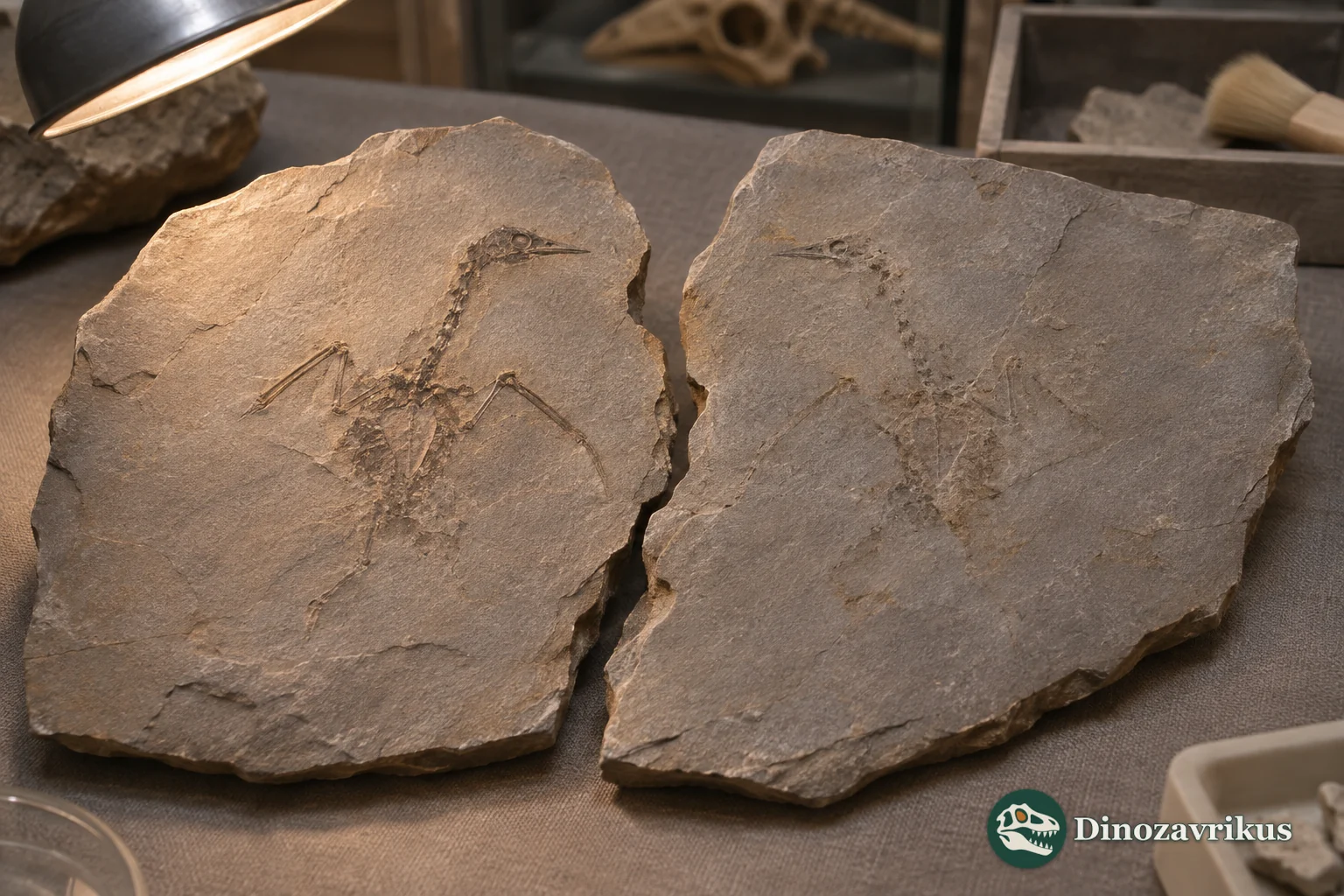
In September 1990, Zhonghe Zhou collected three fossil birds in western Liaoning. He, Fan Jin and Jiang Zhang described the most complete specimen as Cathayornis yandica in 1992. The holotype, IVPP V9769, came from Xidaogou just south of Boluochi, in the Early Cretaceous Jiufotang Formation.
Its bones are distributed between the part and counterpart of a split slab. These preserve features of the skull, shoulder girdle, sternum and wings, while parts of the lower hindlimbs are missing. Casts made from impressions in the rock allowed researchers to examine small projections and joint surfaces.
What the wing and breastbone show
Cathayornis belongs to Enantiornithes, the diverse Cretaceous lineage that also includes the South American Enantiornis. Its sternum has a pair of outer projections with fan-shaped ends. These reach farther back than the central, tapering xiphoid process. Their arrangement supplies useful characters for comparing early birds.
The hand preserves small claws, and the jaws carried teeth. These features help inform a reconstruction of the animal. They leave considerable uncertainty about particular foods and how the bird used its wings.
The distinction from Sinornis
Cathayornis and Sinornis were named at about the same time from Early Cretaceous sites in Liaoning. Their broad similarities led some researchers to unite them. Detailed comparisons of the type specimens identified differences including the shape and proportions of the first finger and its claw, and supported keeping the two names separate.
Other fossils were subsequently described as species of Cathayornis. A later reassessment transferred Cathayornis caudatus to the genus Houornis. The ability to compare the same parts of the skeleton is crucial when deciding whether additional material belongs with the type species.
Frequently asked questions
Who found the type of Cathayornis?
Zhonghe Zhou collected it in Liaoning in September 1990. The species description appeared in 1992.
What is distinctive about its sternum?
Its outer projections end in broad fans and extend farther back than the central xiphoid process.
Are Cathayornis and Sinornis the same genus?
Some researchers united them, but later comparisons of their type specimens supported recognising two distinct genera.
Do its fossils tell us what it ate?
The jaws and teeth survive. The published material supplies no direct evidence of the contents of the digestive tract.