

Cedaria was a Cambrian trilobite. In the type species, seven articulated segments separated a broad head shield from a tail shield of comparable size. Fossils of that species occur in North America and in a limestone block in Mendoza, Argentina.
Quick facts
| Group | Trilobites |
|---|---|
| Age | Cambrian, including the Guzhangian |
| Region | North America and South America (United States, Argentina) |
| Diet | Unknown |
| Type species | Cedaria prolifica |
| Genus named by | Charles Walcott, 1924 |
What can the fossils tell us?
The thorax lacks median spines in C. prolifica and C. minor. The rings of their large tail shields form part of the fused pygidium.
The identifications of C. prolifica and C. puelchana confirm the genus in rocks now exposed in Argentina.
A species once assigned to Cedaria helped define the traditional zone. Its distinctive eye sutures call that generic assignment into question.
The two broad shields
Charles Walcott described the type species, C. prolifica, from the Conasauga Formation of Alabama. Both it and C. minor have a head and tail shield of comparable size. Articulated fossils show seven thoracic segments without median spines.
The facial sutures mark where the free cheeks could separate from the central portion of the head shield. They are informative even on disarticulated specimens. The known dorsal armour does not establish the diet.
A record from Mendoza
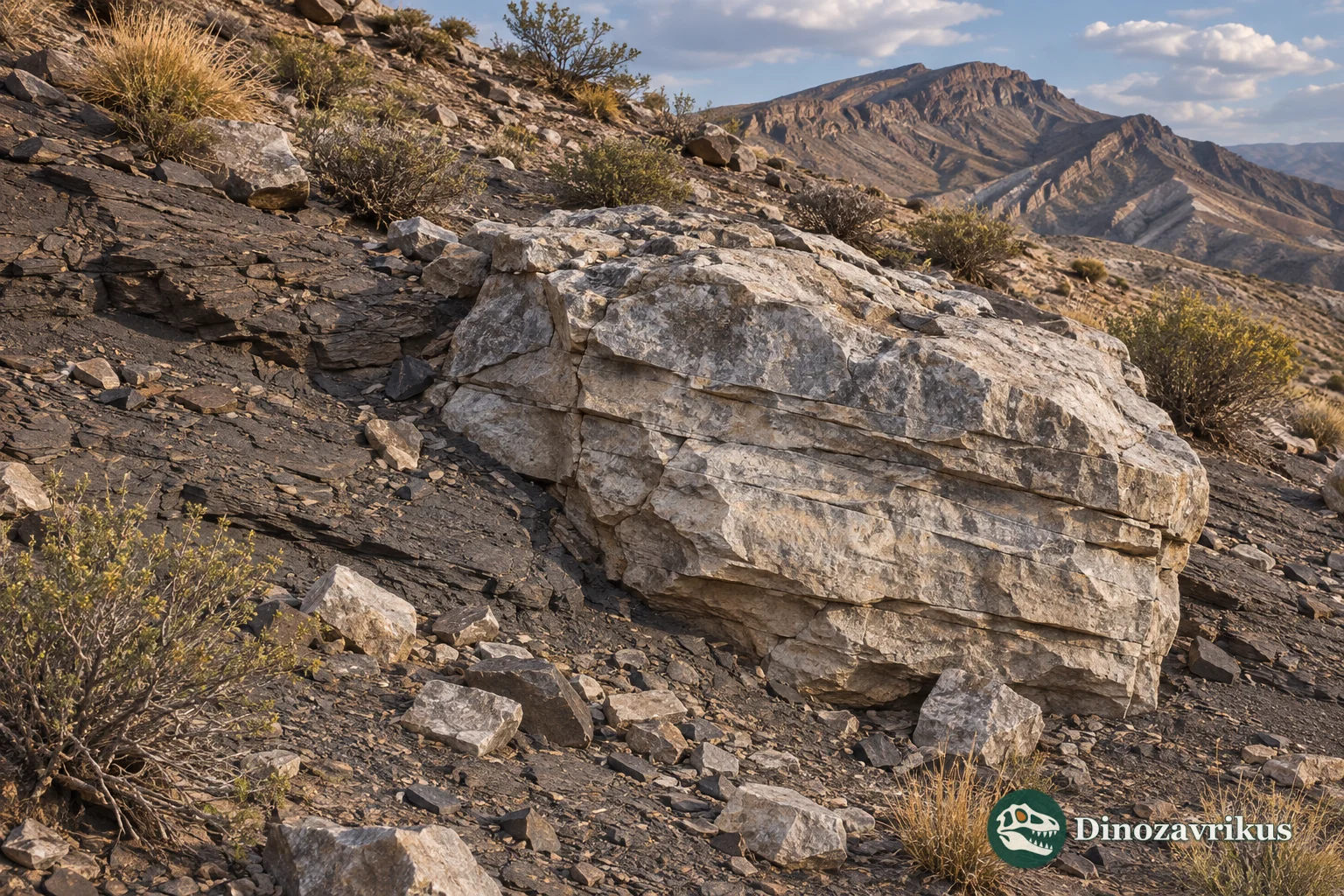
Franco Tortello's revision of material from near Estancia San Isidro identified C. prolifica and C. puelchana in a transported limestone block of the La Cruz Olistoliths. They occur with other trilobites, including Tricrepicephalus. The assemblage is late Guzhangian in age.
The similarities between this assemblage and North American fossils support a Laurentian origin for the rocks of the Argentine Precordillera. Argentina and the United States describe the present locations of the evidence. The ancient arrangement of the land and seas is an interpretation drawn from several lines of geological evidence.
What the traditional zone name tells us
The Laurentian Cedaria Zone was historically based in part on the Wisconsin species “Cedaria” woosteri. A suture surrounds its eye and it lacks the ordinary facial sutures seen in Cedaria. The old biozone name is useful in discussing earlier work, but cannot establish the generic identity of a fossil in that interval.
Frequently asked questions
Where does the type species of Cedaria come from?
C. prolifica was described from the Conasauga Formation in Alabama.
How many thoracic segments did Cedaria have?
Articulated fossils of C. prolifica and C. minor show seven.
Has Cedaria been found in South America?
Yes. C. prolifica and C. puelchana were identified in fossils from the San Isidro area of Mendoza, Argentina.
Why is the genus in “Cedaria” woosteri in quotation marks?
Its unusual suture around the eye makes its old assignment to Cedaria doubtful.