

Cedarina was a Cambrian trilobite. The Utah species C. schachti had ten thoracic segments, with a single long spine projecting backwards from the eighth. The articulated thorax of its holotype supplied the first detailed evidence of that part of the armour for the genus.
Quick facts
| Group | Trilobites |
|---|---|
| Age | Cambrian, regional Marjuman Stage |
| Region | North America (Utah, Nevada, South Dakota and Missouri, United States) |
| Diet | Unknown |
| Type species | Cedarina vale |
| Genus named by | Christina Lochman, 1940 |
What can the fossils tell us?
A single long axial spine belongs to segment eight. The holotype lacks a pygidium, whose outline is visible in a different specimen.
The spine and the form of the surrounding segments resemble those of early remopleuridoideans. The relationship is an interpretation based on several characters.
C. dakotaensis is part of a distinctive fauna at the base of the Deadwood Formation. Its distribution helps identify changes in the depositional setting.
What the Utah fossil preserved
Christina Lochman named the genus in 1940, with Cedarina vale from the Bonneterre Dolomite of Missouri as its type species. The first informative thorax came from a different species, C. schachti, named in 2009 by Jonathan Adrain, Shanan Peters and Stephen Westrop. Robert Schacht collected the holotype, FMNH PE57116, from the Weeks Formation in western Utah and donated it for study.
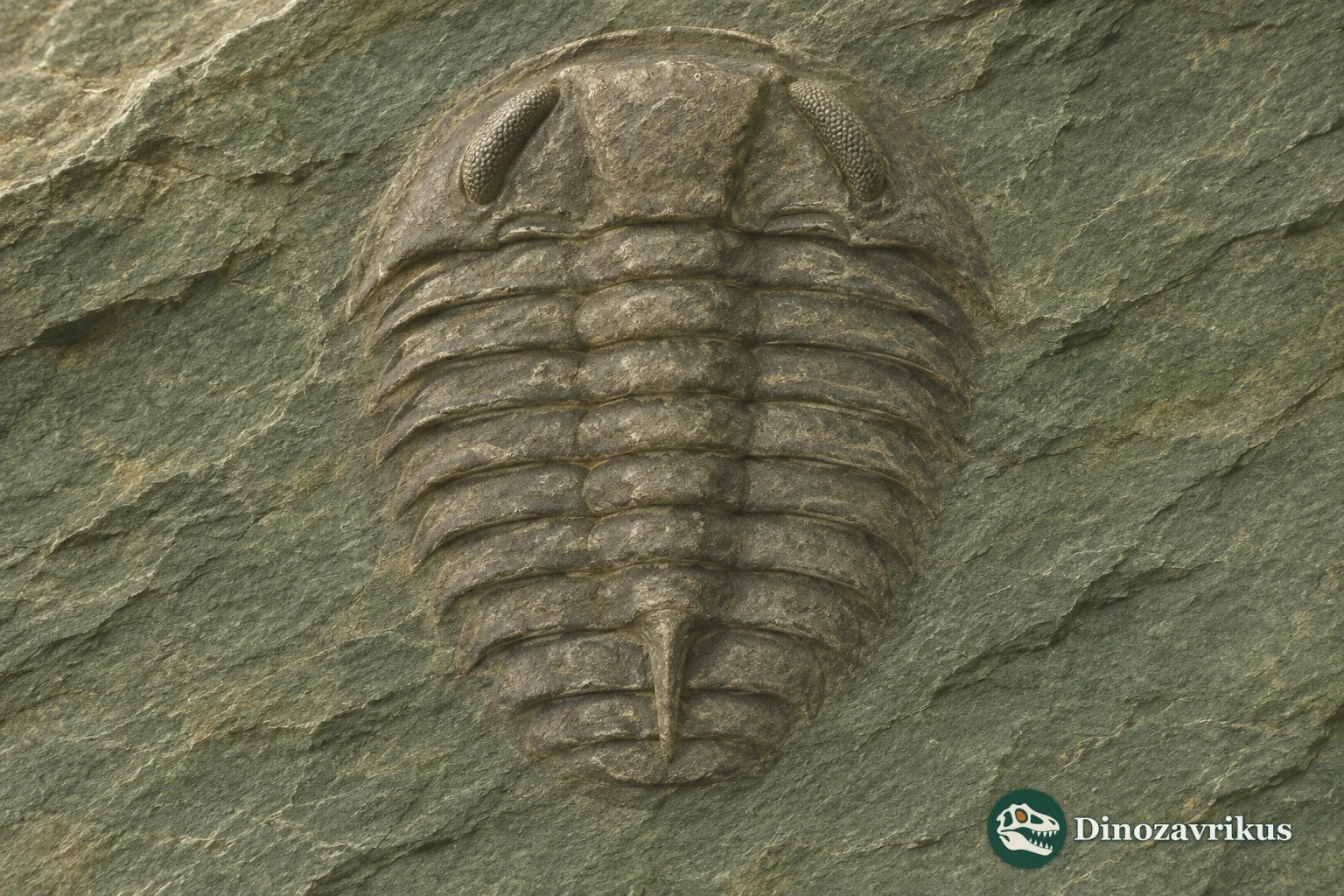
The specimen lacks a tail shield but retains the complete series of ten thoracic segments. Their sides taper to short, blunt tips that point backwards. The eighth segment bears a long median spine. The other segments lack axial spines and nodes. Less complete material supplied the outline of the tail shield.
Why the discovery mattered
Some Cedarina head shields resemble those of Cedaria. Articulated specimens tell a different story about the thorax. In well-known species of Cedaria, the thorax has seven unspined axial rings. The combination of the spine and the other segment features of C. schachti closely resembles early remopleuridoideans. The authors proposed a close relationship on the basis of these similarities and features of the head.
Two other species and their rocks
C. clevensis is known from silicified material in the Lincoln Peak Formation of eastern Nevada. Its holotype is a pygidium. In the Black Hills of South Dakota, C. dakotaensis is abundant in nearshore sandstone at the base of the Deadwood Formation. Kormagnostus is also recorded in the broader assemblage, which helps correlate the section with coeval North American deposits.
Frequently asked questions
Where was the long spine on Cedarina schachti?
It projected from the eighth thoracic segment. Two articulated segments followed it.
What is preserved in the Utah holotype?
The head and complete thorax are preserved. Other material provided evidence of the tail shield.
How did the thorax differ from that of Cedaria?
C. schachti had ten segments and one long median spine. The known articulated species of Cedaria have seven segments without axial spines.
Where is Cedarina dakotaensis found?
In the basal Deadwood Formation of the Black Hills, South Dakota, where it is especially common in nearshore sandstone.