

Chalawan thailandicus was a large, long-snouted crocodylomorph from the Phu Kradung Formation of northeastern Thailand. A nearly complete lower jaw and skull fragments from a second locality preserve different parts of its head. The newer material helped clarify its relationships.
Quick facts
| Species | Chalawan thailandicus |
|---|---|
| Family | Pholidosauridae |
| Age of the deposits | Late Jurassic to earliest Cretaceous |
| Localities | Nong Bua Lamphu and Kham Phok, Thailand |
| Holotype | CAS42-20, nearly complete lower jaw |
| Skull length | About 1.1 m in the genus description |
What can the fossils tell us?
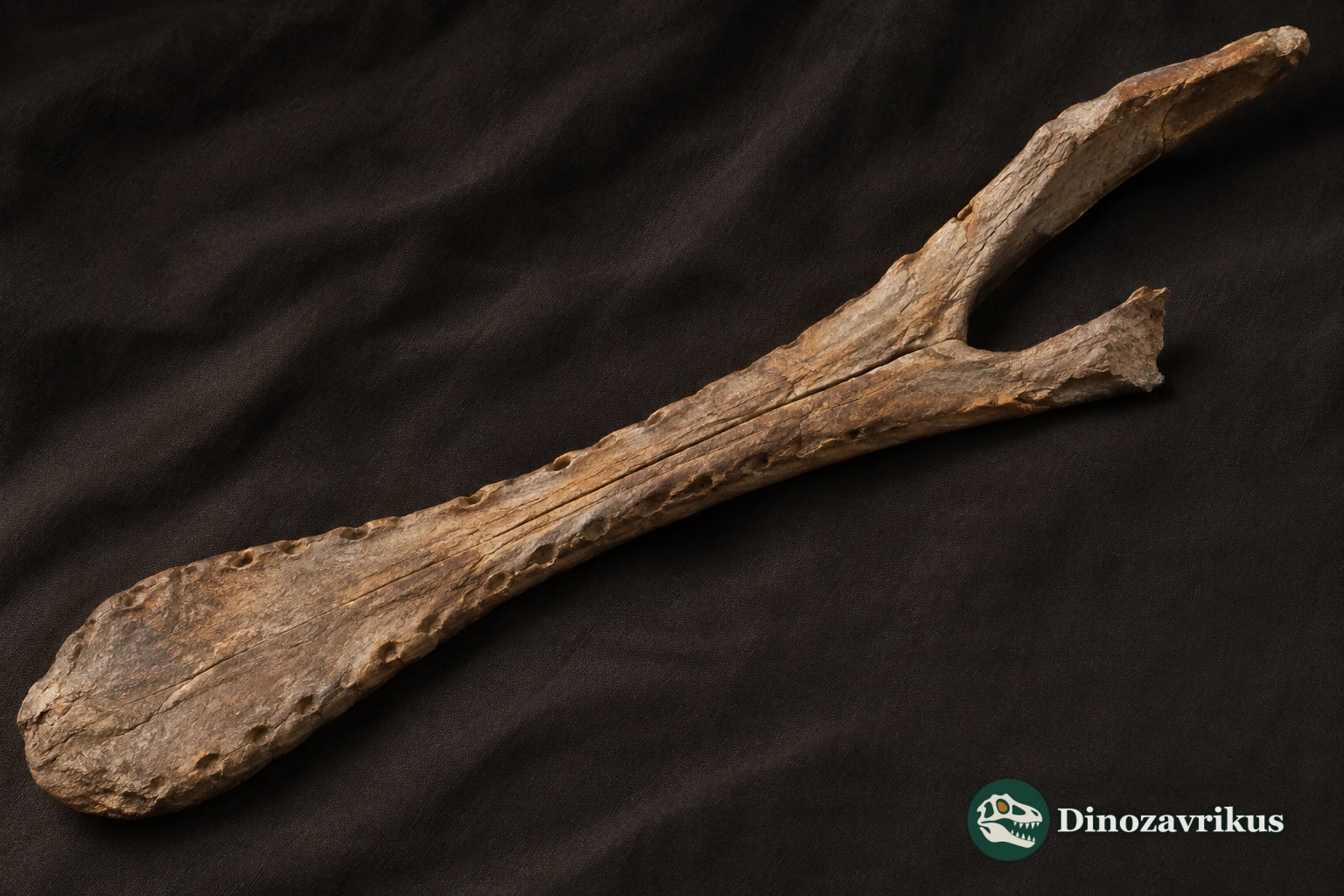
CAS42-20 preserves a broad tip near the third and fourth sockets. The two sides of the jaw meet along a seam reaching as far back as the level of the 25th socket.
The Kham Phok material includes pieces of the snout, braincase and skull roof. These help establish the flattened shape of the elongated snout.
Zircon dates constrain the age of fossil assemblages in the formation. They give a geological bracket, with no exact date inferred here for either jaw or skull specimen.
Two finds and a new name
The nearly complete lower jaw from near Nong Bua Lamphu was originally described under Sunosuchus. The holotype, CAS42-20, was formerly numbered TF1370 and is kept at the Sirindhorn Museum. It lacks part of its right rear branch.
Specimen PRC102-143, from Kham Phok in Mukdahan Province, includes skull and jaw fragments recovered from a single individual. Jeremy Martin and colleagues studied both specimens when they established Chalawan. The genus takes its name from the giant crocodile in the Thai tale of Khrai Thong.
An elongated snout with a broad tip
The lower jaw broadens into a rounded paddle shape around the third and fourth tooth sockets. The fifth socket is considerably smaller. The bony union between the two sides reaches the level of the 25th socket, and the splenials contribute to that long junction.
The upper jaw curved around the front into a transverse tooth row. Some traits resemble those seen in Sunosuchus, including a depression where the upper jaw meets the cheek bone. The full combination of preserved features led the authors to place Chalawan in Pholidosauridae and estimate a skull length of about 1.1 m.
The beds and the local fauna
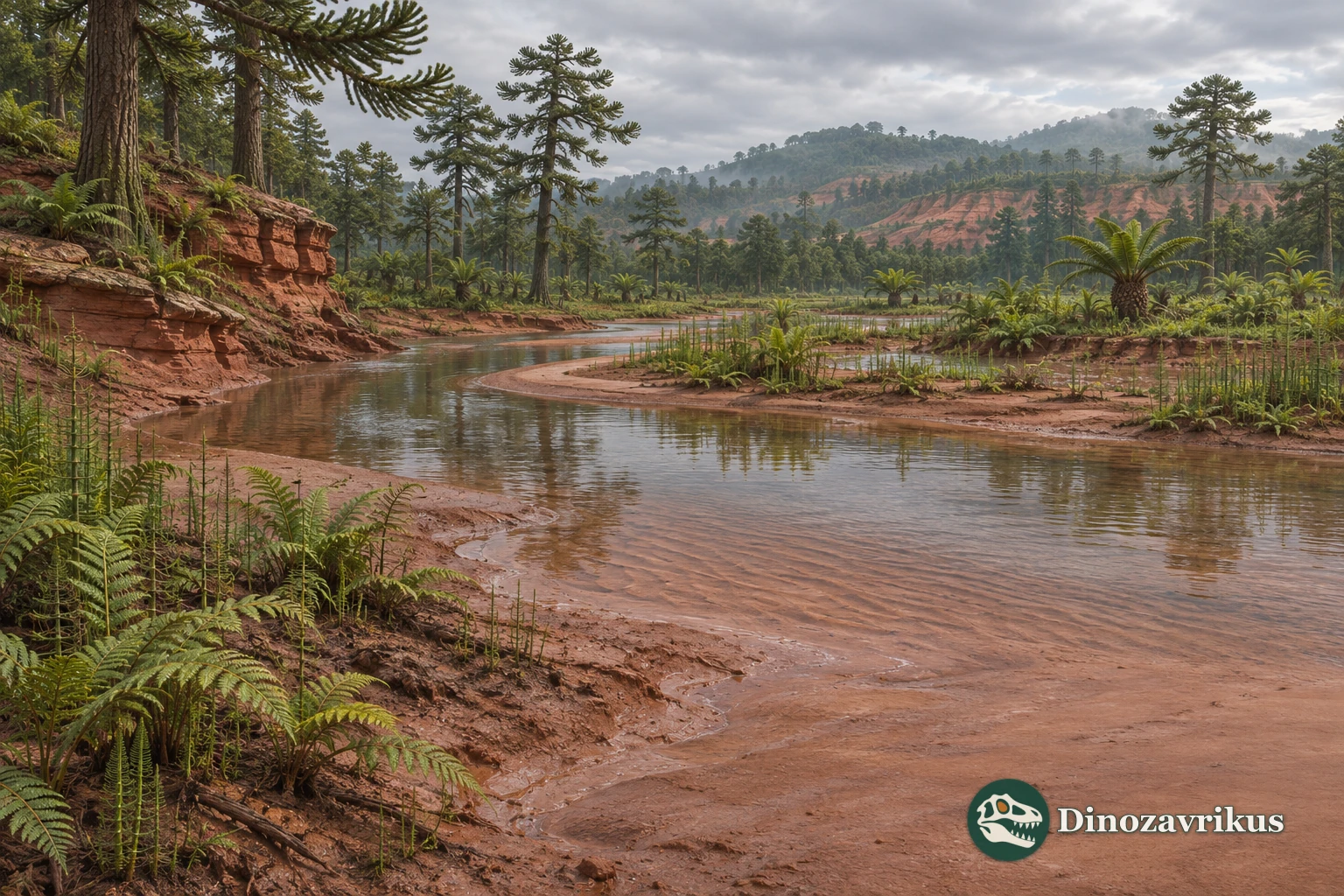
Detrital zircon dating brackets the studied Phu Kradung assemblages between the Kimmeridgian of the Late Jurassic and the early Berriasian of the Early Cretaceous. This interval provides geological context for the two Chalawan localities.
Fossils from Kham Phok also include ray-finned fish, a coelacanth, hybodont sharks and a large turtle. They document animals that occurred in the area. The fossils of Chalawan do not identify its prey.
Frequently asked questions
Why was Chalawan separated from Sunosuchus?
Additional skull material showed a combination of features that supported a separate genus within Pholidosauridae.
What remains of the holotype?
Almost the entire lower jaw survives, with part of the right rear branch missing.
How long was the skull?
The authors who established the genus estimated a skull length of about 1.1 m.
When did Chalawan live?
It is known from the Phu Kradung Formation, whose fossil assemblages span the Late Jurassic and earliest Cretaceous.