

Chenoprosopus milleri was an early Permian temnospondyl from what is now the American Southwest. Its long snout and skull bones are known from incomplete fossils, including the specimen that Paul C. Miller found in New Mexico in 1911. Later discoveries and a histological sample add evidence that the original type alone could not provide.
The genus appears in the ancient amphibian catalogue among edopoid amphibians. Its record also shows why a fossil name can outlast the species distinction that first created it: C. lewisi, named in 1993, has commonly been treated as a junior synonym of C. milleri.
Quick facts
| Scientific name | Chenoprosopus milleri |
|---|---|
| Group | Edopoid temnospondyl |
| Age | Early Permian |
| Range | New Mexico and Texas, North America |
| First described | 1913, from a skull found in 1911 |
| Key evidence | Incomplete skulls and histological sections |
| Name in literature | C. lewisi is often treated as a junior synonym |
What can the fossils tell us?
Paul C. Miller found the original skull in 1911 near Poleo Creek, close to Arroyo del Agua, New Mexico. The skull was described by M. G. Mehl in 1913. Its incompleteness limits what can be reconstructed from the type alone.
Hook named C. lewisi in 1993 from additional material. Subsequent regional and taxonomic works treated it as a junior synonym of C. milleri, although the history of the name should be kept visible when older sources are compared.
UCMP 41104 has been studied through bone histology. Growth marks and remodelling record changes in bone tissue, but they do not yield a reliable calendar age for each individual without a validated growth model.
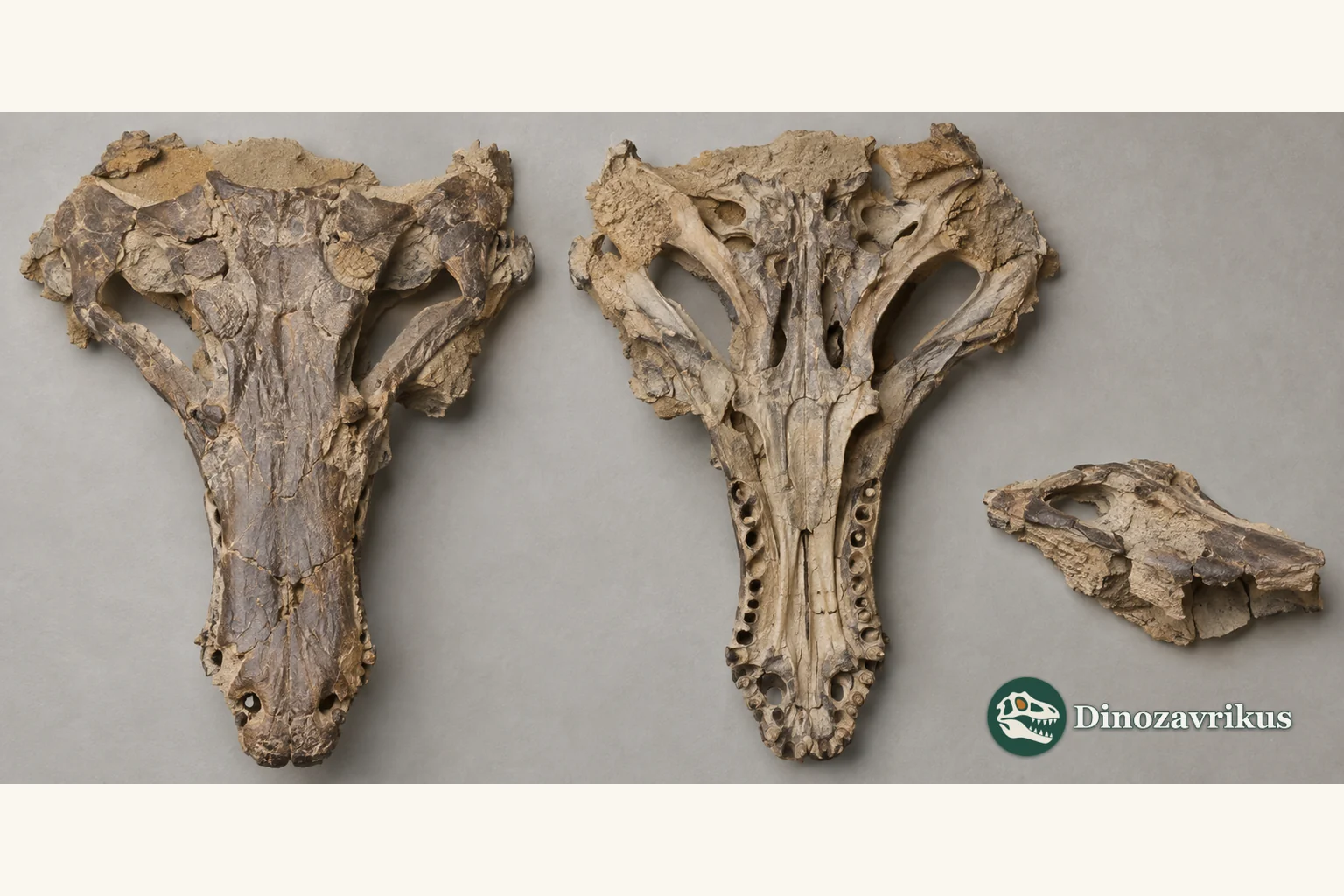
Skulls preserve a long rostrum, teeth and parts of the palate. Reconstructions must distinguish actual bone from missing regions; body length, skin texture and exact feeding behaviour remain less directly constrained.
A skull found near Arroyo del Agua
Paul C. Miller discovered the original Chenoprosopus skull in 1911 near Poleo Creek, close to Arroyo del Agua in New Mexico. M. G. Mehl described it in 1913 as Chenoprosopus milleri. The type is incomplete and distorted, so the original description preserves an important name-bearing specimen without supplying a complete picture of the animal.
Later work documented additional skull material from New Mexico and Texas. These finds make comparisons possible across more than one individual and locality, but the remains are still dominated by cranial bones. A full-body silhouette in an illustration is consequently a reconstruction informed by related edopoids, not a fossil outline recovered intact.
What happened to the name Chenoprosopus lewisi?
Hook named Chenoprosopus lewisi in 1993 from later material. Subsequent studies of the New Mexico succession and comparative anatomy treated the name as a junior synonym of C. milleri. Under that interpretation, the fossils do not justify two distinct species names. Older publications may still list both names, so a reader should check the date and taxonomic treatment rather than count every historical name as a valid species.
Synonymy is a conclusion about how the named specimens compare, not a claim that every bone is identical. It can change if new diagnostic evidence or a new revision supports a different boundary. Current summaries commonly retain C. milleri as the species name and explain the earlier C. lewisi usage.
Bone tissue and growth
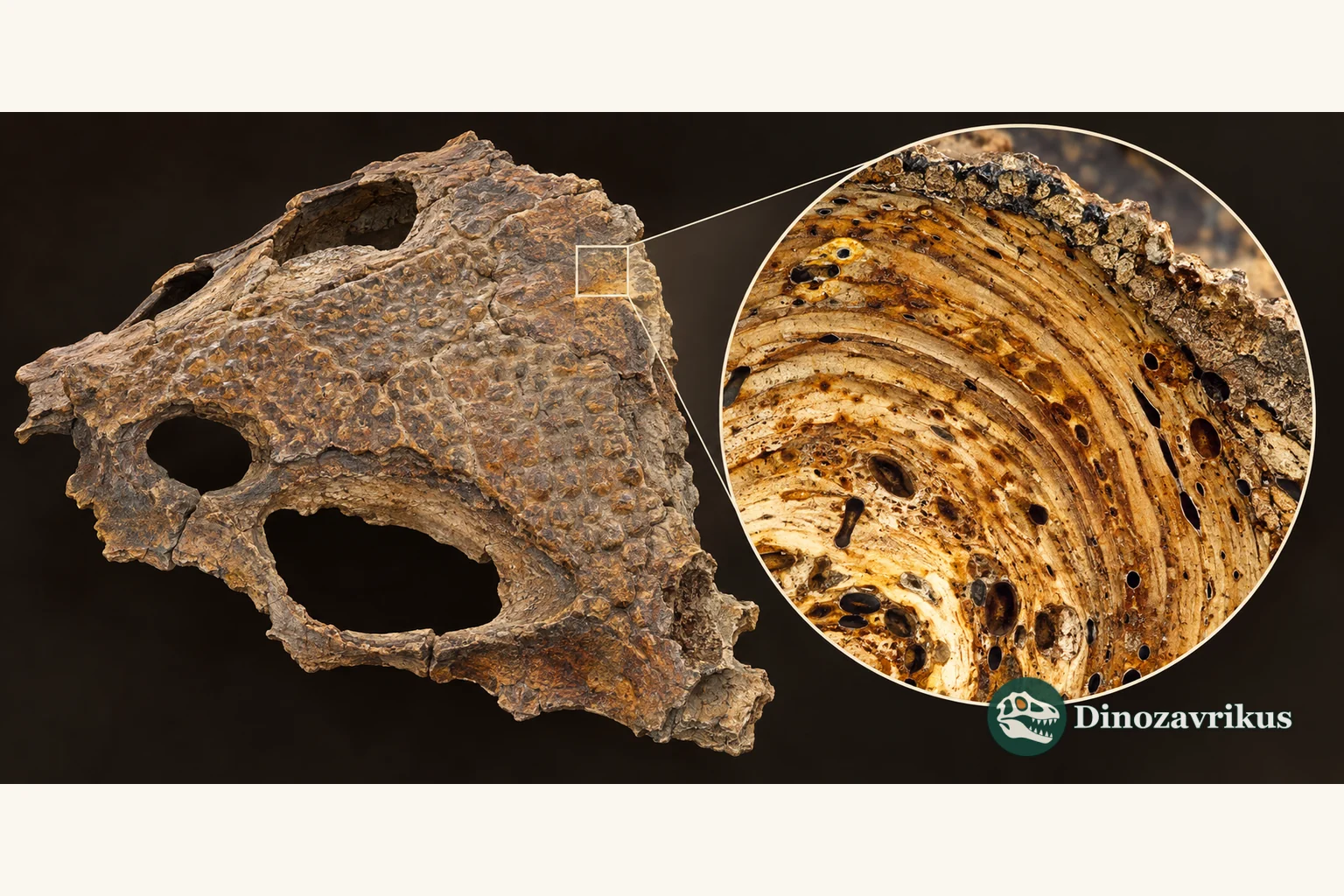
Histological work examined UCMP 41104, a fossil bone sample attributed to Chenoprosopus. A thin section reveals vascular spaces, growth marks and remodelling that a surface view cannot show. The tissue records a changing skeleton as the animal grew, but seasonal marks are not automatically an exact annual clock.
Bone remodelling can erase earlier growth signals, and a limited sample cannot represent every individual or every part of the skeleton. The study is useful for describing growth pattern and tissue organisation. It does not establish the specimen's age in calendar years or a population-wide growth curve.
Predator, but with limits on behaviour claims
The teeth and long skull support a predatory interpretation. The fossils do not identify a specific prey species or record a feeding event. Likewise, a long head does not by itself establish a particular hunting strategy. Functional comparisons with other temnospondyls can suggest possibilities, but the evidence is indirect.
Chenoprosopus lived during the Permian Period, in ecosystems whose sediment and associated fossils give the regional context. The most secure story is therefore about discovery, skull anatomy, naming and bone growth. Colour, calls, exact movement and a complete body profile remain artistic or comparative reconstruction.
Frequently asked questions
Who found the original Chenoprosopus skull?
Paul C. Miller found the incomplete skull in 1911 near Poleo Creek and Arroyo del Agua, New Mexico. M. G. Mehl described it in 1913.
Is Chenoprosopus lewisi a separate valid species?
It was named in 1993, but later works commonly treated it as a junior synonym of C. milleri. Older sources may use both names.
Can histology tell the animal's exact age?
No. Bone growth marks and remodelling reveal tissue development, but do not give a reliable calendar age without a validated growth model.
Is a complete skeleton known?
No. The record is chiefly skull material, plus a histological sample. A complete body outline in artwork remains a reconstruction.