

Clavagnostus was a small Cambrian agnostoid. The tail shield of its type species has a prominent lance-shaped axis. The end of that axis and the grooves on the head distinguish species that were formerly grouped together.
Quick facts
| Group | Agnostida |
|---|---|
| Age of Swedish material | Middle Cambrian |
| Genus named | Benjamin Howell, 1937 |
| Type species | Clavagnostus repandus |
| Type locality | Andrarum, southern Sweden |
| Main fossils | Head and tail shields |
What can the fossils tell us?
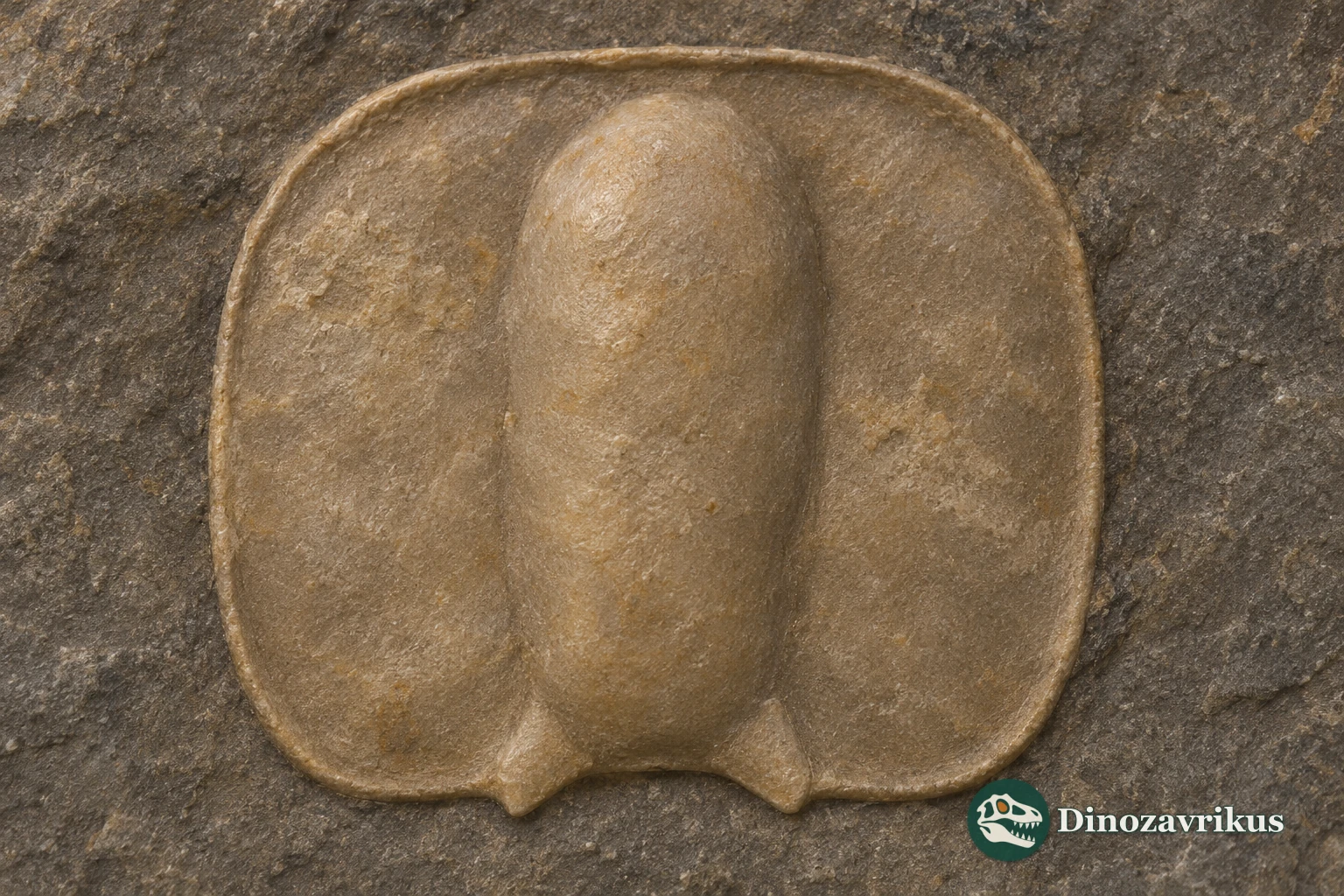
The raised glabella occupies about two thirds of the head shield's length. Its rounded front and the smooth space ahead of it help identify the species.
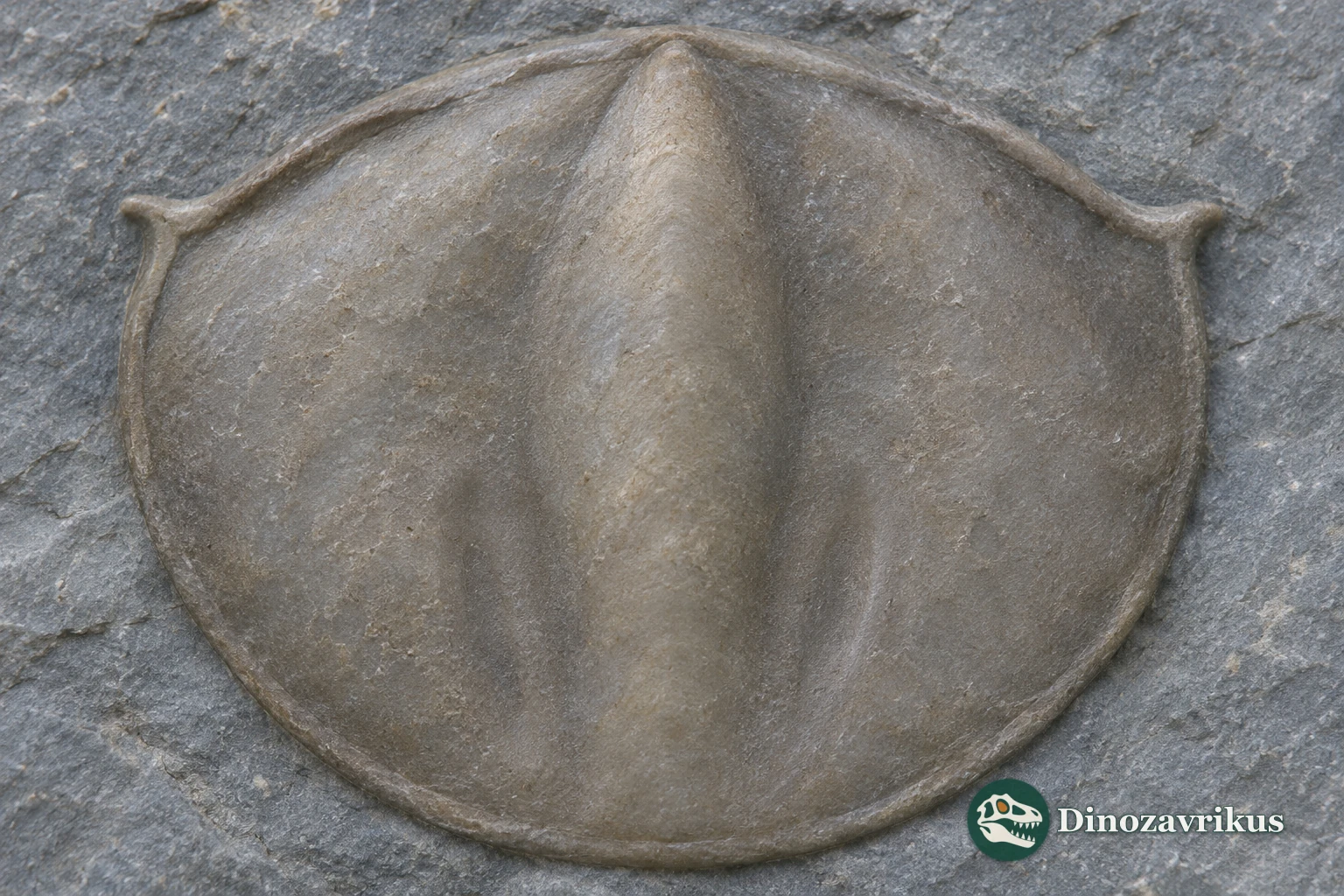
The axis lacks transverse rings. Its depressed posterior part carries a pair of elongated pits.
Combining the groove with a blunt or pointed tail axis helps separate forms from different rock sections.
The Andrarum shields
Anders Westergård named the type species Agnostus repandus in 1930. Benjamin Howell established Clavagnostus for it in 1937. The holotype is a head shield from Andrarum in the Swedish province of Skåne.
Westergård later described about a dozen head shields and as many tail shields. The head is slightly more convex than the tail. The thorax is missing from this series, so its proportions in the reconstruction follow comparisons with other agnostoids.
A lance-shaped axis and a groove on the head
The head of C. repandus bears a long, smooth glabella, the raised central part of its shield. The glabella has a rounded front with no median groove in the field ahead of it. The basal lobes at the back are triangular.
On the tail the long axis is raised at the front and depressed behind, with two elongated pits in its rear part. The rear tip reaches the rim. This shape helps identify tail shields found on their own.
Why earlier identifications changed
James Jago and Brian Daily described C. burnsi and C. milli from Tasmania and revised the genus. The C. burnsi group combines a median furrow on the head with a blunt tail axis. The C. sulcatus group also has a median furrow ahead of the glabella, but its pygidial axis ends in a point.
Specimens from different regions were once assigned to C. repandus. The revision found that several species were represented. Where identifications are well established, agnostoids help correlate Cambrian rocks over long distances. One species of Lejopyge, for example, marks the base of the Guzhangian Stage.
Frequently asked questions
Where was the holotype found?
The holotype head shield comes from Andrarum in southern Sweden.
What does the axis of the tail look like?
In the type species it is lance-shaped and lacks transverse rings. It extends to the rear rim.
Which species were described from Tasmania?
Jago and Daily named C. burnsi and C. milli. They assigned a third Tasmanian species to the genus tentatively.
Do the Swedish shields preserve the thorax?
The described Swedish series consists of heads and tail shields. The thorax is inferred from related agnostoids.