

Cochleosaurus was a Carboniferous temnospondyl known from Czech deposits and from Nova Scotia, Canada. Its two described species are C. bohemicus and C. florensis. Unlike an animal represented by one isolated bone, the Czech species includes skulls at several sizes and parts of the body skeleton. The Canadian species is much more strongly documented by skulls.
These fossils make a useful comparison in the ancient amphibian catalogue: a difference between skulls may reflect species, growth stage or preservation. Each possibility must be checked against the actual bones.
Quick facts
| Scientific name | Cochleosaurus |
|---|---|
| Group | Cochleosauridae, an edopoid temnospondyl family |
| Age | Late Carboniferous |
| Described species | C. bohemicus and C. florensis |
| Locations | Nýřany, Czech Republic; Cape Breton, Nova Scotia |
| Material | Skulls and Czech postcranial bones |
| Canadian holotype | MCZ 4343, a skull |
| Important distinction | Adult skull traits must be separated from juvenile traits |
What can the fossils tell us?
Several large, probably adult Czech skulls reveal bone boundaries obscured in accounts based on smaller individuals. Pitting beneath the postorbital was proposed as a species character independent of growth; it cannot establish skin colour.
Juvenile vertebral arches were less ossified and unfused, while some wrist elements had not ossified. A small skull alone should not automatically be named a new species.
The Nova Scotia material differs in dermal sculpture and proportions. Holotype MCZ 4343 is a skull, not a complete Canadian skeleton; similarity in whole-body form remains comparative.
Vertebrae, ribs and limb bones were described from differently sized Czech individuals. About 24 presacral vertebrae is an estimate from incomplete material, not a count from a perfect articulated animal.
Adult Czech skulls changed the picture
Antonín Frič introduced the Bohemian material in the nineteenth century. Later accounts by several researchers relied heavily on relatively small specimens. Sandra Sequeira re-examined several large, probably adult C. bohemicus skulls from Nýřany and revised the description of cranial proportions and bone contacts. Pitting on the underside of the postorbital bones was identified as a character of the Czech species that does not simply disappear with age.
Surface sculpture should still be distinguished from allometry. Pits, ridges and relative bone lengths can look different between young and large skulls. The same analysis supported Cochleosauridae as a group including Cochleosaurus, Chenoprosopus and two other genera, while deeper edopoid relationships were less securely supported. A phylogenetic tree is a test of a character sample, not a preserved genealogy.
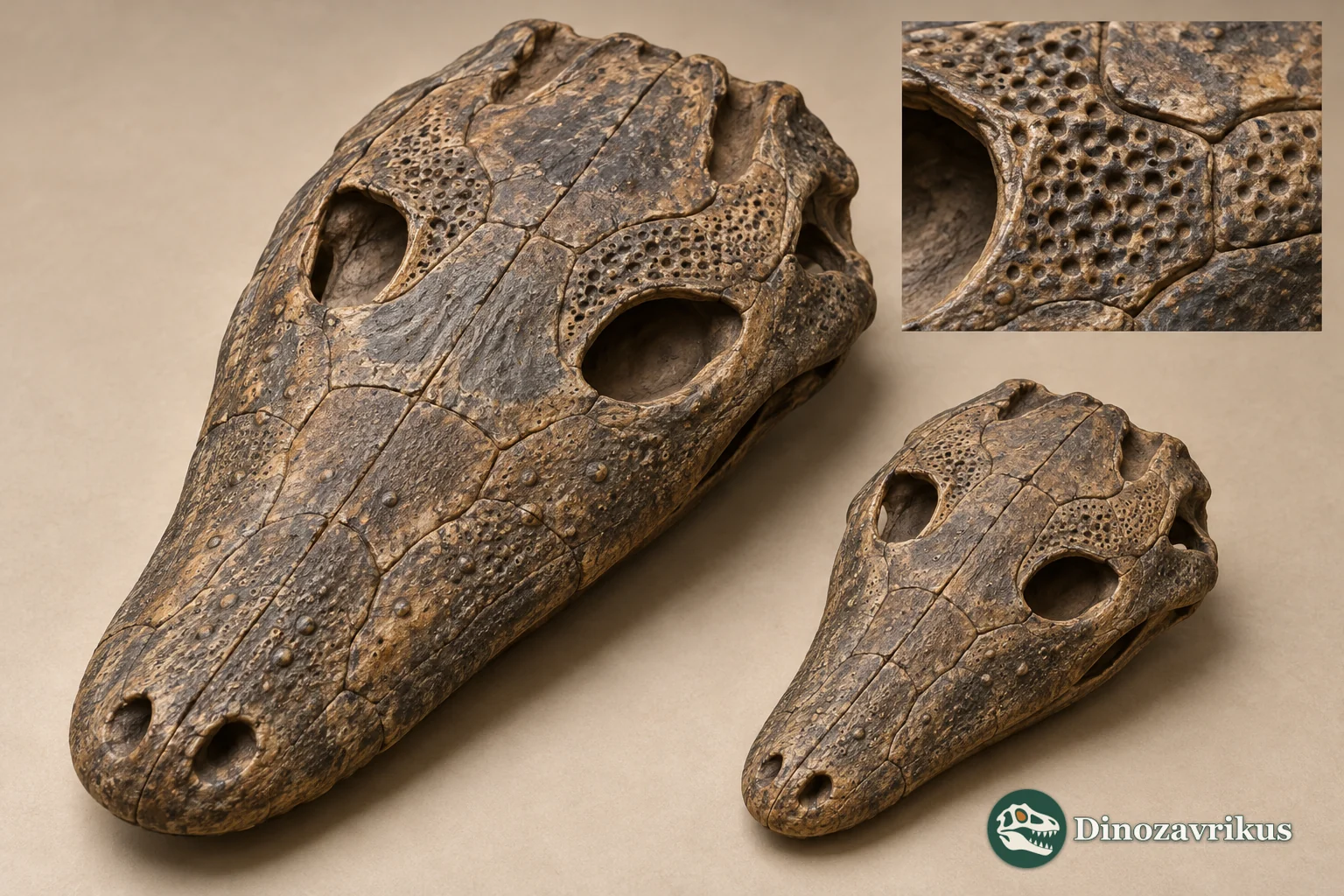
What the Nova Scotia skulls tell us
Olivier Rieppel named C. florensis in 1980 from material near Florence on Cape Breton Island. The Museum of Comparative Zoology records skull MCZ 4343 as its holotype and MCZ 4344 as additional material. A 1956 field party encountered vertebrate remains in upright fossil Sigillaria stumps close to a coal seam. The trunks were a setting for preservation; they do not show that this amphibian lived inside trees.
Rieppel distinguished the Canadian species by skull proportions and the pattern of ornament on outer bones. Comparison with mature Czech skulls is important, because two individuals of different ages could appear more distinct than adults of different populations. A Canadian complete skeleton was not part of the named type material. Body restorations therefore depend chiefly on Czech remains and relatives.
Body bones and the sequence of growth
Sequeira's later study documented postcranial remains from small and larger C. bohemicus individuals. The vertebrae were rhachitomous, with approximately 24 presacral vertebrae estimated; ribs lacked uncinate processes. Parts of the shoulder remained cartilaginous and the pubis was not ossified. Those observations describe anatomy, but do not measure swimming speed or time spent on land.
Young specimens had less ossified, unfused neural arches and unossified carpals. Parts of the humerus and ilium also differed with size. This growth series helps distinguish age-related features from taxonomic ones, without giving a precise age in years for each individual.
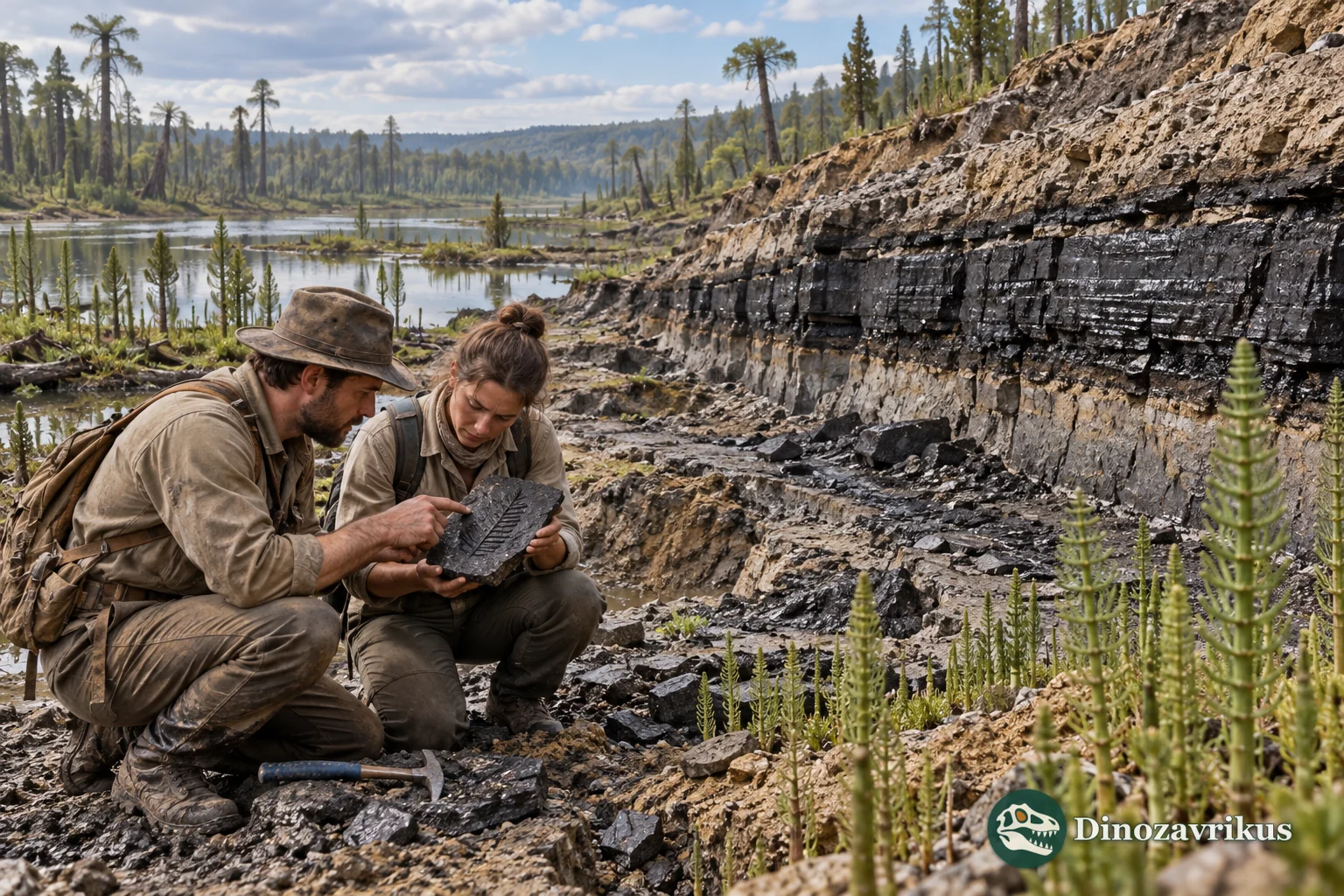
Habitats, feeding and the limits of paleoart
The long skull and teeth support a predatory animal, but no identified prey was found in a Cochleosaurus stomach. Limbs show that it could bear weight on a substrate; they do not establish the proportion of its life spent out of water. The cover's wetland, skin pattern and instant of movement are artistic choices around the preserved skeleton.
For the wider setting see the Carboniferous Period. Cochleosaurus is most informative when specimens from two regions and several growth stages are compared without turning a tree-stump burial into a behaviour story.
Frequently asked questions
Was Cochleosaurus a dinosaur?
No. It was a temnospondyl amphibian of the Carboniferous, long before dinosaurs appeared.
What is known of the Canadian species?
C. florensis is based on skulls from Nova Scotia. Its holotype MCZ 4343 is a skull, not a complete skeleton.
Why did adult skulls change the description?
Older accounts relied mainly on small individuals. Large Czech skulls let researchers check which features persist with growth.
Did it live in hollow trees?
The Canadian bones were found in fossil tree stumps. That is a burial context, not direct evidence of everyday shelter.