

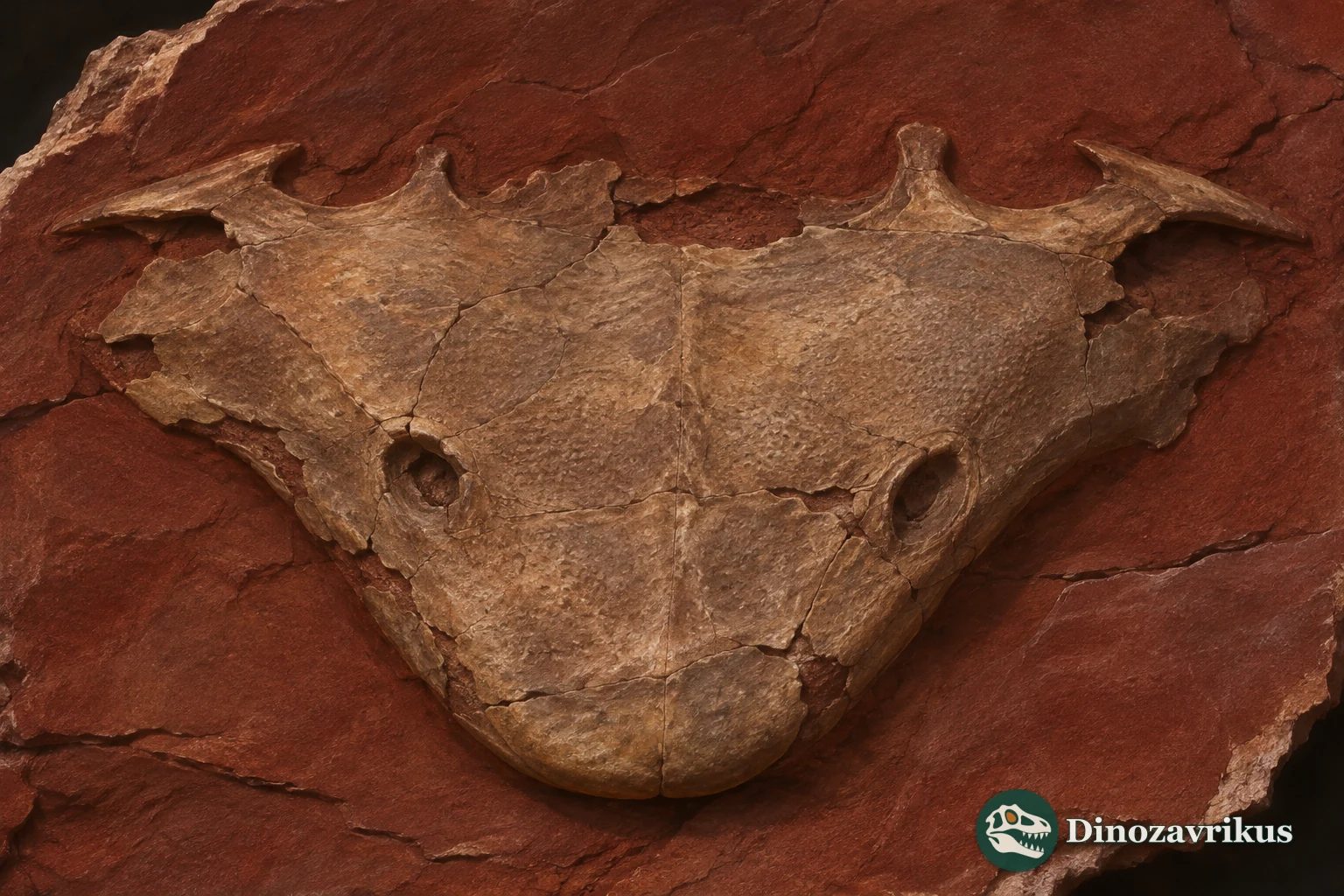
Compsocerops was a Late Triassic temnospondyl. Its type species had a broad skull with slender bony projections pointing backwards at the rear corners. Those projections and other skull features linked specimens from India and southern Brazil.
Quick facts
| Group | Temnospondyls, chigutisaurids (Chigutisauridae) |
|---|---|
| Age | Late Triassic |
| Region | Asia (India), South America (Brazil) |
| Type species | Compsocerops cosgriffi |
| Scientific name | Compsocerops |
| Diet | Exact prey is unknown |
What can the fossils tell us?
The type specimen ISI A 33 from Maleri preserves a nearly complete skull with lower jaws. The Tiki and Santa Maria formations yielded more fragmentary material.
The bony projections at the back of the skull contributed to placing the Brazilian fossil in the genus. Parts of the palate also distinguish the Indian specimens from other temnospondyls.
The Brazilian specimen has no species assignment. Some distinct features could reflect immaturity. Exact prey is unknown.
The type skull from Maleri
Dhurjati Prasad Sengupta named Compsocerops cosgriffi in 1995 from skull ISI A 33, found in red clay near Rechni in the Pranhita–Godavari Basin. The tabular projections extend backwards near the rear corners of the skull. Those structures and the palate help distinguish the type species from its relatives. A much later member of the same family, Koolasuchus, is known from Cretaceous Australia.
A second species from Tiki
Sanjukta Chakravorti and Sengupta named C. tikiensis in 2023 from material in central India. The ISI A 202 material includes the left half of a skull roof, other cranial pieces and a clavicle. The authors also reassigned an isolated palate previously identified as a metoposaurid. In particular, they compared the shape of the pterygoid and the proportions of the large paired openings in the palate.
A fragmentary individual from Brazil
The Santa Maria Formation yielded skull pieces, part of a jaw, a clavicle and a humerus from a small individual interpreted as immature. A pointed rear projection and a process on the adjacent bone resemble those of the Indian fossils. Other details differ. In 2012 the describers assigned the Brazilian material to Compsocerops sp., since differences that would suggest another species could instead reflect the individual’s growth stage.
Watercourses and prey
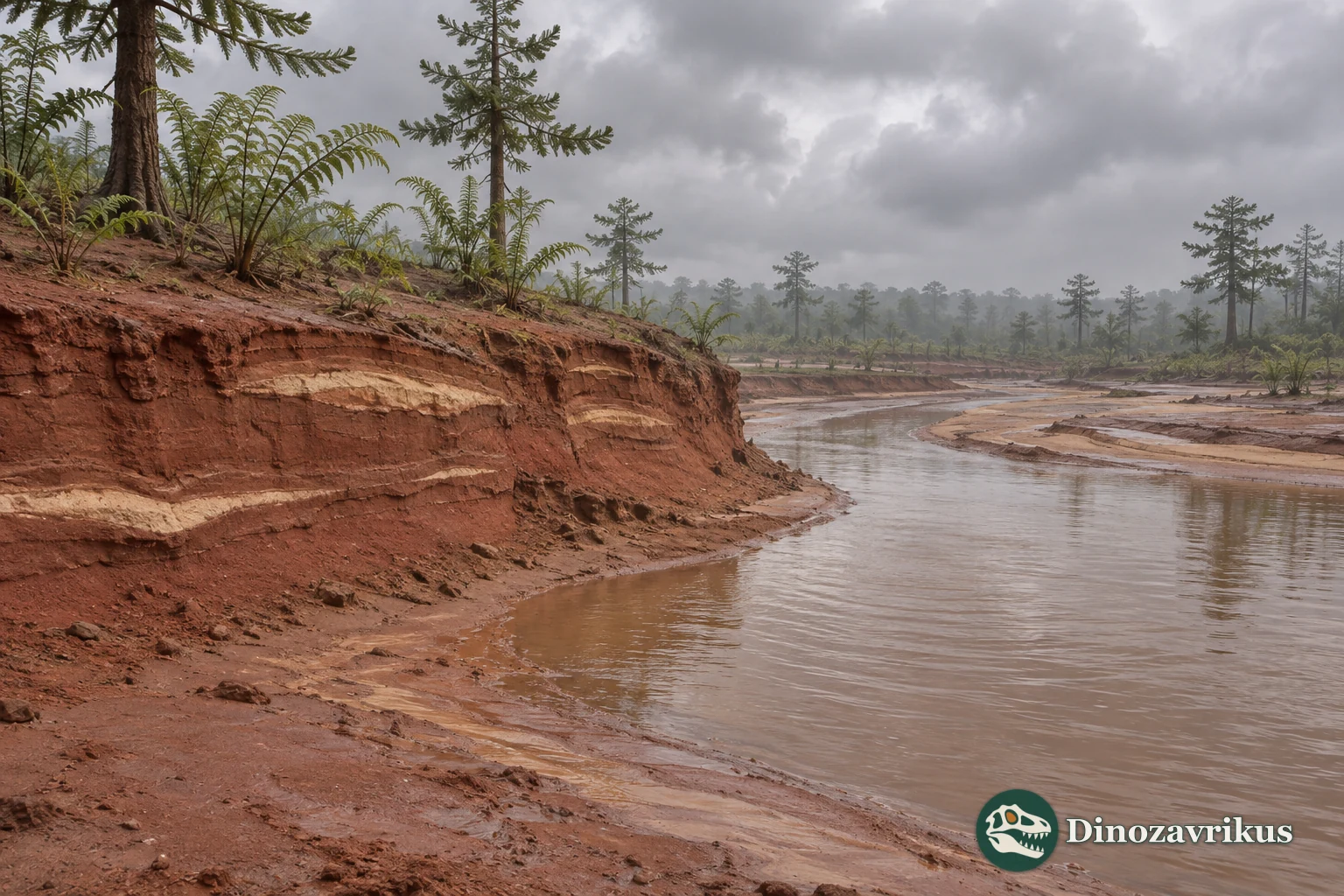
The Tiki material occurs in river deposits with alternating sand-rich and reddish muddy sediment. Teeth of other vertebrates occur alongside these remains. Such finds document parts of the local fauna without identifying the animals Compsocerops might have eaten.
Frequently asked questions
Where was the type specimen found?
Near Rechni in India, in the upper part of the Maleri Formation.
Did it have horns?
Narrow bony projections pointed backwards from the skull roof. The fossils do not preserve the appearance of the soft tissues covering them.
Is the genus known from Brazil?
Yes. The Brazilian fossil was assigned to Compsocerops without assigning it to either of the named Indian species.
What material represents the Tiki species?
The ISI A 202 series includes part of a skull roof, other cranial pieces and a clavicle. The study also assigned a separate palate to the species.