

Contectopalatus atavus is a Middle Triassic mixosaurid ichthyosaur known from skull material in Germany. A high median crest and a distinctive closed palate help make its fossils recognizable. Its taxonomic history is less straightforward: researchers have variously placed the species in Contectopalatus, Phalarodon or a broader Mixosaurus.
Quick facts
| Type species | Contectopalatus atavus |
|---|---|
| Age | Middle Triassic, Anisian |
| Region | Germanic Basin, present-day southwestern Germany |
| Type material | Historical Ichthyosaurus atavus material from the Lower Muschelkalk |
| Distinctive evidence | High skull crest, closed palate and labyrinthine tooth bases |
| Classification | A mixosaurid in taxonomies that recognise separate Phalarodon and Contectopalatus genera |
Evidence guide
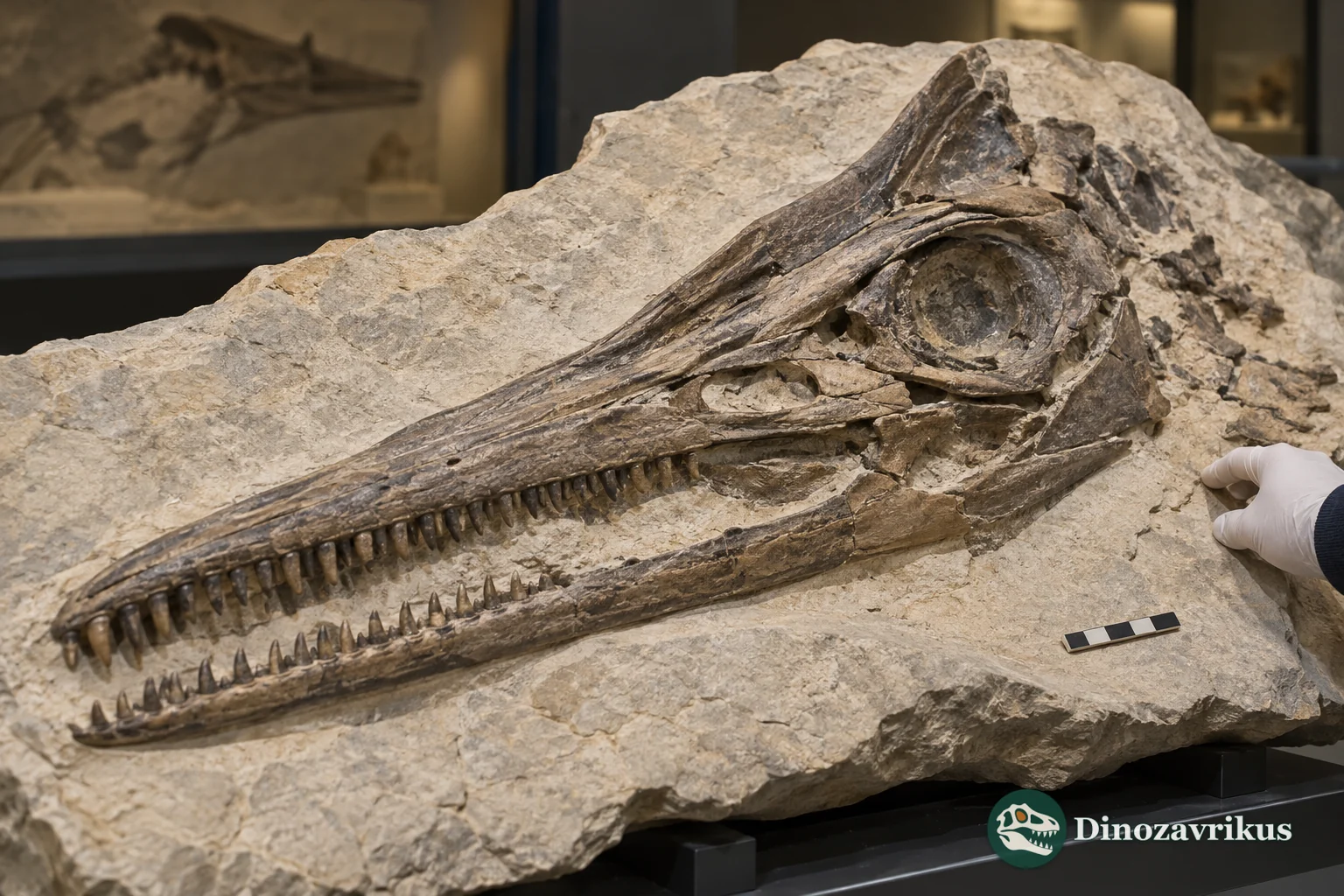
Skull material shows a high sagittal crest and a palate without the large openings that distinguish many other ichthyosaur skulls. These are cranial features, not evidence of a sail along the back.
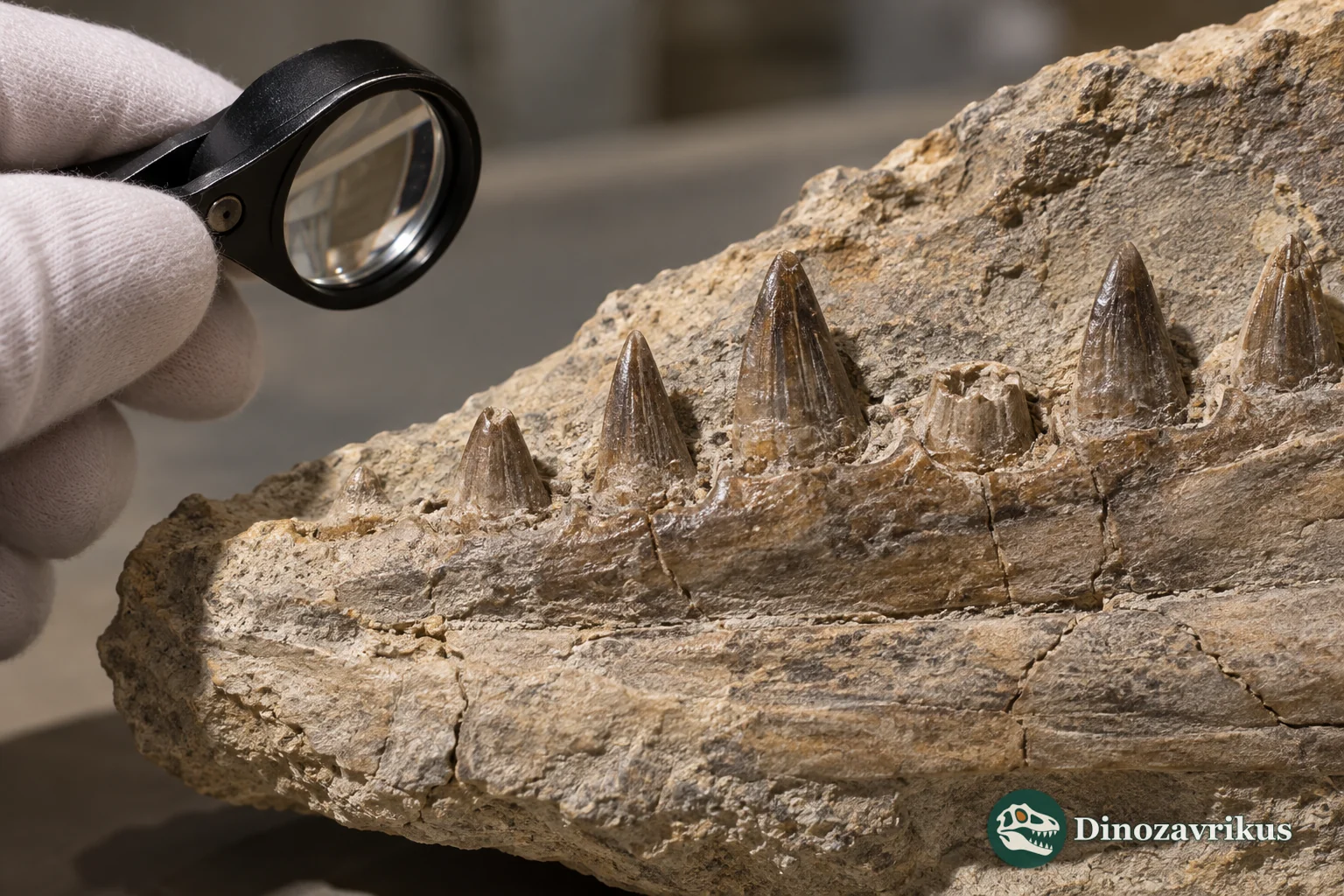
Researchers described teeth set in the jaws with labyrinthine folds at their bases. This anatomy helps compare mixosaurids, but does not identify a particular prey species.
The literature includes Contectopalatus atavus, Phalarodon atavus and broader combinations with Mixosaurus. These are competing classifications of the species, not separate fossils that document different animals.
Large skull specimens were interpreted as late growth stages and compared with other mixosaurids. That comparison is not a measured body length and cannot recover exact proportions or swimming behaviour.
A name moved through ichthyosaur taxonomy
Friedrich Quenstedt described the species as Ichthyosaurus atavus in the mid-nineteenth century. Later authors transferred it to other genera. In 1998 Michael Maisch and Andreas Matzke proposed Contectopalatus, drawing attention to its cranial anatomy. In a 2001 revision they revisited the historical type material and concluded that the old lectotype was diagnostic, making a recently proposed neotype unnecessary.
The disagreement concerns how closely related mixosaurids should be grouped. Some classifications retain Contectopalatus; others use Phalarodon atavus, and broader treatments have placed it with Mixosaurus. Recent reviews continue to describe different generic limits, so no single combination should be presented as universal consensus.
What the skull and teeth preserve
A high sagittal crest rises along the midline of the skull roof. It is a bony feature of the head and should not be confused with a dorsal fin. The closed palate cited in the genus name refers to the arrangement of bones on the underside of the skull. Together with other cranial features, it can be used to compare fossils and test taxonomic assignments.
The teeth were set in the jaws, and their bases show folded, labyrinthine structure. These details say more about anatomy than a generic outline reconstruction can. A single tooth feature does not settle relationships by itself; researchers assess the whole combination of preserved characters.
Middle Triassic seas and uncertain size
The fossils come from Muschelkalk deposits of the Germanic Basin, a broad marine basin where limestone and marl accumulated during the Anisian Stage of the Middle Triassic. The material includes skull remains rather than a single complete skeleton with soft tissue. Reconstructions of the full animal therefore borrow proportions from better-known ichthyosaurs.
Maisch and Matzke interpreted the largest skull specimens as very late ontogenetic stages and compared them with other mixosaurids. This is an interpretation of the preserved skull sample, not a reliable body-length estimate. No complete skeleton supplies the proportions needed to measure total length, mass, swimming speed or a specific prey preference.
What the evidence does not show
The crest’s function is not established. A display role, muscle attachment or other biological explanation would require evidence beyond the crest itself. Teeth and jaws are consistent with a predatory marine reptile, but the described fossils do not preserve a confirmed meal that would identify its diet precisely.
Comparisons with Phalarodon and Mixosaurus clarify the taxonomic discussion; resemblance does not show that one genus was the direct ancestor of another. The later Stenopterygius belongs to a different part of ichthyosaur history.
Frequently asked questions
What was Contectopalatus?
It was a Middle Triassic mixosaurid ichthyosaur from Germany. Its type species, Contectopalatus atavus, is known chiefly from skull material.
Why is it also called Phalarodon atavus?
Some authors combine or redistribute closely related mixosaurid species and use Phalarodon atavus. Others retain Contectopalatus as a separate genus. The names reflect competing taxonomic treatments of one species.
What was the skull crest used for?
Its function is unknown. The crest is directly preserved, but explanations for its biological role remain hypotheses.
How long was Contectopalatus?
There is no reliable total body-length estimate. Large skulls have been compared with those of other mixosaurids, but skull size alone does not preserve whole-body proportions.