

Coosina is a Cambrian trilobite genus based on material from Tennessee. Later specimens from Utah resemble a Tennessee species, C. amage. Differences in the area in front of the central head lobe, along with the fragmentary material, are why the Utah fossils carry a qualified identification.
Quick facts
| Group | Trilobites |
|---|---|
| Age | Cambrian, including the late Miaolingian |
| Region | North America (Tennessee and Utah, United States) |
| Diet | Unknown |
| Type species | Coosina ariston |
| Genus named by | Franco Rasetti, 1956 |
What can the fossils tell us?
Rasetti retained the original type of Maryvillia and made M. ariston the type species of a different genus.
One free cheek preserves the eye area. It was not found articulated with the cranidia and pygidium.
The Utah cranidia resemble C. amage, but that difference and their incomplete preservation prevent a firm attribution to the species.
How Coosina got its name
Charles Walcott described ariston from the Maryville Formation in Tennessee as a species of Maryvillia. Franco Rasetti revised that genus in 1956. He retained its type species M. arion and created Coosina with M. ariston as its type. The similarly named Coosia was based on a different type species.
What the Tennessee and Utah fossils preserve
The holotype of C. amage, USNM 62824, is a cranidium from the Nolichucky Formation near Knoxville. This central portion of the head shield retains the glabella and fixed cheeks. It gives no direct view of the separate free cheeks of that individual.
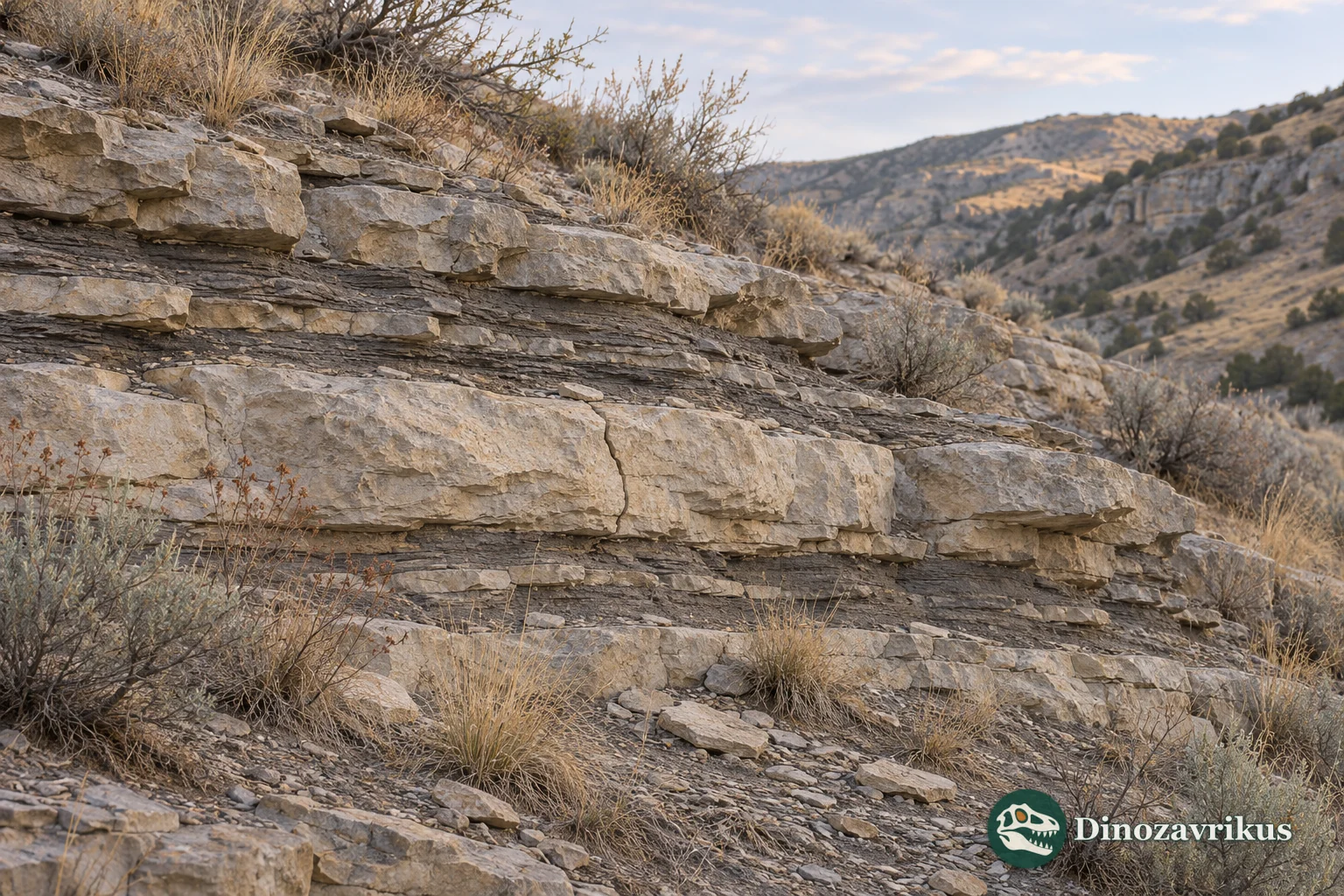
The Nounan Formation at Smithfield Canyon in northern Utah yielded partially preserved cranidia, a pygidium and free cheeks. USNM 775588 is a free cheek with the ocular region preserved. The assemblage is assigned to the Crepicephalus Biozone of the late Middle Cambrian.
Why the species name remains qualified
The Utah material was identified as Coosina cf. C. amage. The comparison indicates a close resemblance. The preglabellar area, between the raised centre of the head and the frontal border, appears shorter than in the reference material. Better preserved specimens would help test whether that difference separates species. The known dorsal material also gives no reliable evidence for the diet of the genus.
Frequently asked questions
Who established Coosina?
Franco Rasetti established the genus in 1956 during a revision of Maryvillia.
Where do the Tennessee specimens come from?
The type species is from the Maryville Formation. The holotype of C. amage comes from the Nolichucky Formation near Knoxville.
Why are the Utah specimens only compared with C. amage?
They preserve incomplete shields, and the field in front of the glabella appears shorter than in the comparative material.
What did Coosina eat?
The available exoskeleton fragments do not establish the diet of the genus.