

Crepicephalus was a Cambrian trilobite with two sharp spines on its tail shield. Charles Walcott described twelve thoracic segments in the type species. Finds of the genus also help geologists correlate fossil beds in what are now the United States and Mexico.
Quick facts
| Group | Trilobites |
|---|---|
| Age | Cambrian, Guzhangian Stage |
| Genus named by | David Dale Owen, 1852 |
| Type species | Crepicephalus iowensis |
| Type beds | Eau Claire Formation, Minnesota |
| Tail | A pair of marginal spines |
What can the fossils tell us?
Walcott restored the complete outline from an incomplete articulated fossil and separate shields.
Specimens from a single locality show differences in the angle between the spines.
Correlations use the associated trilobites and the position of finds in each section.
From Owen's fossils to an articulated shell
David Dale Owen described the type species in 1852 as Dikelocephalus? iowensis. Its type beds are in the Eau Claire Formation of Minnesota. Charles Walcott traced the history of the identification and recorded twelve thoracic segments. He restored the complete outline using an incomplete articulated specimen, USNM 61630 from Wisconsin, and separate shields.
A narrow groove outlines the cranidium's central lobe, which tapers towards the front. Arcuate eye lobes sit alongside it near the midpoint. A compact rim borders the front of the head.
Variation in the tail spines
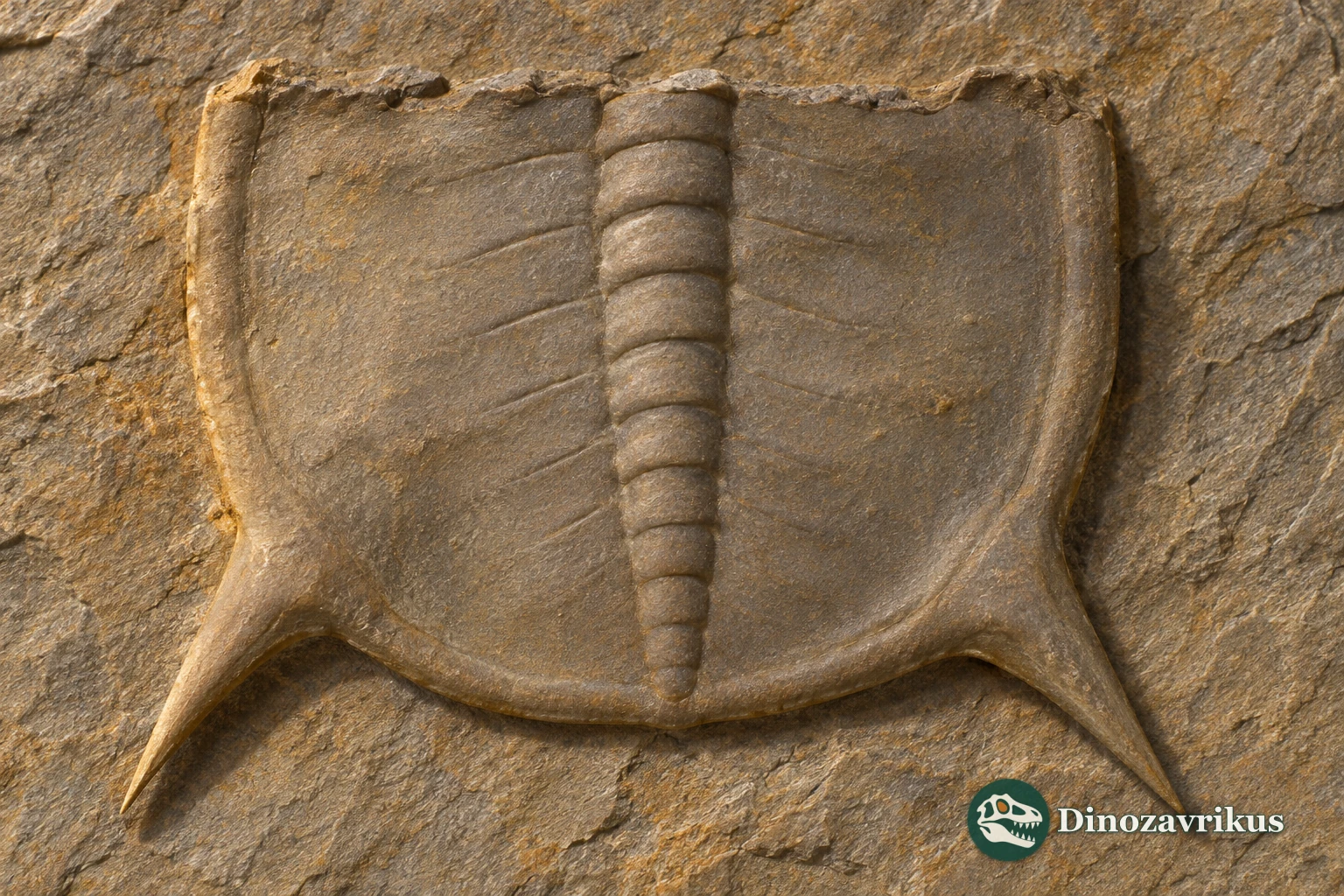
The broad tail shield has a narrow axis divided by transverse furrows. In the type species each spine grows from a broad base at the rear corner of the rim. Walcott compared specimens from Menomonie, Wisconsin. Some spines diverge strongly, while others point almost directly back. The angle alone gives a poor basis for identification.
Older studies also placed the Texan species texanus in Crepicephalus. It is now placed in Tricrepicephalus. Both genera occur in rocks of the same age.
Tracking a biozone
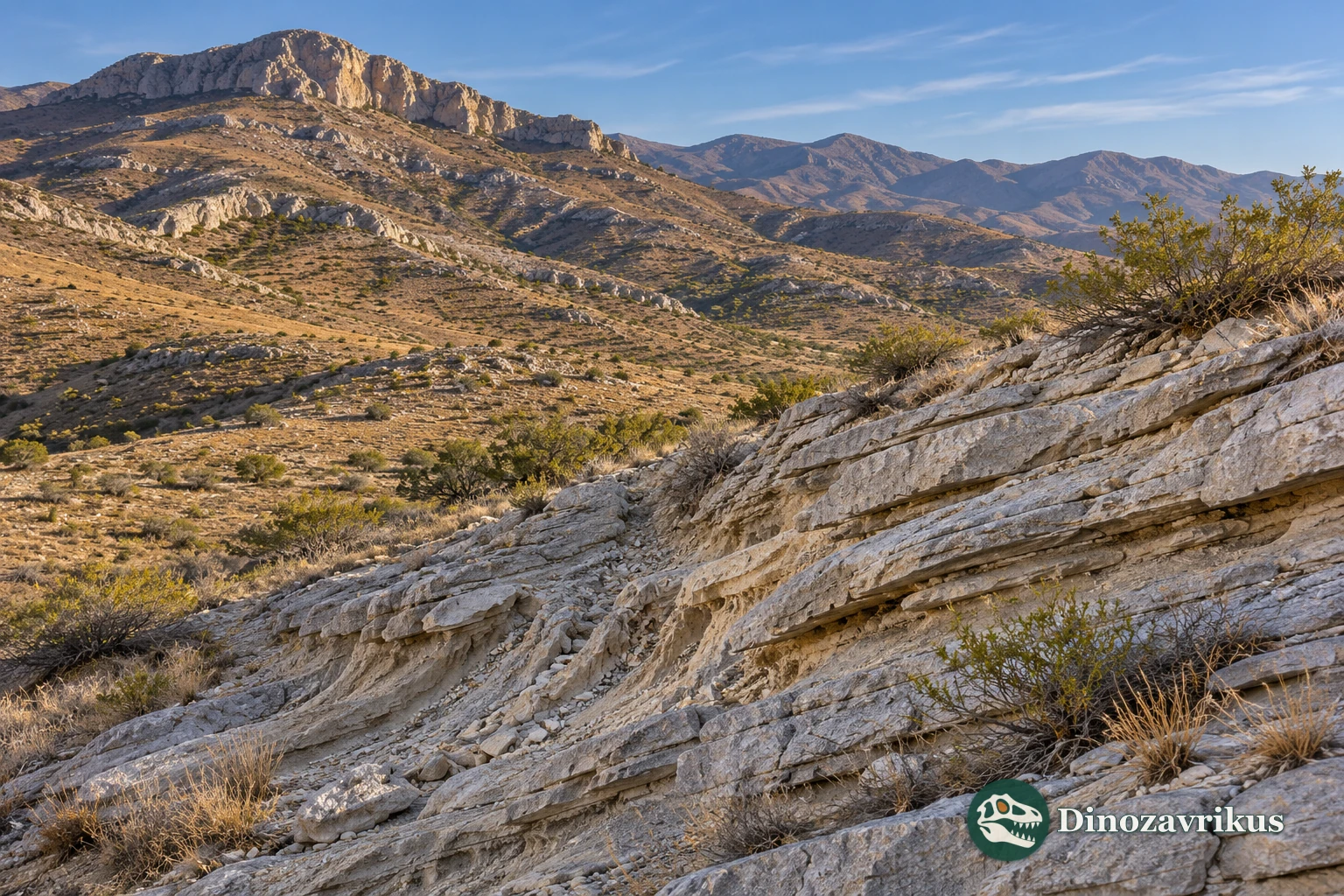
Researchers correlated trilobite assemblages from the upper Guzhangian Stage of northern Sonora with assemblages in Arizona and Texas. Finds from the Sierra Los Ajos were identified as Crepicephalus at genus level. The biozone takes its name from the genus, and the succession of fossil assemblages helps identify the interval.
Frequently asked questions
Which species defines the genus?
Crepicephalus iowensis, first described by Owen from the Eau Claire Formation.
How many thoracic segments did Walcott describe?
Twelve. A separate fragment, USNM 61631, preserves eleven.
Do the tail spines always diverge at the same angle?
No. The angle varies noticeably among specimens from Menomonie.
What does the Crepicephalus Biozone represent?
It is an interval recognised by a characteristic fossil assemblage. In southwestern North America it is assigned to the upper Guzhangian Stage.